 How to read Quran
For many learners, the first encounter with Quranic Arabic feels like standing at the edge of a vast ocean—beautiful, meaningful, yet intimidating. Letters shift shapes, sounds emerge from unfamiliar places, and the script flows differently than anything learned before, demanding patience and guidance.
Reading the Quran in Arabic becomes achievable through a clear progression: mastering letters and their articulation, understanding Harakat, learning how letters connect, applying Noorani Qaida systematically, introducing Tajweed rules, and reinforcing everything through daily practice and qualified teacher support.
1. Start With the Arabic Alphabet to Read Quran in Arabic Easy
Learning the 29 Arabic letters forms your foundation for easy way to read Quran in arabic. Each letter has a unique shape and sound that differs completely from English alphabets. You must recognize letters in their isolated, initial, middle, and final forms.
The Arabic alphabet includes letters with no English equivalents. Letters like ع (Ayn), ح (Haa), and خ (Khaa) require specific throat and mouth positioning. Mastering these sounds early prevents pronunciation errors later.
Letters Grouped by Articulation Points
Arabic letters emerge from specific mouth and throat regions called Makharij. Understanding these articulation points helps produce authentic sounds. The throat produces six letters, the tongue produces eighteen, and the lips produce four.
Practice each letter group separately. Focus on throat letters first: ء ه ع ح غ خ. These sounds feel unusual initially but become natural with consistent practice guided by proper instruction.
Read Also: How to Read the Quran?
2. Learn Arabic Harakat to Read Quran Easily
Harakat are short vowel marks that determine how you pronounce each letter. The three primary Harakat are Fatha (ـَ), Kasra (ـِ), and Damma (ـُ). Without understanding these marks, reading Arabic becomes impossible.
Fatha produces an “a” sound. Kasra creates an “i” sound. Damma generates an “u” sound. These marks appear above or below letters, guiding your pronunciation precisely.
| Harakah | Symbol | Sound | Example |
| Fatha | ـَ | “a” as in “cat” | بَ (ba) |
| Kasra | ـِ | “i” as in “sit” | بِ (bi) |
| Damma | ـُ | “u” as in “put” | بُ (bu) |
Sukoon (ـْ) indicates no vowel sound. The letter remains silent or produces only its consonant sound. This mark appears frequently in Quranic text and requires careful attention during practice.
Shots Videos from Our Courses
Start Your Quran Learning Journey Today
Join Quran Reading Academy and begin structured, step-by-step Quran reading with expert guidance.
Try your first class for free3. Master Letter Joining for Easy Quran Reading
Unlike English, Arabic letters connect within words. Most letters join from both sides, while six letters (ا د ذ ر ز و) only connect from the right. Understanding connection rules enables smooth reading flow.
Each letter transforms shape depending on position. The letter ب appears as ب (isolated), بـ (initial), ـبـ (middle), or ـب (final). Recognizing these variations quickly improves reading speed significantly.
At The Quran Reading Academy, our Noorani Qaida Course with certified instructors helps students master letter joining through personalized 1-on-1 sessions. The structured curriculum ensures proper progression from simple to complex word formations.
Start Reading the Quran Today with Our Noorani Qaida Course

Practice Two-Letter Combinations First
Begin with simple combinations like بَا (baa) or تِي (tee). These basic syllables build confidence before tackling longer words. Write each combination multiple times while pronouncing it aloud.
Progress to three-letter words next. Words like كَتَبَ (kataba) and قَرَأَ (qara’a) demonstrate standard patterns. Regular practice with graduated difficulty strengthens recognition skills effectively.
4. Follow Noorani Qaida Method for Systematic Learning
Noorani Qaida offers the most effective structured approach for Arabic reading beginners. This traditional methodology progresses from individual letters to complete Quranic verses systematically. Each lesson builds directly upon previous knowledge.
The curriculum begins with alphabet recognition and advances through Harakat application, letter combinations, Sukoon rules, Tanween (double vowels), Tashdeed (letter emphasis), and Madd (elongation). This logical sequence prevents confusion and gaps.
Expected Timeline for Noorani Qaida Completion
Adults typically complete Noorani Qaida in three to six months with consistent practice. Children may require six to twelve months depending on age and dedication. Daily practice sessions of 20-30 minutes produce optimal results.
Never rush through lessons to finish quickly. Proper pronunciation and rule application matter more than speed. Mastering each lesson thoroughly before advancing prevents developing incorrect reading habits.
The Quran Reading Academy’s Quran Course for Beginners offers step-by-step guidance for students who are starting their Arabic reading journey from zero, ensuring proper foundation from day one. Certified instructors identify and correct mistakes immediately.
Enroll in Our Quran Reading Course for Beginners with a Free Trial
5. Apply Tajweed Basics When Reading Quran in Arabic
Tajweed rules ensure correct Quranic pronunciation and preserve meaning. Basic Tajweed includes understanding Noon Sakinah rules, Meem Sakinah rules, and Qalqalah letters. These fundamentals prevent common recitation errors.
Qalqalah occurs with five letters: ق ط ب ج د. When these letters carry Sukoon, they produce a slight echoing sound. This characteristic sound distinguishes proper recitation from ordinary Arabic reading.
لَمْ يَلِدْ وَلَمْ يُولَدْ
Lam yalid wa lam yoolad
“He neither begets nor is born.” (Al-Ikhlas 112:3)
Notice the Qalqalah on د (daal) in يَلِدْ. The letter bounces slightly, creating the distinctive Quranic sound. Practicing with qualified tutors ensures you apply this rule correctly in every occurrence.
| Tajweed Rule | Letters Affected | Sound Characteristic |
| Qalqalah | ق ط ب ج د | Echoing bounce |
| Ghunnah | ن م with certain marks | Nasal sound (2 counts) |
| Ikhfa | ن before 15 specific letters | Hidden nasal sound |
Working with qualified Quran tutors at The Quran Reading Academy through our Online Quran Reading Course with Tajweed provides the individualized attention needed to master these rules, with flexible scheduling available 24/7.
Start Reading the Quran With Tajweed Today
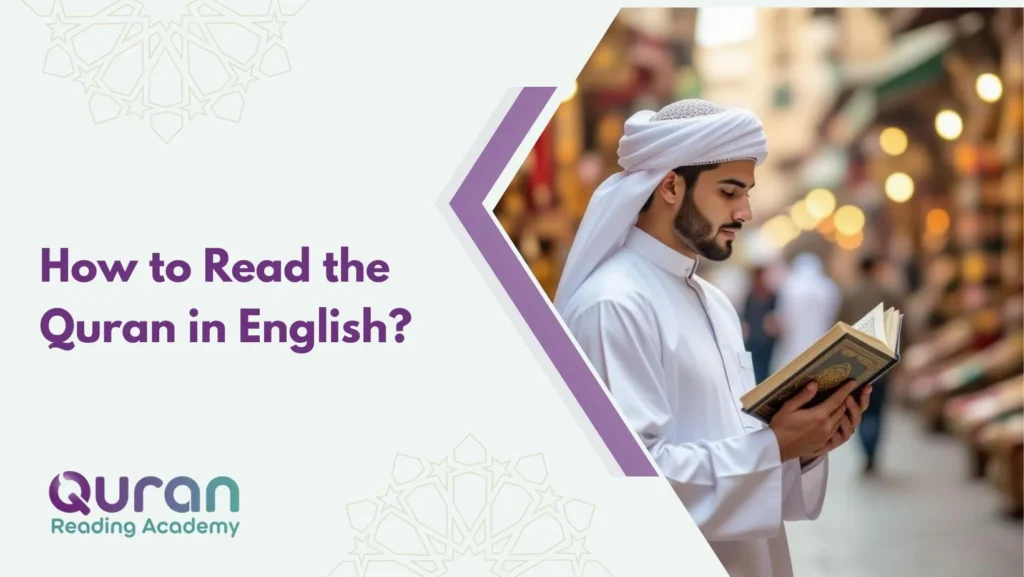
Read Also: How to Read the Quran in English?
6. Practice Daily With Short Surahs
Begin practical Quran reading with the shortest Surahs from Juz Amma. Surahs like Al-Ikhlas, Al-Falaq, and An-Nas contain simple vocabulary and clear pronunciation patterns. These familiar chapters boost confidence significantly.
قُلْ هُوَ اللَّهُ أَحَدٌ
Qul Huwa Allahu Ahad
“Say, He is Allah, [who is] One.” (Al-Ikhlas 112:1)
Read each verse slowly, applying every Harakat and Tajweed rule correctly. Speed develops naturally with time. Accuracy must remain your primary focus during early practice sessions.
Use Repetition for Muscle Memory Development to Read the Quran in Arabic Easy
Repeat each verse minimum ten times before progressing. Your mouth muscles need training to produce unfamiliar Arabic sounds automatically. Repetition transforms conscious effort into natural recitation.
Record your reading periodically and compare with proper recitation. Identifying your own mistakes accelerates improvement. Many students discover pronunciation issues they hadn’t noticed during live reading.
Start Your Quran Learning Journey Today
Join Quran Reading Academy and begin structured, step-by-step Quran reading with expert guidance.
Try your first class for free7. Reading With a Qualified Quran Teacher Regularly is the Easy way to Read the Quran in Arabic
Self-study alone cannot develop proper Quranic reading. A qualified teacher identifies subtle pronunciation errors you cannot hear yourself. Regular feedback corrects mistakes before they become permanent habits.
Teachers provide immediate correction for Makharij errors, Tajweed application, and reading flow. They demonstrate proper mouth positioning and breathing techniques. This personalized guidance remains irreplaceable for mastering authentic recitation.
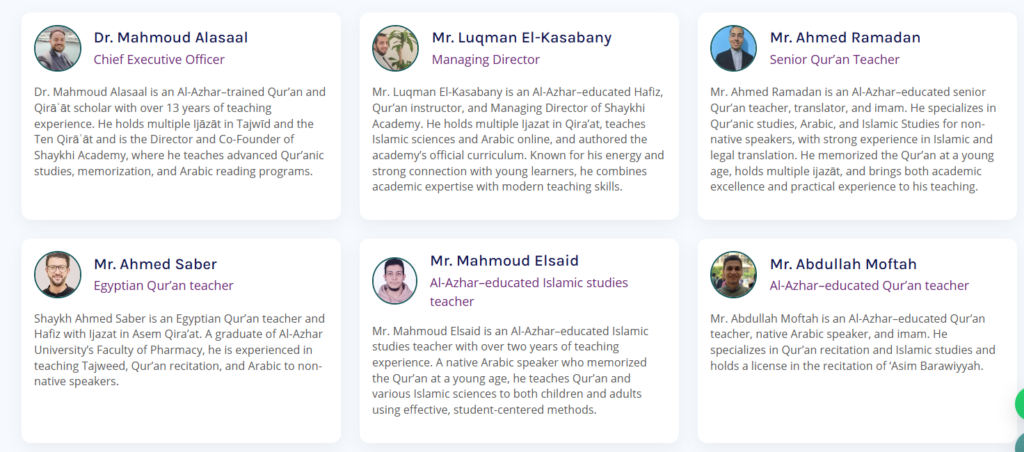
Meet our Quran teachers and find the perfect match for your trial session
Benefits of Live One-on-One Instruction
Individual lessons adapt to your specific learning pace and challenges. Group classes often move too quickly or slowly for individual needs. Personalized attention maximizes every session’s effectiveness.
Teachers motivate during difficult phases and celebrate your progress. This encouragement maintains consistency when self-motivation wavers. The teacher-student relationship creates accountability that supports long-term commitment.
How to Read Quran in Arabic for Beginners Effectively?
Consistency matters more than lengthy study sessions. Twenty minutes daily produces better results than two hours weekly. Your brain processes and retains information better through regular, shorter exposures.
Establish a fixed daily schedule for Quran reading practice. Morning hours after Fajr or evening hours before Maghrib work well for many students. Routine eliminates decision fatigue and builds lasting habits.
| Day | Focus Area | Duration |
| Monday | Letter recognition and sounds | 25 minutes |
| Tuesday | Harakat practice with words | 25 minutes |
| Wednesday | Short Surah reading | 25 minutes |
| Thursday | Tajweed rule application | 25 minutes |
| Friday | Review and correction | 30 minutes |
| Weekend | Live lesson with teacher | 30-45 minutes |
Track your progress weekly. Note which letters or rules require additional practice. This awareness helps you focus effort on weak areas rather than practicing what you already know.
Our Students Reviews
Start Your Quran Learning Journey Today
Join Quran Reading Academy and begin structured, step-by-step Quran reading with expert guidance.
Try your first class for freeStart Your Quran Reading Journey With Expert Guidance
Mastering Quranic Arabic reading requires proper foundation, systematic methodology, and qualified instruction. These elements together transform the seemingly difficult task into an achievable, rewarding experience.
The Quran Reading Academy offers comprehensive support through:
- Certified Qaris with Ijazah and extensive teaching experience
- Structured curriculum using Al-Menhaj Book and Noorani Qaida
- Flexible 24/7 scheduling for students worldwide
- One-on-one personalized instruction tailored to your pace
- Free trial class to experience our teaching methodology
Our Quran Reading Classes welcome complete beginners and provide the expert guidance needed to develop proper, beautiful Quranic recitation Insha’Allah.
Check out our top courses to help you read the Quran with confidence:
- Quran Reading Course With Tajweed
- Noorani Qaida Course
- Quran Reading Course for Beginners
- Quran Reading Classes for Adults
- Quran Reading Classes for Sisters
- Quran Reading Classes for Kids
- Quran Hifz Course
- Arabic Reading Practice Course
- Quranic Arabic Course
Book your free class today—it’s the perfect start to learning the Quran
Conclusion
Effective Quran reading in Arabic rests on a strong technical foundation. Accurate letter recognition, correct articulation points, and precise Harakat usage prevent early mistakes that later become difficult to undo, allowing learners to build fluency with confidence and clarity.
Structured learning methods such as Noorani Qaida create a logical pathway from isolated letters to complete verses. When combined with gradual Tajweed application, this approach protects the meanings of the Quran and refines recitation without overwhelming beginners.
Consistency and guided instruction complete the process. Short daily practice sessions, repetition with familiar Surahs, and regular correction from qualified teachers transform reading from a struggle into a steady, rewarding act of worship and connection.
Related Articles
How to read Quran


Leave a Reply