 How to read Quran
Learning to read the Quran independently often begins with a quiet frustration, recognizing letters but missing their flow, hearing recitation yet struggling to follow along. For many learners, the challenge isn’t motivation, but knowing how to build skill step by step without confusion or overwhelm.
Clear progress comes from structure, not guesswork. Mastering the Arabic alphabet, understanding Harakat, practicing with intention, and gradually applying Tajweed rules form a practical path from hesitant decoding to confident reading, even without prior Arabic knowledge or classroom instruction.
1. Begin to Learn Quran Reading By Yourself With Arabic Alphabet Mastery
Learning to read Quran begins with the Arabic alphabet. Without this foundation, attempting to read Quranic text becomes nearly impossible for non-Arabic speakers.
The Arabic alphabet contains 28 letters, each with distinct shapes depending on its position in a word. Unlike English, Arabic reads from right to left.
Start by learning each letter’s isolated form first. Then progress to recognizing how letters connect at the beginning, middle, and end of words.
Practice Letter Recognition Daily
Dedicate 15-20 minutes daily to writing each letter repeatedly. This builds muscle memory and visual recognition simultaneously.
Use flashcards to test yourself on individual letter shapes. Mix isolated forms with connected forms to strengthen your recognition skills.
Learn Letter Sounds Before Moving Forward
Each Arabic letter produces a unique sound from specific articulation points in your mouth and throat. These articulation points, called Makharij, determine correct pronunciation.
Don’t rush this stage. Incorrect letter sounds create reading habits that become difficult to correct later.
Record yourself pronouncing each letter, then compare with expert recitation. This self-assessment reveals pronunciation gaps you might otherwise miss.
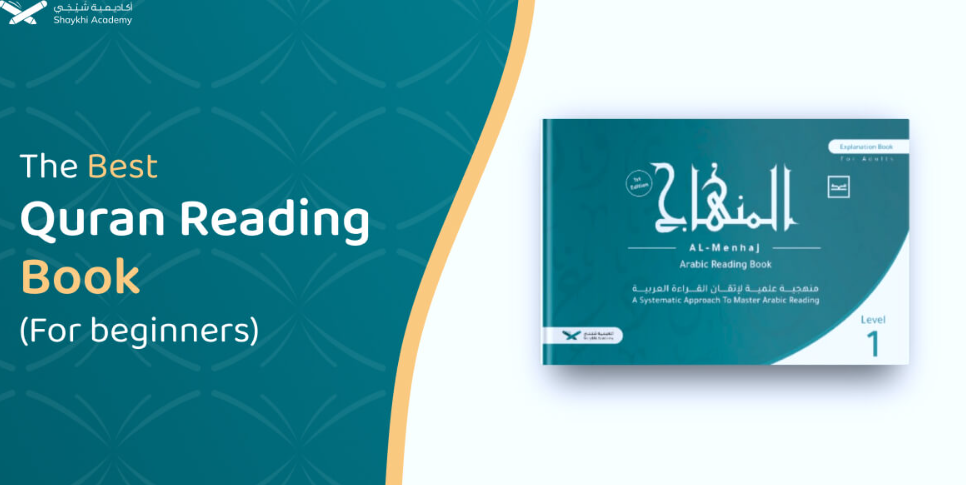
Al-Menhaj Book, authored by Luqman ElKasabany and developed by The Quran Reading Academy team with 25+ years of teaching experience, guides non-native speakers through the Arabic Alphabet and reading fundamentals step-by-step.
Explore The Best Quran Reading Book
Read Also: How to Read the Quran?
2. Master Harakat to Improve Your Quran Reading Quality
Harakat are short vowel marks that appear above or below Arabic letters. They control how you pronounce each letter when reading Quran.
The three primary Harakat are Fatha (َ), Kasra (ِ), and Damma (ُ). Fatha creates an “a” sound, Kasra creates an “i” sound, and Damma creates an “u” sound.
| Harakat | Symbol | Sound | Example |
| Fatha | َ | “a” as in “cat” | بَ (ba) |
| Kasra | ِ | “i” as in “sit” | بِ (bi) |
| Damma | ُ | “u” as in “put” | بُ (bu) |
Practice Harakat With Simple Words While Learning to Read Quran By Yourself
Begin with two-letter combinations before attempting full Quranic words. This gradual progression prevents overwhelming yourself with complexity.
Read each combination slowly, focusing on accuracy over speed. Speed develops naturally once accuracy becomes consistent.
Recognize Sukoon and Tanween Marks While Learning to Read Quran By Yourself
Sukoon (ْ) indicates a letter without a vowel sound. Tanween marks (ً ٍ ٌ) add an “n” sound after the vowel.
These marks appear frequently in Quranic text. Missing them changes word meanings and disrupts proper recitation flow.
Practice identifying these marks in simple Quranic verses. Surah Al-Fatihah provides excellent practice material for beginners:
ٱلْحَمْدُ لِلَّهِ رَبِّ ٱلْعَـٰلَمِينَ
Alhamdu lillahi rabbil ‘aalameen
“All praise is due to Allah, Lord of all the worlds.” (Al-Fatihah 1:2)
At The Quran Reading Academy, our Noorani Qaida Course with certified instructors helps students master Harakat application through personalized 1-on-1 sessions.
Start Reading the Quran Today with Our Noorani Qaida Course

3. Build Fluency Through Systematic Practice Sessions
Consistent practice transforms mechanical letter-reading into fluent Quran recitation. Structure your practice sessions to maximize retention and minimize frustration.
Dedicate specific time blocks exclusively to Quran reading practice. Morning hours after Fajr often provide the mental clarity beginners need.
Follow a Progressive Reading Schedule
Week 1-2: Arabic alphabet and basic Harakat (15 minutes daily)
Week 3-4: Two-letter combinations with all Harakat (20 minutes daily)
Week 5-6: Simple three-letter words from Quran (20 minutes daily)
Week 7-8: Short Quranic verses with Tajweed awareness (25 minutes daily)
This gradual progression prevents burnout while building solid reading skills. Rushing through stages creates gaps in your foundational knowledge.
Use Repetition to Strengthen Recognition
Repeat each new word or verse at least 10 times before moving forward. Repetition embeds letter patterns and Harakat combinations into your memory.
Shots Videos from Our Courses
Start Your Quran Learning Journey Today
Join Quran Reading Academy and begin structured, step-by-step Quran reading with expert guidance.
Try your first class for freeRead Also: How to Get Better at Reading Quran?
4. Apply Basic Tajweed Rules
Tajweed rules govern proper Quran pronunciation. Learning basic Tajweed alongside reading prevents developing incorrect recitation habits that require correction later.
Start with the most fundamental rule: Noon Sakinah and Tanween. This rule has four applications that affect how you pronounce these letters.
| Rule | Arabic Term | When Applied | Effect |
| Clear pronunciation | Izhar | Before throat letters | Full “n” sound |
| Merging | Idgham | Before specific letters | Merge with next letter |
| Nasalization | Iqlab | Before ب | Convert to “m” sound |
| Concealment | Ikhfa | Before remaining letters | Soft nasal sound |
Focus on Correct Letter Articulation Points to Learn Quran Reading by Yourself
Heavy letters (like ص ض ط ظ) require different tongue positions than light letters. This distinction affects your entire recitation quality.
Practice each Makharij category separately before combining them in actual Quranic words. Precision at this stage prevents pronunciation errors later.
Learn Madd Rules for Proper Vowel Elongation to Learn Quran Reading by Yourself
Madd means elongation of vowel sounds. Natural Madd extends for two counts, while some Madd types extend for four or six counts.
Listen carefully to expert reciters demonstrating different Madd types. Then practice holding your vowel sounds for the correct duration.
قُلْ هُوَ ٱللَّهُ أَحَدٌ
Qul huwa Allahu ahad
“Say: He is Allah, the One.” (Al-Ikhlas 112:1)
Notice the Madd in “هُوَ” (huwa) where the و creates natural elongation.
Working with qualified Quran tutors at The Quran Reading Academy through our Online Quran Reading Course with Tajweed provides the individualized attention needed to identify and correct reading mistakes, with flexible scheduling available 24/7.
Start Reading the Quran With Tajweed Today
5. Listen to Expert Recitation to Improve Quran Reading By Yourself
Your ears guide your recitation quality. Regular listening to qualified Qaris trains your brain to recognize correct pronunciation patterns.
Choose one consistent reciter initially, rather than switching between multiple voices. This consistency helps your brain internalize specific pronunciation patterns.
Practice Alongside Recorded Recitation to Improve Quran Reading
Play a verse, pause it, then attempt replicating exactly what you heard. Repeat this process until your recitation matches the recording.
Start with Surah Al-Fatihah, the most recited chapter. Its familiarity makes it ideal for beginners practicing recitation matching.
بِسْمِ ٱللَّهِ ٱلرَّحْمَـٰنِ ٱلرَّحِيمِ
Bismillahir-Rahmanir-Raheem
“In the name of Allah, the Entirely Merciful, the Especially Merciful.” (Al-Fatihah 1:1)
Record Yourself Reading Quran Regularly to Improve Quran Reading
Recording reveals pronunciation mistakes your ear might miss during recitation. Compare your recordings with expert reciters to identify specific improvement areas.
Listen for letter clarity, Harakat accuracy, and Tajweed rule application. Focus on correcting one mistake category at a time.
Our Quran Recitation Course provides expert feedback on your recordings, helping you identify and correct pronunciation issues systematically.
Start Your Quran Learning Journey Today
Join Quran Reading Academy and begin structured, step-by-step Quran reading with expert guidance.
Try your first class for free6. Use Mushaf With Clear Typography for Self Learning
Choosing the right Quran copy significantly impacts your learning experience. Mushafs designed for learners include features that support independent study.
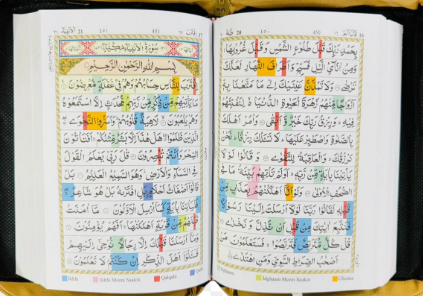
Select a Mushaf with clear, large Arabic text. Colored Tajweed Mushafs highlight different rules with distinct colors, making rule identification easier.
Features That Support Independent Learners
Look for Mushafs containing word-by-word translation beneath Arabic text. This feature helps you understand what you’re reading while building vocabulary.
Some Mushafs include transliteration alongside Arabic text. While helpful initially, reduce transliteration dependence as your Arabic reading improves.
Tajweed color-coding systems mark rules directly in the text.
Supplement With Digital Quran Apps
Digital platforms offer audio playback, translation, and Tajweed highlighting simultaneously. Apps like these complement physical Mushaf study effectively.
Use repeat functions to practice difficult verses multiple times. Slow playback speed helps beginners catch pronunciation details they might miss at normal speed.
7. Create Accountability Systems When Learning Quran Independently
Self-learning requires self-discipline. Accountability structures keep you consistent even when motivation fluctuates.
Track your daily reading practice in a dedicated journal. Record which pages you practiced, mistakes you noticed, and improvements you achieved.
Set Specific Measurable Reading Goals
Vague goals like “read better” don’t provide clear direction. Instead, set concrete targets: “Master all letters with Fatha by Friday” or “Read Surah Al-Ikhlas without mistakes.”
Break larger goals into weekly milestones. Celebrating small victories maintains motivation throughout your learning journey.
Find a Study Partner or Online Community
Connect with other learners at your level. Exchange voice recordings for mutual feedback and encouragement.
Online forums and social media groups dedicated to Quran learning provide support and answer questions you encounter during independent study.
However, certified instructors at The Quran Reading Academy provide expert guidance that peers cannot offer, correcting subtle mistakes before they become habits.
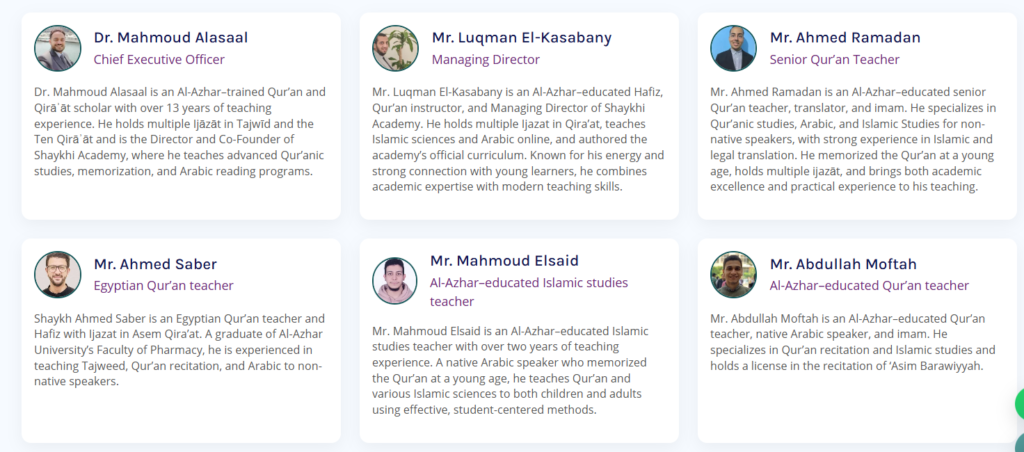
Meet our Quran teachers and find the perfect match for your trial session
8. Review and Repeat to Solidify Quran Reading Skills
New learning requires reinforcement through systematic review. Without review, previously learned material fades from memory within days.
Implement the 1-3-7 review method: Review new material after one day, again after three days, then after seven days. This spacing optimizes long-term retention.
Dedicate Time to Revision Sessions
Allocate at least 30% of your practice time to reviewing previously learned material. Don’t only focus on learning new letters or rules.
Revision prevents the frustrating experience of forgetting earlier lessons while progressing to advanced material. Strong foundations require consistent maintenance.
Gradually Increase Reading Complexity
Once comfortable with short Surahs, progress to medium-length Surahs like Surah Al-Mulk. Eventually work toward longer Surahs requiring sustained focus.
This gradual difficulty increase builds reading stamina. Jumping to complex passages too early discourages learners and reinforces bad habits.
Our Students Reviews
Start Your Quran Learning Journey Today
Join Quran Reading Academy and begin structured, step-by-step Quran reading with expert guidance.
Try your first class for freeStart Your Quran Reading Journey With The Quran Reading Academy
Learning to read Quran by yourself requires dedication, but the right guidance accelerates your progress significantly. You’ve discovered essential steps that transform beginners into confident readers.
The Quran Reading Academy offers everything you need to master Quran reading:
Certified Quran reading instructors with proven teaching expertise in Tajweed and Arabic literacy
Al-Menhaj Book: Expertly-designed Learn to Read Quran book for beginners (authored by Luqman ElKasabany, developed by teachers with 25+ years experience)
1-on-1 personalized sessions tailored to your specific level and learning pace
24/7 flexible scheduling across all time zones
Specialized courses for all ages and levels (kids, adults, beginners, sisters, new Muslims)
Comprehensive curriculum from Noorani Qaida Course to Quran Tajweed Course
Affordable monthly pricing plans
Free Trial Class (no credit card required)
Check out our top courses to help you read the Quran with confidence:
- Quran Reading Course With Tajweed
- Noorani Qaida Course
- Quran Reading Course for Beginners
- Quran Reading Classes for Adults
- Quran Reading Classes for Sisters
- Quran Reading Classes for Kids
- Quran Hifz Course
- Arabic Reading Practice Course
- Quranic Arabic Course
Book your free class today—it’s the perfect start to learning the Quran

Conclusion
Independent Quran reading becomes achievable when strong foundations lead the way. Alphabet mastery, accurate letter sounds, and Harakat awareness work together to prevent early mistakes that often block long-term fluency and confidence.
Consistent practice, structured schedules, and careful repetition transform recognition into flow. Listening to expert recitation and reviewing regularly sharpen accuracy while strengthening memory, allowing progress without burnout or discouragement.
The journey thrives on accountability and smart tools. Clear Mushafs, digital resources, measurable goals, and timely feedback ensure steady improvement, turning self-learning into a disciplined, sustainable path toward fluent and meaningful Quran reading.
Related Articles
How to read Quran




Leave a Reply