 Quran Reading manners
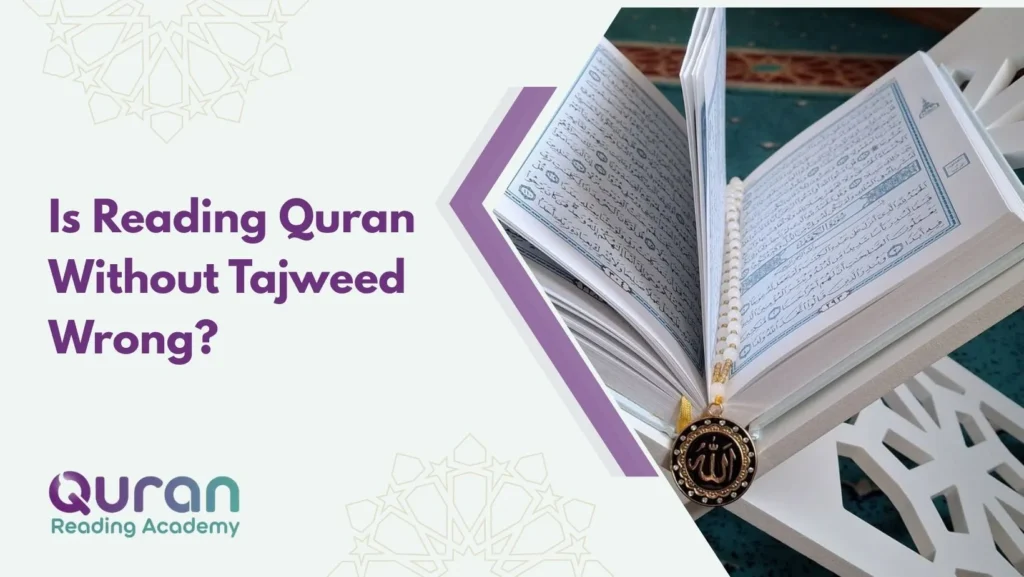
Many Muslims worry whether their Quran recitation is acceptable without proper Tajweed rules. Reading without Tajweed is not automatically sinful; the ruling hinges on the nature of mistakes.
Major errors that alter meaning are impermissible when done knowingly, while minor refinements affect beauty, not validity. Learning foundational pronunciation remains an individual obligation for every reciter.
Is Reading Quran Without Tajweed Wrong?
Reading Quran without Tajweed is not inherently sinful, but the ruling depends on the type of mistakes made. Islamic scholars distinguish between major errors that change meaning (Lahn Jali) and minor pronunciation mistakes (Lahn Khafi).
Major errors (Lahn Jali) include changing vowels, adding or removing letters, or altering words in ways that change Quranic meaning. These mistakes make recitation impermissible and potentially sinful if done knowingly.
Minor mistakes (Lahn Khafi) involve improper application of Tajweed refinements like Ghunnah duration, Qalqalah strength, or Madd elongation. These don’t invalidate recitation but reduce its perfection.
For beginners starting their reading journey, The Quran Reading Academy offers structured Quran Reading Classes for Beginners that teach proper pronunciation from the foundation, preventing major errors from forming.
Enroll in Our Quran Reading Course for Beginners with a Free Trial

Start Your Quran Learning Journey Today
Join Quran Reading Academy and begin structured, step-by-step Quran reading with expert guidance.
Try your first class for freeWhat Makes Reading Quran Without Tajweed Actually Sinful?
The sin occurs when a Muslim deliberately persists in major pronunciation errors despite having ability and opportunity to correct them. This shows negligence toward Allah’s words.
Changing a Fatha to Kasra can transform “أَنْعَمْتَ” (an’amta – You bestowed) to “إِنْعَمْتَ” (in’amta – completely different meaning). Such alterations distort Quranic message.
Allah commands in the Quran:
وَرَتِّلِ ٱلْقُرْءَانَ تَرْتِيلًا
Warattilil-Qur’aana tartila
“And recite the Quran with measured recitation.” (Al-Muzzammil 73:4)
This verse establishes the obligation of careful, proper recitation. Scholars interpret “Tartil” as reading with correct pronunciation and measured pace.
When Incorrect Quran Reading Becomes Prohibited?
If you know your pronunciation changes meanings but refuse to learn corrections, this constitutes disrespect to Allah’s revelation. Ignorance provides temporary excuse only.
The Difference Between Beginner Mistakes and Negligence
Beginners struggling with Arabic sounds are not sinful for pronunciation difficulties. Their sincere effort is rewarded. Neglecting available learning resources when capable constitutes the problematic behavior.
Shots Videos from Our Courses
Start Your Quran Learning Journey Today
Join Quran Reading Academy and begin structured, step-by-step Quran reading with expert guidance.
Try your first class for freeRead also: Quran Reading Etiquettes and Manners
Learning Basic Tajweed Rules To Avoid Major Errors is Obligatory for Muslims
Scholars agree that learning enough Tajweed to avoid major errors is Fard Ayn (individual obligation) on every Muslim who recites Quran. This includes proper letter pronunciation and basic vowel marks.
The foundational Tajweed includes knowing Arabic letter sounds (Makharij), and recognizing Harakat (vowel marks). These prevent meaning-altering mistakes.
What Scholars Say About Tajweed Obligation
Scholars classify Tajweed rules into two categories: obligatory (preventing errors) and recommended (perfecting beauty). The obligatory aspects must be learned and applied.
Minimum Tajweed Knowledge Required for Valid Recitation
You must know how to pronounce each Arabic letter correctly from its proper articulation point. Understanding Harakat and their effects on letter sounds is essential.
The difference between ح (Haa) and ه (Ha), or ص (Saad) and س (Seen) must be clear. Confusing these creates major errors.
Our Noorani Qaida Course systematically builds these foundations through structured lessons designed specifically for non-Arabic speakers. Certified instructors ensure you develop correct pronunciation from day one.
Start Reading the Quran Today with Our Noorani Qaida Course

Read also: Can I Read Quran in Shorts?
Common Mistakes When Reading Quran Without Tajweed Knowledge
Many non-Arabic speakers unknowingly make pronunciation errors that alter meanings. These mistakes stem from lack of proper instruction rather than intentional negligence.
Substituting heavy letters with light equivalents is extremely common. Reading ط (Taa) like ت (Ta) or ق (Qaaf) like ك (Kaaf) changes word meanings entirely.
Ignoring Madd rules shortens elongations that carry linguistic significance. The word “ءَامَنُوا” (aamanu – they believed) requires proper elongation to maintain its meaning.
Here are the most frequent major errors:
| Error Type | Example | Consequence |
| Wrong Harakat | أَنْعَمْتَ vs إِنْعَمْتَ | Complete meaning change |
| Letter Substitution | ط pronounced as ت | Different word created |
| Omitted Elongation | Shortening Madd | Grammatical distortion |
Vowel Mark Mistakes That Change Quranic Meanings
Confusing Fatha, Kasra, and Damma transforms verbs, changes subjects, and alters sentence structures. Reading “قَالَ” (qaala – he said) as “قِيلَ” (qeela – it was said) reverses active and passive voice.
Letter Pronunciation Errors Common Among English Speakers
English speakers struggle with emphatic Arabic letters, throat sounds, and the distinction between similar letters. The ع (Ayn) sound doesn’t exist in English.
Our Quran Tajweed Course addresses these specific challenges through expert guidance and repetitive practice under certified Qaris who understand English speaker difficulties.
Join Our Quran Tajweed Course with a Free Trial

Our Students Reviews
Start Your Quran Learning Journey Today
Join Quran Reading Academy and begin structured, step-by-step Quran reading with expert guidance.
Try your first class for freeStart Your Correct Quran Reading Journey Today
Reading Quran without proper Tajweed isn’t automatically sinful, but avoiding major errors is obligatory. Every Muslim capable of learning must pursue correct pronunciation.
The Quran Reading Academy offers comprehensive Quran reading instruction tailored for non-Arabic speakers:
- Certified Qaris with Ijazah and 9+ years teaching experience
- Flexible scheduling accommodating Western time zones
- Structured progression from basics through advanced Tajweed
- One-on-one personalized attention and correction
- Free trial class to experience our teaching methodology
Book your free trial class today and begin reciting Allah’s words with confidence and correctness. Transform your relationship with Quran through proper reading skills, Insha’Allah.
Check out our top courses to help you read the Quran with confidence:
- Quran Reading Course With Tajweed
- Noorani Qaida Course
- Quran Reading Course for Beginners
- Quran Reading Classes for Adults
- Quran Reading Classes for Sisters
- Quran Reading Classes for Kids
- Quran Hifz Course
- Arabic Reading Practice Course
- Quranic Arabic Course
Book your free class today—it’s the perfect start to learning the Quran

Conclusion
Reciting the Quran without Tajweed becomes blameworthy only when major, meaning-changing mistakes are knowingly maintained. Scholars clearly distinguish between serious errors that distort revelation and minor slips that affect refinement rather than validity.
Every Muslim who reads the Quran must learn enough Tajweed to avoid altering meanings. Correct letter articulation, vowel recognition, and basic elongation rules form the minimum required foundation for sound recitation.
Beginners striving to improve are rewarded for their effort, not punished for difficulty. What matters most is sincere commitment to learning, steady correction of mistakes, and honoring Allah’s words through careful, measured recitation.
Related Articles
Quran Reading manners





Leave a Reply