 Quran Reading manners
Every pause in the Qur’an carries weight. A single misplaced stop can shift meaning, interrupt divine eloquence, or disconnect a command from its condition. Knowing where to breathe is not merely technical—it is an act of reverence that protects the integrity of revelation.
Waqf rules guide readers through precise stopping points marked in the Mushaf, distinguishing obligatory, permissible, prohibited, tolerated, and preferable pauses. By mastering these categories and recognizing complete meaning units, reciters preserve grammatical accuracy, theological clarity, and the natural flow of Qur’anic speech.
Understanding Where to Stop While Reading Quran Begins with Waqf Marks
Stopping while reading Quran follows a system called Waqf, which literally means “pausing” or “stopping” in Arabic. The Quran contains specific symbols that guide readers on where stopping is required, permissible, or prohibited. These marks appear throughout the Mushaf to preserve intended meanings.
Learning these symbols is fundamental to proper recitation. When you stop at wrong places, you risk changing Allah’s message entirely. For example, stopping mid-sentence can disconnect a command from its condition, creating confusion.
The Quran Reading Academy’s Quran Reading Classes include comprehensive Waqf training from beginner levels. Students learn not just how to read letters, but how to respect the structural integrity of revelation.
Start Your Quran Reading Classes Today

The Purpose Behind Quranic Stopping Rules
Waqf rules serve multiple purposes in Quranic recitation. First, they preserve the grammatical coherence of Arabic sentences. Second, they maintain theological accuracy by preventing meaning distortion. Third, they allow readers natural breathing points without disrupting flow.
Consider this verse:
إِنَّمَا يَخْشَى ٱللَّهَ مِنْ عِبَادِهِ ٱلْعُلَمَـٰٓؤُا۟
Innama yakhsha Allaha min ‘ibadihi al-‘ulama’u
“Only those fear Allah, from among His servants, who have knowledge.” (Fatir 35:28)
Stopping after “Allah” changes the meaning completely, making Allah the one who fears instead of being feared. This demonstrates why stopping rules matter immensely.
Shots Videos from Our Courses
Start Your Quran Learning Journey Today
Join Quran Reading Academy and begin structured, step-by-step Quran reading with expert guidance.
Try your first class for freeRead also: Quran Reading Etiquettes and Manners
Rules of Stopping When Reading Quran Include Five Main Categories
Scholars categorized Waqf into five distinct types based on permissibility and recommendation. Each type serves specific purposes and appears with unique symbols in the Mushaf. Mastering these categories elevates your recitation quality significantly.
1. Waqf Lazim – The Obligatory Stop
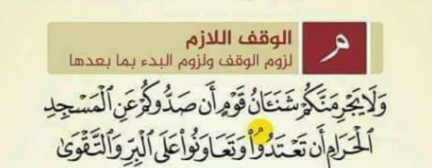
Waqf Lazim appears with the symbol م (meem) in the Mushaf. This marking indicates you must stop at this point. Continuing without pause creates grammatical errors or meaning changes that contradict Islamic teachings.
This stop appears rarely compared to other types. When you see it, always pause and take a breath before continuing. Never rush through these critical points regardless of your recitation speed.
2. Waqf Ja’iz – The Permissible Stop
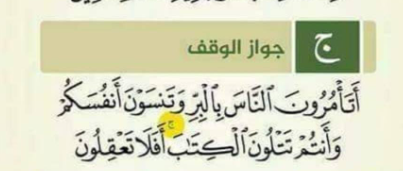
Waqf Ja’iz marked by ج (jeem) indicates equal correctness whether you stop or continue. Both options maintain proper meaning and grammar. This gives readers flexibility based on breath capacity and recitation style.
Many verses contain multiple Ja’iz points. You can choose stopping points based on your understanding emphasis or physical need for breath. Neither choice compromises the recitation’s correctness.
3. Waqf Mamnoo – The Prohibited Stop
The symbol لا (“la” meaning “no”) marks Waqf Mamnoo. Stopping here creates incomplete thoughts or grammatical errors. You must continue reading until reaching an acceptable stopping point ahead.
Beginners often struggle with this rule because they need breath but cannot stop. The solution involves practicing breath control and learning to anticipate these prohibited stops. Our Quran Tajweed Course includes breathing exercises specifically designed for long passages.
Join Our Quran Tajweed Course with a Free Trial

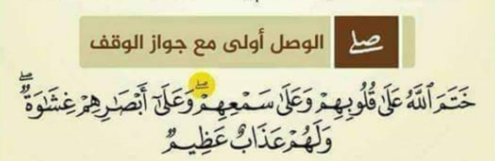
4. Wasl Awla – The Tolerated Stop
Marked by صلى (Sala), this indicates stopping is tolerated but continuing is better. You can stop if necessary, but the meaning flows more naturally without pause at this point.
Use this stop only when physically needed. With practice, your breath capacity increases, allowing you to continue through these points naturally. Building stamina comes gradually through consistent practice.
5. Waqf Aw’la – The Preferable Stop
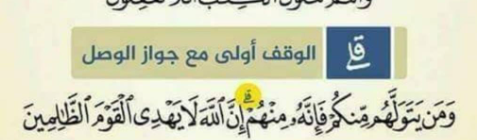
The symbol قلى (qala) marks Waqf Aw’la. Stopping here is preferred over continuing, though both remain grammatically acceptable. This guidance helps readers emphasize important concepts through strategic pausing.
Following these preferences enhances your recitation’s eloquence. While not mandatory, applying them demonstrates advanced understanding of Quranic structure and Arabic rhetoric.
Read also: Is Reading Quran Without Tajweed Wrong?
Where to Stop While Reading Quran Depends on Complete Meaning Units
Beyond symbols, understanding Arabic sentence structure guides appropriate stopping. Complete meaning units, called jumlah tammah, represent natural stopping points. These exist where thoughts conclude fully, even without explicit symbols.
Arabic sentences often extend longer than English equivalents. A single Arabic sentence might span multiple lines in the Mushaf. Stopping mid-sentence disconnects subjects from predicates or conditions from commands.
Recognizing Complete Versus Incomplete Statements
Complete statements contain both subject and predicate, forming independent thoughts. Incomplete statements lack one component, requiring continuation for comprehension. Learning to distinguish these requires Arabic grammar knowledge.
For non-Arabic speakers, relying on Waqf symbols proves most reliable initially.
The Relationship Between Punctuation and Stopping
Modern Mushafs sometimes include punctuation-like symbols familiar to Western readers. However, traditional Waqf marks remain authoritative. When differences appear, always prioritize the classical Waqf system over punctuation-style markings.
Some electronic Quran applications display simplified stopping guides. These help beginners but occasionally oversimplify complex stopping rules. Studying with qualified teachers ensures you learn authentic classical standards.
Our Students Reviews
Start Your Quran Learning Journey Today
Join Quran Reading Academy and begin structured, step-by-step Quran reading with expert guidance.
Try your first class for freeStart Your Quran Reading Journey with The Quran Reading Academy
Mastering proper stopping transforms your relationship with Quran recitation from mechanical reading to meaningful engagement with divine speech. Every pause you make correctly preserves Allah’s intended message for humanity.
The Quran Reading Academy offers comprehensive courses where Waqf rules integrate naturally with pronunciation, Tajweed, and Arabic literacy.
Our certified instructors provide personalized feedback on your stopping application, ensuring you develop correct habits from the beginning. Students progress through structured programs including the Noorani Qaida Course, Quran Tajweed Course, and Reading and Memorizing the Quran Course.
Check out our top courses to help you read the Quran with confidence:
- Quran Reading Course With Tajweed
- Noorani Qaida Course
- Quran Reading Course for Beginners
- Quran Reading Classes for Adults
- Quran Reading Classes for Sisters
- Quran Reading Classes for Kids
- Quran Hifz Course
- Arabic Reading Practice Course
- Quranic Arabic Course
Book your free class today—it’s the perfect start to learning the Quran

Conclusion
Correct stopping during Qur’an recitation safeguards meaning, grammar, and theological precision. Waqf marks serve as a structured system that prevents distortion, ensuring every verse is delivered as intended within its complete linguistic framework.
Understanding the five categories—obligatory, permissible, prohibited, tolerated, and preferable stops—elevates recitation from basic reading to disciplined, meaningful engagement. Applying these rules strengthens fluency while maintaining coherence across extended Arabic sentence structures.
Consistent practice, guided learning, and awareness of classical Waqf symbols help build confidence and accuracy. When pauses align with complete meaning units, recitation becomes clear, balanced, and faithful to the divine message preserved in the Qur’an.
Related Articles
Quran Reading manners






Leave a Reply