 Fatawa
| Key Takeaways |
| Reading Quran on water and then drinking it is a permissible Islamic practice supported by authentic hadith and scholarly consensus. |
| The Prophet ﷺ himself performed ruqyah on water for Thabit ibn Qays, establishing a direct prophetic precedent for this practice. |
| Major scholars including Ibn Baz, Ibn Uthaymeen, and Salih al-Fawzan all issued fatwas explicitly permitting Quranic ruqyah on water. |
| Imam Ahmad ibn Hanbal personally practiced reading Quran over water and encouraged his family to drink and wash with it. |
| This practice is a form of tawassul through righteous deeds — seeking Allah’s help through recitation, not a superstitious ritual. |
Many Muslims encounter this practice — a scholar or family elder recites Quran over a cup of water, which is then given to someone who is ill — and wonder: is this truly Islamic, or is it a cultural addition? The question is especially common among Western Muslims raised outside traditional learning environments.
Reading Quran on water is an established, permissible practice with roots in authentic hadith, the actions of the Companions, and the explicit rulings of major contemporary scholars.
It belongs to the broader category of ruqyah (lawful Quranic healing) and tawassul through good deeds, both of which are firmly grounded in the Sunnah.
Is Reading Quran on Water Islamically Permissible?
Yes, reading the Quran on water and then drinking it or washing with it is permissible according to the majority of Islamic scholars. It falls under the category of ruqyah shar’iyyah — lawful Quranic recitation used for healing and supplication.
Multiple authentic narrations and explicit scholarly fatwas from major authorities establish this clearly, without scholarly dispute on its fundamental permissibility.
This is not a fringe or culturally invented practice. It is supported by a prophetic narration in which the Prophet ﷺ performed ruqyah in water for Thabit ibn Qays ibn Shammas, then poured that water over him.
This hadith appears in authentic collections and was cited by Ibn Baz, Ibn Uthaymeen, Salih al-Fawzan, Sheikh Muhammad ibn Ibrahim Al al-Sheikh, and Sheikh Abd al-Aziz Al al-Sheikh — all of whom explicitly permitted this practice.
The underlying principle is clear: Allah’s words carry healing, and the Quran itself states this directly.
وَنُنَزِّلُ مِنَ الْقُرْآنِ مَا هُوَ شِفَاءٌ وَرَحْمَةٌ لِّلْمُؤْمِنِينَ
Wa nunazzilu minal-Qur’āni mā huwa shifā’un wa rahmatun lil-mu’minīn
“And We send down of the Quran that which is a healing and a mercy for the believers.” (Al-Isra 17:82)
If your goal is to strengthen your own reading so you can perform ruqyah for yourself and your family,our Online Quran Reading Course with Tajweed at The Quran Reading Academy will build the recitation confidence you need, Insha’Allah.
Start Reading the Quran with Tajweed with a FREE Trial Today

What Is the Prophetic Evidence for Reading Quran on Water?
The strongest evidence comes from a narration reported by Imran ibn Husayn, which establishes both a command and a prophetic example.
Before citing the hadith, it is important to understand the context: the Prophet ﷺ was directing Muslims to use Quranic recitation as a means of asking Allah directly, rather than making the Quran a tool to solicit from other people.
The narration from Imran ibn Husayn states that the Prophet ﷺ said:
“Recite the Quran and ask Allah by it”
— recorded by Imam Ahmad and authenticated by al-Albani in Sahih al-Jami’.
A second narration from the same companion adds important detail: the Prophet ﷺ warned that people will come who recite the Quran and then ask other people by it, rather than asking Allah.
This makes clear that asking Allah through Quranic recitation is the intended and approved model. (Reported by al-Tirmidhi, who graded it hasan, and authenticated by al-Albani in Sahih al-Targhib.)
The practical application — reciting over water — was confirmed by the scholars as a valid expression of this principle.
Sheikh Ibn Jibrin stated explicitly that it is established from the early generations (salaf) that they recited over water, oil, food, or other substances, then drank or applied them, because the words of Allah are healing in whatever form they reach the believer.
Shots Videos from Our Courses
Start Your Quran Learning Journey Today
Join Quran Reading Academy and begin structured, step-by-step Quran reading with expert guidance.
Try your first class for freeHow Did the Early Scholars Practice Reading Quran on Water?
The practice of reading Quran on water was not merely theoretical for the early scholars — they lived it. Imam Ahmad ibn Hanbal, one of the four great Imams of Islamic jurisprudence, personally used this method and encouraged it within his own household.
His son Salih reported that when he was ill, his father would take a cup of water, recite over it, and instruct him to drink from it and wash his face and hands with it. His other son Abdullah narrated that he witnessed his father reciting over water and then drinking from it and pouring some over himself.
A student, Yusuf ibn Musa, also reported that Imam Ahmad would recite and make du’a over cups of water brought to the mosque.
These accounts — preserved in classical Islamic literature — show that ruqyah on water was standard practice among the most rigorous scholars of hadith and fiqh. It was not considered innovative or suspicious. It was regarded as a natural expression of trusting in the healing power of Allah’s words.
For those wanting to read Quran with the confidence and clarity needed to benefit themselves and others, our Quran Reading Classes for Adults are designed specifically for non-Arabic speakers building this skill from the ground up.
Book your FREE trial class to start reading Quran

What Surahs or Verses Are Best for Reciting on Water?
No specific list of verses is exclusively prescribed for reciting over water — scholars generally recommend reciting whatever comes easily and sincerely. However, certain portions of the Quran are particularly well-established in the tradition of ruqyah and healing recitation.
1. Al-Fatihah Is the Foundation of All Ruqyah
Al-Fatihah holds a unique position. A famous hadith in Sahih al-Bukhari (5736) describes how a Companion recited Al-Fatihah as a ruqyah over a man who had been stung, and the man recovered.
The Prophet ﷺ, upon hearing this, confirmed its validity. Al-Fatihah is called Umm al-Kitab — the Mother of the Book — and is widely considered the most powerful surah for healing recitation.
2. The Mu’awwidhatayn for Protection
The final two surahs of the Quran — Al-Falaq and Al-Nas — are established in authentic hadith as protective recitations. They address seeking refuge from specific categories of harm, making them particularly appropriate in ruqyah contexts.
3. Ayat al-Kursi as a Comprehensive Recitation
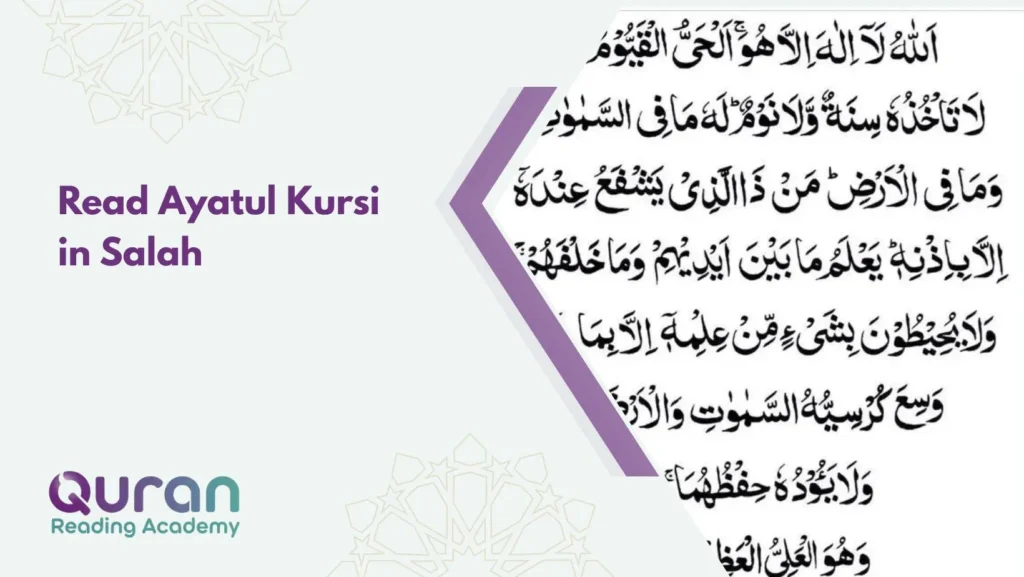
Al-Baqarah 2:255 — Ayat al-Kursi — is the greatest verse of the Quran according to authentic hadith, affirming Allah’s complete sovereignty and protection. Its inclusion in any ruqyah recitation over water is well-supported by scholarly practice.
How Should You Properly Perform Ruqyah on Water?
Performing ruqyah on water is straightforward and does not require elaborate ritual. What matters is sincerity, correct recitation, and genuine reliance on Allah — not the container, not the quantity of water, not any specific formula beyond authentic Quranic text.
1. Face Qiblah and Begin with Sincere Intention
Make a clear intention (niyyah) that you are reciting the words of Allah seeking His healing and mercy. Begin with Bismillah. Facing the qiblah is recommended but not obligatory.
2. Recite Directly Over the Water
Hold the vessel close and recite clearly into it. Scholars mention that nafth — a light breath or gentle blowing accompanied by minimal spittle — was the practice of the Prophet ﷺ when performing ruqyah. This does not mean forcefully spitting; it is a light, deliberate exhalation.
3. Make Du’a After Recitation
After reciting, supplicate to Allah specifically for healing, relief, or whatever need prompted the recitation. The hadith evidence makes clear that the Quran is the means of asking Allah — so ask, clearly and with hope.
Read Also: Why Do I Cry When I Read the Quran?
4. Drink, Apply, or Pour as Appropriate
The one seeking healing may drink the water, wash the affected area, or have it poured over the body. All three forms appear in the narrations from the Prophet ﷺ and the early scholars.
Our Students Reviews
Start Your Quran Learning Journey Today
Join Quran Reading Academy and begin structured, step-by-step Quran reading with expert guidance.
Try your first class for freeRead Also: What Happens If You Fart While Reading Quran?
Start Reading Quran with Confidence at The Quran Reading Academy
Understanding the permissibility of reading Quran on water is one thing — having the recitation quality to do it correctly is another. At The Quran Reading Academy, our certified Quran reading instructors help non-Arabic speakers develop clear, accurate, and confident Quran recitation from the ground up.
- Structured courses for beginners, adults, kids, and new Muslims
- The Al-Menhaj Book — the ideal starting point for complete beginners
- One-on-one online sessions with qualified, experienced instructors
- Free trial class — no commitment required
Book your free trial today and take the first real step toward reading the Quran with clarity and proper Tajweed, Insha’Allah.
Check out our top courses to help you read the Quran with confidence:
- Quran Reading Course With Tajweed
- Noorani Qaida Course
- Quran Reading Course for Beginners
- Quran Reading Classes for Adults
- Quran Reading Classes for Sisters
- Quran Reading Classes for Kids
- Quran Hifz Course
- Arabic Reading Practice Course
- Quranic Arabic Course
Book your free class today—it’s the perfect start to learning the Quran

Conclusion
Reading Quran on water is not a cultural superstition — it is a documented Islamic practice with prophetic roots, a scholarly consensus of permissibility, and centuries of application by the most rigorous scholars in Islamic history. The key is always correct belief: the Quran is a blessed means, and Allah alone is the One who heals.
What this practice ultimately calls every Muslim toward is the same goal: reciting the words of Allah correctly, sincerely, and frequently.
The more fluently you can read the Quran, the more naturally you can use it as a means of worship, supplication, and care for those around you. That journey begins with learning to read — one letter, one word, one verse at a time.
Start Your Quran Learning Journey Today
Join Quran Reading Academy and begin structured, step-by-step Quran reading with expert guidance.
Try your first class for freeRead Also: Can a Non-Muslim Read the Quran?
Frequently Asked Questions About Reading Quran on Water
Can anyone recite Quran on water, or must it be done by a scholar?
Any Muslim who can recite Quran correctly may perform ruqyah on water — for themselves or others. No formal scholarly credential is required. What matters is reciting authentic Quranic text with sincere belief that Allah is the Healer. Scholarly knowledge helps ensure correct recitation, which is why investing in proper Quran reading instruction matters.
Is reading Quran on water considered bidah (innovation)?
No. It is established from the Prophet ﷺ, reported by Companions, and practiced by Imam Ahmad ibn Hanbal and other major scholars of the salaf. Multiple contemporary scholars — including Ibn Baz and Ibn Uthaymeen — explicitly ruled it permissible. Bidah refers to introducing new acts of worship without basis; this practice has clear authentic basis.
Can you read Quran on zamzam water specifically?
Yes, reciting over zamzam water is permissible and considered by many scholars to carry additional blessing given zamzam’s established spiritual status in Islam. The general ruling on ruqyah over water applies fully. There is no narration specifically prohibiting or specifically prescribing zamzam for this purpose, so it remains within the general permissibility.
.
How many times should I recite a surah over the water?
There is no fixed number established in authentic sources that applies universally. Common scholarly practice mentions reciting three times or seven times in some contexts, based on general ruqyah narrations. However, no specific number is obligatory. Recite with presence of heart and sincere du’a — the number is less important than the sincerity and correctness of the recitation.






Leave a Reply