 Fatawa
| Key Takeaways |
| Reading the English translation of the meanings of the Quran is permitted outside Salah for understanding and learning purposes. |
| English translations are human efforts to convey meaning — they are not the Quran itself, which is Arabic only. |
| Salah (prayer) is invalid if performed using an English translation instead of the original Arabic text. |
| Non-Arabic speakers must learn at minimum Surah Al-Fatihah in Arabic to fulfill their obligatory prayers correctly. |
| Reading English translations alongside Arabic text accelerates understanding and deepens connection with Quranic meaning. |
Millions of Muslims around the world love the Quran deeply yet struggle to connect with it because Arabic is not their native language.
The question of whether you can read the Quran in English is one of the most common questions new Muslims and non-Arabic speaking Muslims ask — and it deserves a clear, honest answer.
Can You Read the Quran in English?
Yes — reading an English translation of the meanings of Quran outside of Salah is permissible and encouraged for non-Arabic speakers seeking to understand its meanings.
Scholars affirm that consulting a translation to learn, reflect, and comprehend the Quran’s guidance is a legitimate and valuable practice, particularly for those who have not yet mastered Arabic.
What you are reading, however, is a translation of the meanings — not the Quran itself. Every English rendering is a human interpretation, shaped by the translator’s understanding of classical Arabic.
No translation, however skilled, fully captures the precise weight, rhythm, and layered meaning of the original Arabic. This is why scholars universally describe these works as “translations of the meanings of the Quran” rather than “the Quran translated.”
For beginners starting their Quranic learning path, reading alongside an English translation is one of the most powerful tools available.
At The Quran Reading Academy, we actively encourage students to use a reliable translation as a companion resource while they simultaneously work on building their Arabic reading skills through structured courses like our Quran Reading Classes for Adults.
Book your FREE trial class to start reading Quran

Which English Translation Is Most Reliable?
Several widely respected English translations are used by Muslim communities worldwide. The Sahih International translation is commonly recommended for its accuracy and plain modern English.
For beginners, Sahih International offers the clearest balance between precision and readability without introducing interpretive bias.
Does Reading an English Quran Count Spiritually?
Reading an English translation of the Quran outside of prayer does carry spiritual and intellectual benefit — studying Allah’s guidance, reflecting on His words, and seeking to understand the Deen are all acts of worship in themselves.
However, it does not carry the same reward as reciting the Arabic Quran, which the Prophet ﷺ specifically described in terms of reward per letter.
The Prophet ﷺ said:
“Whoever reads a letter from the Book of Allah will receive a Hasanah (good deed) from it, and the Hasanah is multiplied by ten. I do not say that ‘Alif, Lam, Meem’ is a letter, rather Alif is a letter, Lam is a letter, and Meem is a letter.” (Jami’ at-Tirmidhi 2910)
This hadith specifically refers to reciting the Arabic letters of the Quran. The reward structure is built into the Arabic text itself.
Reading an English translation is beneficial and worthy — but the multiplied per-letter reward belongs to Arabic recitation. This is one of the most compelling reasons to invest in learning to read Quran in Arabic, even at a basic level.
Shots Videos from Our Courses
Start Your Quran Learning Journey Today
Join Quran Reading Academy and begin structured, step-by-step Quran reading with expert guidance.
Try your first class for freeCan You Read the Quran in English If You Don’t Know Arabic?
If you do not know Arabic at all, you can read an English translation to understand the Quran’s message.
Scholars are clear that this is not only permitted but encouraged as a starting point for non-Arabic speakers. Leaving the Quran entirely unread because you lack Arabic skills deprives you of its guidance.
That said, scholars also emphasize that every Muslim is obligated to learn the minimum Arabic necessary for Salah — primarily Surah Al-Fatihah and at least one other short Surah or verse.
This is an obligation, not optional, regardless of your native language. An English translation cannot fulfill this requirement.
At The Quran Reading Academy, we see this exact situation in nearly every intake session with new students. Adults and new Muslims come in having relied solely on English translations for years.
They understand the meanings beautifully — but they have never been taught that learning to recite Al-Fatihah correctly in Arabic is within their reach, often achievable within just a few weeks of structured study. Our Quran Reading Classes for New Muslims were built precisely for this starting point.
Start Reading Quran With a Free Trial Today
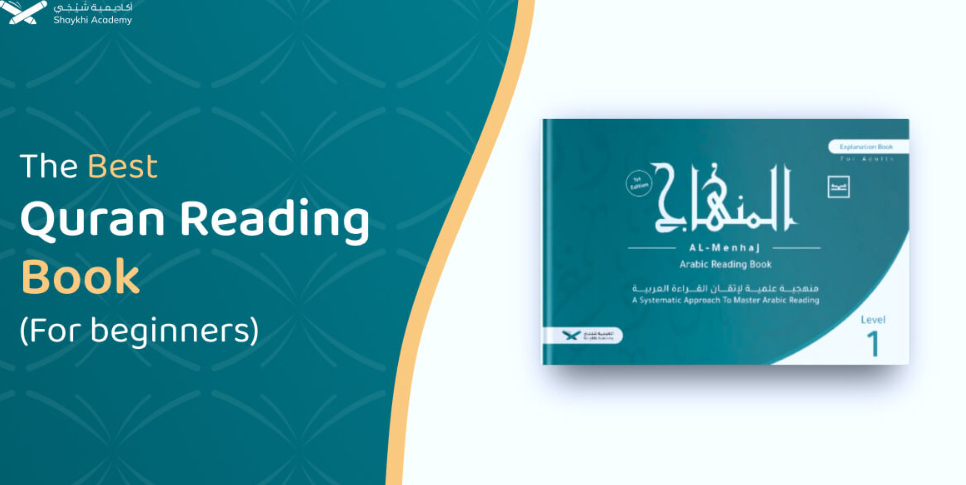
If you are starting from absolute zero, the Al-Menhaj Book — developed by our experienced instructors at The Quran Reading Academy — provides the most structured Arabic reading foundation for non-native speakers, covering the Arabic alphabet and foundational reading mechanics before you ever touch a full Quranic page. Explore it at Al-Menhaj: Learn Quran Reading Book for Beginners.
Explore The Best Quran Reading Book for FREE
Can the Quran Be Read in English During Salah?
No. This is a matter of scholarly consensus — the Salah is not valid if performed using an English translation in place of the Arabic Quran.
The minimum Arabic requirement for valid Salah is recitation of Surah Al-Fatihah, as the Prophet ﷺ established:
لَا صَلَاةَ لِمَن لَّمْ يَقْرَأْ بِفَاتِحَةِ الْكِتَابِ
Lā ṣalāta liman lam yaqra’ bifātiḥatil-kitāb
“There is no prayer for the one who does not recite the Opening of the Book.” (Sahih al-Bukhari 756)
No English substitute satisfies this condition. A Muslim who is genuinely unable to recite Al-Fatihah in Arabic is required to make sincere effort to learn it — beginning immediately — while performing what they are able to do in the meantime.
This is not a burden; Al-Fatihah is seven verses, and with proper instruction, most adults can learn it correctly within two to four weeks of daily practice.
What Should You Do If You Cannot Yet Read Arabic?
Begin learning Al-Fatihah in Arabic as your immediate priority. Work with a qualified instructor who can correct your pronunciation from the start, because mistakes in Quranic Arabic pronunciation learned incorrectly become very difficult to correct later.
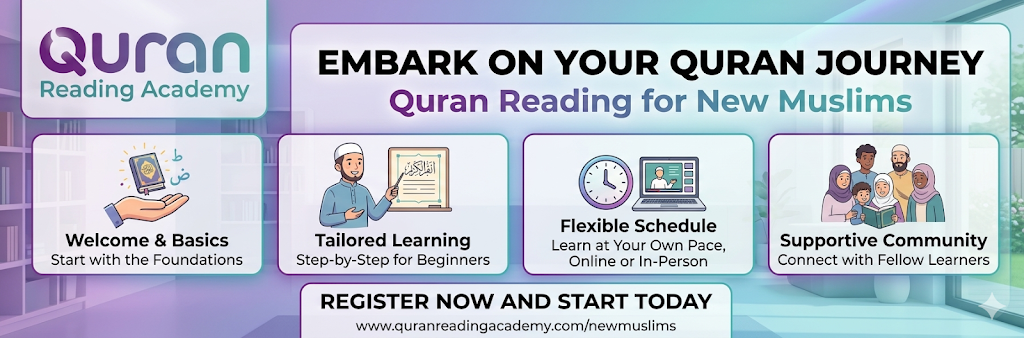
Our Quran Reading Classes for Beginners offer precisely this — a structured, patient, step-by-step approach that takes you from zero Arabic literacy to confident recitation of your essential prayers.
Enroll in Our Quran Reading Course for Beginners with a Free Trial
Common Mistakes Non-Arabic Speakers Make When Using English Translations
The most frequent problem I observe among students who have relied heavily on translations before starting Arabic instruction is a subtle one: they conflate the translator’s interpretation with the direct word of Allah.
Different translators render the same verse differently. When a student encounters two translations that seem to say different things, confusion sets in — not because the Quran is ambiguous, but because they have no Arabic reference point to ground their understanding.
A second common issue is neglecting Tajweed entirely because they assume pronunciation “doesn’t matter” as long as they’re reading in English. For students using English translations outside Salah, this has limited impact.
But once they attempt Arabic recitation — especially in Salah — years of phonetic habits built around English sounds create significant challenges.
Understanding common mistakes when reading the Quran from the start helps you avoid building bad habits that slow your progress significantly.
Read Also: Listen to the Quran Instead of Reading It
Can Adults Really Learn Quran Reading from Scratch?
Absolutely — and this is something we witness regularly. Adults often carry the assumption that Arabic reading is only for children. In reality, adult learners often progress faster because their discipline and motivation are stronger.
Our dedicated resource on whether adults can learn to read Quran addresses this in depth, but the short answer is: yes, with the right method and a qualified teacher, adult beginners make remarkable progress.
Read Also: Do You Have to Read the Quran in Arabic?
Our Students Reviews
Start Your Quran Learning Journey Today
Join Quran Reading Academy and begin structured, step-by-step Quran reading with expert guidance.
Try your first class for freeRead Also: Can You Read Ayatul Kursi in Salah?
Start Your Quran Reading Journey with The Quran Reading Academy
Reading an English translation is a meaningful start — but your goal is to read the words of Allah as He revealed them, in Arabic. The Quran Reading Academy is here to make that possible for you, wherever you are in the world.
Why students choose us:
- Certified, experienced instructors with specialization in teaching non-Arabic speakers
- Structured methodology from the Al-Menhaj Book for complete beginners
- Flexible one-on-one online classes for kids, adults, sisters, and new Muslims
- Proven progression from zero Arabic literacy to confident Quranic recitation
Book your free trial lesson today — no commitment required.
Check out our top courses to help you read the Quran with confidence:
- Quran Reading Course With Tajweed
- Noorani Qaida Course
- Quran Reading Course for Beginners
- Quran Reading Classes for Adults
- Quran Reading Classes for Sisters
- Quran Reading Classes for Kids
- Quran Hifz Course
- Arabic Reading Practice Course
- Quranic Arabic Course
Book your free class today—it’s the perfect start to learning the Quran
Conclusion
The Quran in English is a window into meaning — and it is a window worth opening, especially as you begin your path. But the Arabic text is the Quran itself: the living, breathing words of Allah that carry their own weight, rhythm, and reward that no translation can fully carry.
Reading an English translation outside of Salah is permitted and beneficial. Inside Salah, Arabic is obligatory, and learning it is within every Muslim’s reach with the right guidance. Use English translations to understand and love the Quran — then invest in learning to read it in the language it was revealed.
The goal is not to choose one or the other. The goal is both.
Start Your Quran Learning Journey Today
Join Quran Reading Academy and begin structured, step-by-step Quran reading with expert guidance.
Try your first class for freeRead Also: What is the Punishment of Not Reading Quran?
Frequently Asked Questions About Reading the Quran in English
Does Reading an English Quran Count as Reading Quran?
Reading an English translation counts as studying the meanings of the Quran and carries genuine spiritual benefit. However, it is not considered equivalent to reciting the Arabic Quran. The per-letter reward described in hadith applies specifically to Arabic recitation. English translation reading is encouraged for understanding but does not replace Arabic recitation.
Can I Read the Quran in English If I Don’t Know Arabic?
Yes — reading an English translation outside of Salah is permissible for those who do not know Arabic. It is an important tool for understanding. However, you are simultaneously obligated to begin learning the minimum Arabic required for valid Salah, particularly Surah Al-Fatihah. Translation and Arabic learning should proceed together, not as alternatives.
Is It Haram to Read the Quran Only in English?
Reading an English translation outside of Salah is not haram. However, permanently relying only on English without working toward learning the obligatory Arabic for Salah would be neglecting a religious duty. Scholars encourage non-Arabic speakers to use translations actively while progressively learning the Arabic required for worship and deeper Quranic engagement.
Can a New Muslim Read Quran in English While Learning Arabic?
Yes — new Muslims are encouraged to read English translations to understand the Quran’s guidance from day one. Simultaneously, working with a qualified instructor to learn Surah Al-Fatihah and basic Salah recitation in Arabic is obligatory and should begin as early as possible. Both tracks can and should run in parallel during the early learning period.

Leave a Reply