 benefits of reading quran

| Key Takeaways |
| Reading the Quran at Fajr prayer is specifically witnessed by angels, as confirmed in Surah Al-Isra (17:78). |
| The pre-dawn mind is scientifically less distracted, making Fajr the most effective time for Quran memorization and retention. |
| Consistent Fajr Quran reading builds a structured daily habit that strengthens recitation quality over weeks. |
| Allah’s special blessings (barakah) are concentrated in the early morning hours, amplifying the reward of every recited letter. |
| Students who read Quran after Fajr prayer for 15 minutes daily show faster Tajweed progress than those who read at other times. |
There is something unmistakable about the stillness before sunrise. The world has not yet begun its noise, and in that silence, the words of Allah land differently — deeper, clearer, and with a weight that afternoon recitation rarely matches.
For Muslims seeking to strengthen their connection with the Quran, Fajr is not simply an early prayer; it is the single most powerful window of the day.
The benefits of reading Quran at Fajr span the spiritual, the cognitive, and the physical. From the direct Quranic testimony that Fajr recitation is witnessed by Allah’s angels, to the neurological reality of how a rested pre-dawn mind absorbs and retains Arabic text, every dimension of this practice points to one conclusion: if you read Quran at any one time of day, make it Fajr.
1. Fajr Quran Recitation Is Witnessed by the Angels of Allah
Reading the Quran in Fajr prayer specifically and at Fajr generally carries a distinction no other time of day holds: it is directly witnessed by the angels of the night and the angels of the day simultaneously. This is not a scholarly opinion — it is a Quranic declaration.
وَقُرْءَانَ ٱلْفَجْرِ ۖ إِنَّ قُرْءَانَ ٱلْفَجْرِ كَانَ مَشْهُودًا
Wa qur’ānal-fajr, inna qur’ānal-fajri kāna mashhūdā
“And [recite] the Qur’an of dawn. Indeed, the recitation of dawn is ever witnessed.” (Al-Isra 17:78)
The classical scholars of Tafsir, including Ibn Kathir, understood “witnessed” (مَشْهُودًا) to refer to the angels of the night shift and the angels of the day shift both being present during Fajr time, making it unique among the five prayer times.
When you open the Quran after Fajr prayer, you are not reciting in solitude. This awareness — that your recitation is being witnessed at this specific hour — transforms the act from routine to sacred testimony.
For students at The Quran Reading Academy, this verse is one of the first we share with adult beginners who ask why the timing of their practice matters. The answer is embedded in the Quran itself.
2. Your Mind at Fajr Is Biologically Optimized for Quran Learning
Reading Quran at Fajr works with your brain’s natural state, not against it. After a full night of sleep, the prefrontal cortex — the region governing focus, language processing, and memory consolidation — operates at its highest daily capacity before cognitive fatigue begins accumulating.
This has direct, practical implications for anyone working on Quran reading or memorization. T
he Arabic language demands precision: distinguishing ح from ه, tracking Harakat (short vowel markings), and applying Tajweed rules simultaneously. These are not passive tasks. They require the kind of sharp, undivided attention that only exists in the pre-dawn hours before the day’s demands arrive.
In our experience at The Quran Reading Academy, students who commit to reading Quran for 15–20 minutes after Fajr prayer — rather than during evening sessions — report noticeably faster progress with letter recognition and rule application within their first month.
The brain at Fajr is not the same brain that reads Quran at 10 PM. If you are learning to read the Quran from the beginning, establishing a Fajr reading habit from day one is among the most effective structural decisions you can make.
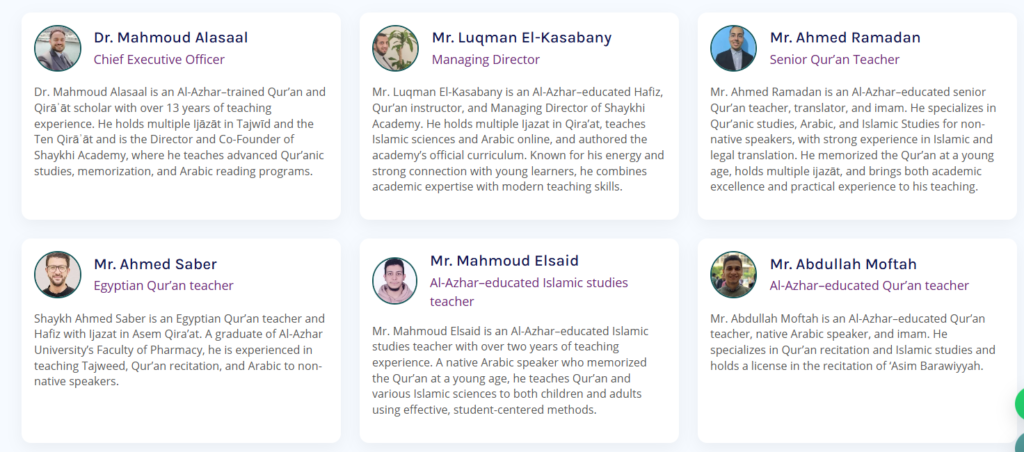
Meet our Quran teachers and find the perfect match for your trial session
3. The Barakah of the Early Morning Hours Multiplies Every Letter’s Reward
The early morning hours carry a specific, narrated blessing that extends to every righteous act performed within them — including Quran recitation. The Prophet ﷺ made this explicit in a well-known supplication for his Ummah.
The Prophet ﷺ said: “O Allah, bless my nation in their early mornings.” (Sunan Ibn Majah 2236)
This barakah is not metaphorical. It is a real, active divine blessing placed into the early hours of the day — and Fajr falls directly within this window. Every letter recited from the Quran already carries a promised reward of ten good deeds, as established in hadith.
Reading within the barakah hours of early morning is understood by scholars to mean that the spiritual weight and benefit of those deeds is amplified beyond their base value.
For a non-Arabic speaker working through even a single page of Quran after Fajr — slowly, carefully, with proper Tajweed — the accumulation of reward during these blessed hours is immense. This is not an incentive to rush. It is an incentive to be present and deliberate in a time set apart by Allah Himself.
Read also: Benefits of Reading Quran
4. Reading Quran at Fajr Builds the Most Durable Daily Habit
Consistency is the foundation of Quran reading progress, and Fajr creates the most reliable daily anchor point for consistent practice. You are already awake. You have already performed wudu. You have just prayed. The transition from Fajr salah directly into Quran recitation requires no additional decision — and that matters enormously.
Habit researchers describe this as “habit stacking” — attaching a new behavior directly to an existing, established routine.
Fajr prayer is one of the most deeply ingrained daily anchors in a Muslim’s life. Stacking Quran reading onto it means your recitation practice becomes automatic rather than aspirational.
Students who struggle with consistency in our daily Quran reading plan almost always share the same pattern: they intend to read “sometime during the day,” and that intention dissolves under the weight of work, family, and fatigue.
Fajr removes that variable entirely. It is the one hour that belongs to you before the world claims the rest.
Start Your Quran Learning Journey Today
Join Quran Reading Academy and begin structured, step-by-step Quran reading with expert guidance.
Try your first class for free5. The Silence of Fajr Sharpens Tajweed Application and Pronunciation
Tajweed is not merely theoretical knowledge — it is a physical, auditory practice that requires you to hear yourself. At Fajr, the conditions for self-monitoring your recitation are at their best: the household is quiet, external noise is minimal, and your own voice is the loudest thing in the room.
This matters more than most beginners realize. Applying rules like Ghunnah (nasalization through the nasal passage), Tafkhim (heavy emphasis in letters like ص, ض, ط, ظ, غ, خ), and Tarqiq (light, thin pronunciation of letters like ر in certain contexts) requires you to actively listen to your own output. If you are reciting against a background of television noise, household conversations, or street traffic, your self-correction loop breaks down.
At Fajr, there is nothing competing with your voice. This makes it the optimal time to work through the kind of careful, letter-by-letter recitation that actually builds correct pronunciation habits.
For students enrolled in our Quran Reading Classes with Tajweed, we consistently advise using the quiet Fajr window for independent practice between sessions — it is where the instructor’s corrections become internalized.
Start Reading the Quran With Tajweed Today

6. Fajr Quran Reading Protects and Purifies the Heart for the Entire Day
The spiritual benefit of beginning the day with Quran recitation extends well beyond the recitation itself. Scholars of Islamic spirituality have long observed that how a Muslim begins the morning shapes the quality of their entire day — their patience, their character in dealings with others, and their consciousness of Allah throughout the hours that follow.
The Quran itself describes its effect on the heart:
يَـٰٓأَيُّهَا ٱلنَّاسُ قَدْ جَآءَتْكُم مَّوْعِظَةٌ مِّن رَّبِّكُمْ وَشِفَآءٌ لِّمَا فِى ٱلصُّدُورِ
Yā ayyuhan-nāsu qad jā’atkum maw’izatun min rabbikum wa shifā’un limā fis-sudūr
“O mankind, there has come to you instruction from your Lord and healing for what is in the breasts.” (Yunus 10:57)
Beginning the day by absorbing this “healing” means entering the world in a state of spiritual clarity rather than spiritual emptiness. For parents, professionals, and anyone who carries significant daily stress, the Fajr Quran reading becomes more than worship — it becomes the emotional and spiritual reset that makes the rest of the day navigable.
Read also: Benefits of Reading Quran in the Morning
7. Fajr Recitation Strengthens Quran Memorization More Than Any Other Time
For anyone working toward memorization — whether of individual surahs or larger portions — Fajr is the single most effective time to review and consolidate.
Memory consolidation occurs during sleep: the brain processes and files information from the previous day. Immediately after waking, that freshly consolidated material is most accessible.
Reviewing memorized portions right after Fajr prayer takes advantage of this neurological window.
New memorization done at Fajr similarly benefits from the absence of “retroactive interference” — the cognitive phenomenon where new information learned after memorization disrupts recall. At Fajr, there is nothing learned after your recitation session to disrupt it.
| Time of Day | Memory State | Distraction Level | Recitation Benefit |
| After Fajr | Peak consolidation | Very low | Highest |
| Mid-morning | Declining | Moderate | Moderate |
| Afternoon | Fatigued | High | Low |
| After Isha | Tired | Low | Moderate |
Students working through our Quran reading plan for beginners who anchor their memorization review to Fajr consistently outperform those using the same plan at other times. The plan is the same — the timing changes the outcome.
Join Our Quran Hifz Course with a Free Trial

8. Spiritual Discipline That Carries Into All Worship
Waking for Fajr and then choosing to extend that time in recitation builds a quality that cannot be taught in a classroom: spiritual discipline. It is one thing to read Quran when convenient. It is something entirely different to be awake at dawn, having chosen it, and opening the Quran before the demands of the day begin.
This discipline compounds. Students who establish a consistent Fajr reading habit rarely let their overall Quran practice collapse. The commitment required to be present at that hour creates a psychological investment in the practice that protects it from the inconsistency that plagues evening reading schedules.
For beginners who feel discouraged by slow progress, we always ask one question first: at what time are you reading? If the answer is “whenever I find time,” the solution is almost always to move the practice to Fajr — not to change the material, the method, or the pace.
If you are wondering how long it takes to read the Quran consistently, the honest answer is: much less time than you think, if you protect the Fajr window.
Start Your Quran Learning Journey Today
Join Quran Reading Academy and begin structured, step-by-step Quran reading with expert guidance.
Try your first class for freeBegin Your Fajr Quran Practice with The Quran Reading Academy
The benefits described in this article are not theoretical aspirations. They are the daily reality of students who have structured their practice around Fajr — and the transformation in their recitation quality, their consistency, and their connection to the Quran is measurable.
The Quran Reading Academy offers structured, live online Quran reading instruction designed for non-Arabic speakers at every level:
- Expert certified tutors with up to 25 years of teaching experience
- Flexible scheduling built around your Fajr and morning availability
- Structured progression through our Al-Menhaj Book for complete beginners
- Dedicated courses for adults, kids, and new Muslims
- Quran Reading Classes with Tajweed for those ready to refine their recitation
Book your free trial class today and start your Fajr Quran reading practice with proper, expert guidance — Insha’Allah.
Check out our top courses to help you read the Quran with confidence:
- Quran Reading Course With Tajweed
- Noorani Qaida Course
- Quran Reading Course for Beginners
- Quran Reading Classes for Adults
- Quran Reading Classes for Sisters
- Quran Reading Classes for Kids
- Quran Hifz Course
- Arabic Reading Practice Course
- Quranic Arabic Course
Book your free class today—it’s the perfect start to learning the Quran

Frequently Asked Questions About the Benefits of Reading Quran at Fajr
How Long Should I Read Quran After Fajr to See Real Benefits?
Even 10–15 minutes of focused, consistent Quran reading after Fajr prayer produces measurable benefits over weeks. Quality of attention matters more than duration. A short, deliberate session with proper pronunciation will build stronger recitation habits than a longer, distracted one at any other time of day.
Can Beginners Who Cannot Read Arabic Fluently Still Benefit From Fajr Recitation?
Absolutely. The reward for a struggling reader is explicitly greater, not lesser. The Prophet ﷺ stated that the one who recites with difficulty receives a double reward. Beginners should use the Fajr session to practice slowly and carefully — working through the foundational steps of Quran reading for beginners with full attention, not speed.
Does Listening to Quran at Fajr Carry the Same Benefits as Reading It?
Listening to Quran is virtuous and carries its own reward. However, reading Quran yourself — engaging the eyes, the tongue, and the mind simultaneously — involves a distinct act of worship with its own documented reward structure. For those learning to read, active recitation practice at Fajr produces far greater skill development than passive listening.
What If I Fall Asleep After Fajr Prayer Before I Can Read Quran?
This is one of the most common challenges our students report — particularly in winter when Fajr falls very early. The practical solution is to read Quran immediately after the prayer, before sitting down or lying back. Even two or three minutes of immediate recitation right after salah, before the drowsiness returns, builds the habit. Over time, the practice itself becomes what keeps you alert. You can also explore how to read the Quran faster to make the most of shorter windows.
Related Articles
benefits of reading quran


Leave a Reply