 benefits of reading quran
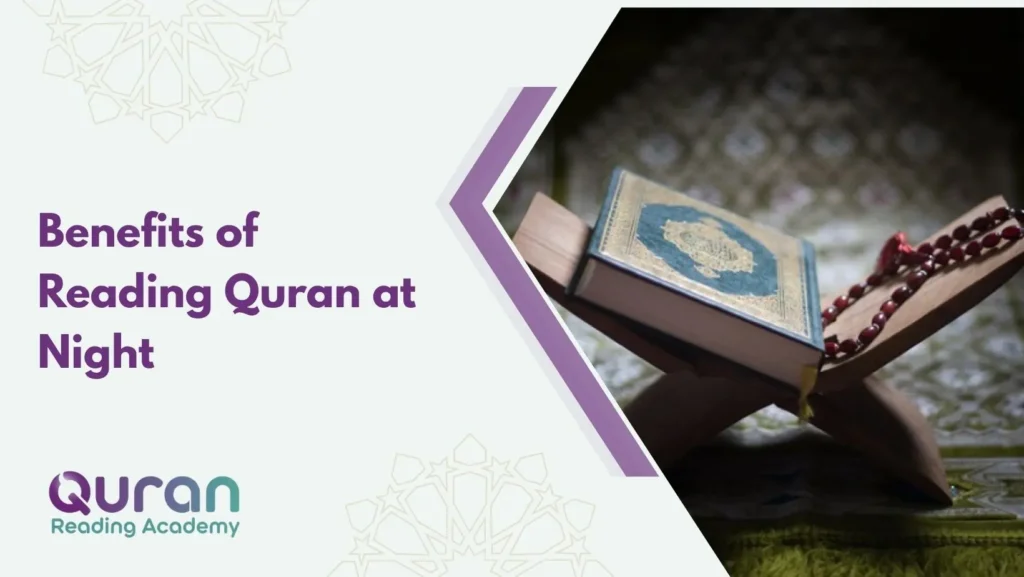
The night holds a stillness that daytime rarely offers. When the house quiets and distractions fall away, something extraordinary becomes possible — a connection with the Quran that reaches deeper than any rushed recitation between errands or appointments ever could.
The benefits of reading Quran at night reach spiritual, cognitive, and physical aspects that scholars and neuroscientists alike have documented. From the heightened receptivity of the mind during late hours to the profound peace that follows consistent night recitation, this practice transforms not just your reading quality but your entire relationship with Allah’s words.
1- Night Recitation Holds a Distinguished Status in the Quran and Sunnah
The Quran doesn’t simply encourage night worship, it singles it out with remarkable specificity. Allah (SWT) describes night recitation as uniquely powerful for the heart and tongue in ways that daytime reading simply cannot replicate.
In Surah Al-Muzzammil, Allah addresses the Prophet ﷺ directly:
**إِنَّ نَاشِئَةَ ٱلَّيْلِ هِىَ أَشَدُّ وَطْـًٔا وَأَقْوَمُ قِيلًا**
*Inna nāshi’ata al-layli hiya ashaddu wat’an wa-aqwamu qīlā*
**”Indeed, the hours of the night are more effective for concurrence [of heart and tongue] and more suitable for words.”** [Al-Muzzammil 73:6]
This verse uses two precise terms: *ashaddu wat’an* (stronger impression on the heart) and *aqwamu qīlā* (more upright in speech). These aren’t general encouragements — they’re a direct, divine confirmation that night reading produces superior results in both comprehension and pronunciation.
The Prophet ﷺ reinforced this in practice. According to a narration in [Sahih Al-Bukhari], he would pray and recite for such extended periods at night that his feet would swell — yet he never abandoned this practice as it represents being a thankful servant.
2- The Night Reduces Cognitive Interference for Deeper Quran Absorption
One of the most practical benefits of reading Quran at night is the dramatic reduction in mental noise. During the day, the working memory is loaded — tasks, conversations, notifications, and obligations compete for cognitive bandwidth.
At night, especially after Isha prayer, the prefrontal cortex shifts from active problem-solving mode into a more receptive, consolidating state. This is not spiritual theory — it’s how human memory consolidation actually works.
3- Night Reading Strengthens Long-Term Retention of Quranic Verses
When you read the Quran in the hours before sleep, the brain processes and consolidates that material during the early sleep cycles. This is why students of Quran memorization, particularly those enrolled in a Quran Hifz Course have long been advised by classical scholars to review new memorization before sleeping.
The material reviewed at night gets preferential treatment during memory consolidation. What you read at Fajr competes with an entire day’s worth of new information. What you read before sleeping enters consolidation with far less competition.
4- Pronunciation Errors Are More Noticeable in Night Silence
For those working on their recitation quality, the silence of night is a diagnostic gift. Background noise during daytime reading often masks subtle pronunciation errors — a slightly heavy letter that should be light, a Ghunnah that’s too short, a Madd that runs long.
In the quiet of night, your own voice becomes your most honest teacher.
Practitioners who combine nighttime reading with structured study through an Online Quran Reading Course with Tajweed report faster error correction simply because they hear themselves more clearly.
Start Reading the Quran With Tajweed Today

5- Consistent Night Recitation Develops Stronger Tajweed Application
Tajweed rules are not memorized through repetition alone — they’re internalized through mindful repetition. And mindfulness requires mental availability that the day rarely provides.
When you sit with the Quran at night with no urgency to finish, you naturally slow your pace. That slower pace is exactly what the Tajweed application demands. Rules like Ikhfa, Idgham, and Iqlab cannot be applied correctly at a rushed tempo.
6- Night Reading Enhances Fluency Development
Fluency in Quran reading is built through what linguists call deliberate practice — focused, self-monitored repetition where errors are noticed and corrected in real time. Night reading creates the conditions for this.
The following table shows how night reading supports key Tajweed rule development compared to rushed daytime reading:
| Tajweed Rule | Daytime (Rushed) Risk | Night Reading Advantage |
| Ghunnah (nasalization) | Often shortened under time pressure | Natural slowness allows full 2-beat duration |
| Madd (prolongation) | Inconsistent length | Silence helps the reader self-monitor length |
| Qalqalah (echo sound) | Weak or absent echo | Quiet environment amplifies the echo for self-correction |
| Makharij (articulation) | Blurred under speed | Deliberate pace allows correct tongue/lip placement |
For beginners building these skills from the foundation, The Quran Reading Academy’s Noorani Qaida Course pairs excellently with a night reading routine — because the structured lessons learned during class get reinforced naturally during quiet evening review.
Start Your Quran Learning Journey Today
Join Quran Reading Academy and begin structured, step-by-step Quran reading with expert guidance.
Try your first class for free7- Reading Quran at Night Produces a Measurable Calming Effect on the Mind
Multiple peer-reviewed studies on recitation and meditative vocalization have documented reductions in cortisol and heart rate during sustained, rhythmic reading. Quran recitation, with its structured breath patterns governed by Waqf (stopping) rules, produces precisely this effect.
The elongated Madd letters require controlled exhalation. The pausing at Waqf points creates natural breathing breaks. Together, these Tajweed-governed patterns produce a physiological response that resembles the calming effect of controlled breathing exercises.
At night, when the nervous system is already transitioning toward rest, this effect is amplified significantly. Readers who make night recitation a habit consistently report improved sleep quality — not as a spiritual claim, but as a practical, lived experience.
Start Your Quran Reading Classes Today

8- Nightly Quran Reading Regulates Emotional Well-being
Nightly Quran reading is a powerful practice for emotional regulation, offering a moment of stillness and reflection in the quiet hours of the evening. Allah Almighty identifies this connection explicitly in Surah Ar-Ra’d:
أَلَا بِذِكْرِ ٱللَّهِ تَطْمَئِنُّ ٱلْقُلُوبُ
Alā bidhikri Allāhi taṭma’innu al-qulūb
“Verily, in the remembrance of Allah do hearts find rest.” [Ar-Ra’d 13:28]
Thus, regular night recitation builds emotional resilience over time. The habit creates a nightly “reset” — a dedicated moment of turning away from the world’s pressures and returning to something stable and profound.
Enroll in Our Quran Reading Course for Beginners with a Free Trial

9- Increasing the Spiritual Weight and Reward of Your Reading
In Islamic scholarship, acts performed during the night — particularly the last third of the night — carry elevated spiritual weight. The Prophet ﷺ described Allah’s descent to the lowest heaven during the final third of every night, when supplications and worship are most directly received.
Reciting Quran within this time frame is therefore not just spiritually beneficial — it aligns the act of reading with the most receptive spiritual environment possible.
A narration recorded in [Sunan Abi Dawud] states that the Prophet ﷺ said:
“Whoever recites ten verses in a night, he will not be recorded among the heedless.”
This single hadith reframes what “night reading” even requires — it isn’t a lengthy recitation session. Ten verses, read with presence and sincerity, carries profound standing.
Read also: Benefits of Reading Quran
10- Building the Habit of Making the Quran a Daily Companion
There is a practical psychology to habit formation that strongly favors night reading. Habit science identifies three components in every lasting habit: cue, routine, and reward. Night reading has all three built in.
The cue is natural — the completion of Isha prayer. The routine is the reading itself. The reward is the calm, the peace, and the spiritual satisfaction that follows. This loop, repeated nightly, makes Quran reading one of the most naturally sustainable habits a Muslim can build.
Families who build this into a shared evening routine — even for children — create a home environment where the Quran is not an obligation to fulfill but a presence to return to. Quran Reading Classes for Kids at The Quran Reading Academy can be seamlessly timed to support this evening routine, giving children structured learning that their nightly family reading reinforces.
Read also: Benefits of Reading Quran with Tajweed
11- Night Recitation in Qiyam al-Layl Boosts Spiritual Connection and maximizes the Rewards
Qiyam al-Layl (night prayer) is structurally inseparable from Quran recitation. The prayer requires recitation. The recitation, within Salah, carries a different spiritual weight than reading outside of it.
Combining both — night prayer that includes long, deliberate recitation of Quranic passages — maximizes the spiritual benefits of reading Quran at night. Many certified instructors at The Quran Reading Academy guide students specifically on how to select and practice verses suitable for Qiyam, so night prayer becomes a powerful practice rather than a repetitive routine.
Meet our Quran teachers and find the perfect match for your trial session

12- A Structured Night Reading Routine Accelerates Overall Quran Learning Progress
One of the most overlooked benefits of reading Quran at night is the compounding effect on overall learning speed. Students who read for even 15-20 minutes each night — consistently — outpace those who read for an hour sporadically during the day.
The reason is consolidation and consistency working together. Each night session reinforces the previous one. The brain builds stronger neural pathways for Arabic letter recognition, Tajweed pattern application, and reading fluency when the reinforcement comes regularly at the same time.
A Practical Night Reading Schedule for Different Learning Levels
Wherever you are in your Quran reading progress, this schedule gives you a clear, realistic starting point for building a consistent night reading habit adapted to different stages of Quran reading development:
| Learning Level | Recommended Time | Focus Activity | Duration |
| Complete Beginner | After Isha | Arabic letter and vowel review (Al-Menhaj Book) | 15 min |
| Early Reader | After Isha | Slow recitation with Tajweed self-check | 20 min |
| Intermediate | Last third of night | Fluency practice + verse memorization | 25–30 min |
| Advanced/Hifz Student | Last third of night | New memorization + revision of previous lesson | 30–45 min |
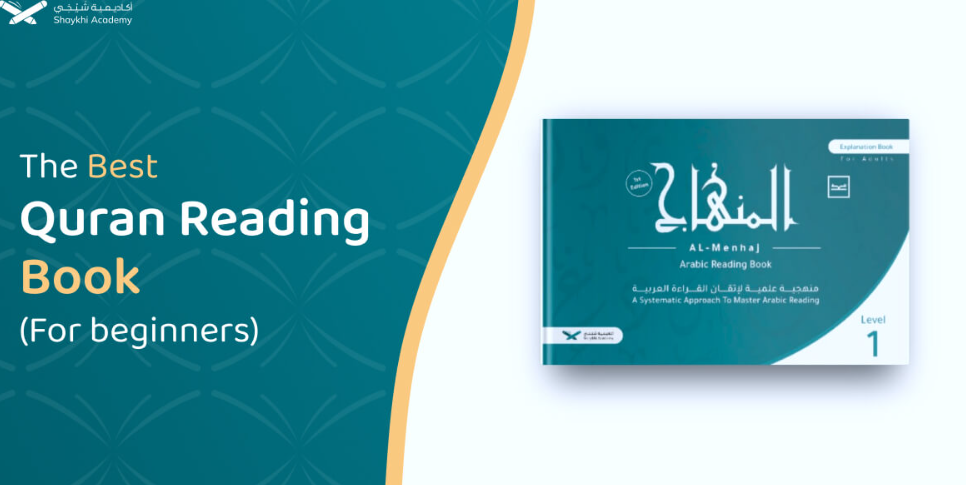
For complete beginners unsure how to even begin this routine, the “Al-Menhaj Book” — developed by The Quran Reading Academy’s team of highly qualified instructors with up to 25 years of experience — provides a clear, lesson-by-lesson progression that makes structured night review immediately practical.
Explore The Best Quran Reading Book
Start Your Nightly Quran Practice with The Quran Reading Academy
The night gives you something rare — undivided time with the words of Allah. Whether you’re building from scratch or refining years of reading, structured guidance makes every night session count.
The Quran Reading Academy offers:
- Certified Quran instructors specializing in non-Arabic speaker instruction.
- Flexible scheduling including evening and night time slots.
- Beginner-friendly courses including the Al-Menhaj Book and Noorani Qaida Course.
- Quran Reading Classes for kids, adults, sisters, and new Muslims.
- Online Quran Reading Course with Tajweed for all levels.
Check out our top courses to help you read the Quran with confidence:
- Quran Reading Course With Tajweed
- Noorani Qaida Course
- Quran Reading Course for Beginners
- Quran Reading Classes for Adults
- Quran Reading Classes for Sisters
- Quran Reading Classes for Kids
- Quran Hifz Course
- Arabic Reading Practice Course
- Quranic Arabic Course
Book your free class today—it’s the perfect start to learning the Quran
Conclusion
Reading Quran at night is not simply a devotional preference — it is a practice with Quranic authority, prophetic precedent, and measurable cognitive and spiritual advantages that daytime reading genuinely cannot replicate.
The night’s silence sharpens both your pronunciation awareness and your retention of new material. Combined with consistent Tajweed application, night reading accelerates fluency development in ways that rushed daytime sessions rarely achieve.
Every Muslim, regardless of their current reading level, has the capacity to build this habit — starting with as few as ten verses each night. That small, sincere commitment, made regularly, builds a relationship with the Quran that deepens for a lifetime, Alhamdulillah.
Related Articles
benefits of reading quran


Leave a Reply