 Quran Reading manners
Small details in acts of worship often raise big questions, especially when daily practice meets sincere caution. Direction, posture, and etiquette can quietly shape how Muslims approach the Quran, turning simple moments of recitation into spaces of reflection—or unnecessary doubt.
Islamic scholarship clearly distinguishes between Quran recitation inside prayer and outside it. Facing the Qiblah is encouraged as a sign of reverence, yet remains non-obligatory beyond Salah. This distinction preserves both respect for the Quran and ease in everyday reading circumstances.
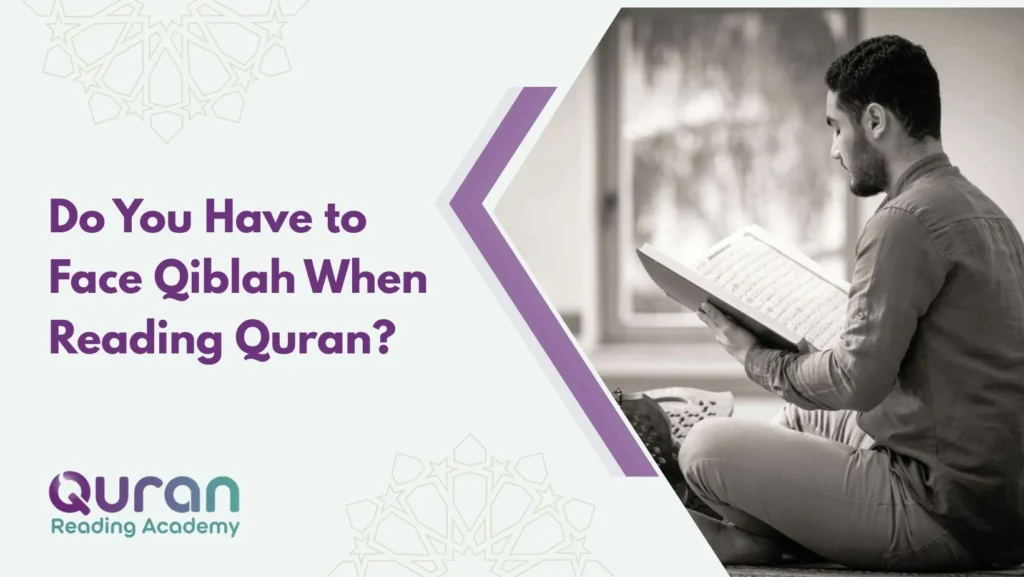
Do You Have to Face Qiblah When Reading Quran?
No, facing the Qiblah is not obligatory when reading the Quran. Islamic scholars agree that while facing the Qiblah is recommended for respect and reverence, it is not a mandatory requirement for Quran recitation outside of prayer.
This ruling is based on authentic Islamic sources. The Prophet Muhammad (peace be upon him) and his companions recited the Quran in various positions and directions without strict adherence to facing the Qiblah.
The flexibility in direction allows Muslims to read the Quran comfortably at home, during travel, while lying down due to illness, or in any situation where facing the Qiblah may be difficult.
The Quran Reading Academy’s Quran Reading Classes teach students proper recitation etiquette alongside Tajweed rules. Our certified instructors guide learners through both the technical and spiritual aspects of Quranic recitation.
Start Reading the Quran With Tajweed Today

Read also: Quran Reading Etiquettes and Manners
What Islamic Scholars Say About Facing Qiblah When Reading Quran?
The four major schools of Islamic jurisprudence agree that facing the Qiblah during Quran recitation is mustahabb (recommended) but not wajib (obligatory).
Sheikh Ibn Baz clarified that for Quran recitation outside prayer, Muslims may face any direction while maintaining respect and proper sitting posture.
When Facing Qiblah Becomes Necessary During Quran Reading?
Facing the Qiblah becomes obligatory only during formal prayer (Salah) when reciting Al-Fatihah and other Quranic verses. This is the single exception where direction is mandatory.
During voluntary night prayers (Qiyam al-Layl), facing the Qiblah follows the same ruling as obligatory prayers. The direction requirement is tied to the prayer format itself, not the Quran recitation.
For Quran memorization sessions, Tajweed practice, or studying Tafsir, students can sit comfortably in any direction that aids concentration.
Start Your Quran Learning Journey Today
Join Quran Reading Academy and begin structured, step-by-step Quran reading with expert guidance.
Try your first class for freeRead also: How to Make Sujood When Reading Quran?
The Difference Between Reading Quran in Prayer and Outside Prayer
The Quran recitation during Salah is fundamentally different from casual reading outside prayer. In Salah, facing the Qiblah, standing position, and specific recitation order are integral pillars that cannot be omitted.
Outside prayer, Muslims enjoy flexibility. You can recite while sitting, lying down, walking, or traveling. This flexibility demonstrates Allah’s mercy and the practicality of Islamic law.
The Prophet (peace be upon him) would recite Quran while resting on Aisha’s lap (may Allah be pleased with her). This authentic hadith from Sahih Bukhari confirms the permissibility of flexible positions.
Start Your Quran Learning Journey Today
Join Quran Reading Academy and begin structured, step-by-step Quran reading with expert guidance.
Try your first class for freeStart Your Quran Reading Journey with The Quran Reading Academy
Understanding the ruling about facing Qiblah removes unnecessary worry and allows comfortable Quran recitation. Focus on what matters most: proper pronunciation, understanding, and consistent practice.
The Quran Reading Academy offers comprehensive programs for all levels:
- Certified Qaris and Qariahs with international Ijazah
- One-on-one personalized lessons tailored to your pace
- Al-Menhaj Book curriculum for structured beginners’ learning
- Flexible scheduling accommodating Western time zones
- Arabic Reading Practice Course for non-Arabic speakers
Our Quran Course for Beginners has helped thousands achieve confident recitation. Whether you’re starting with Arabic alphabet recognition or refining Tajweed mastery, our instructors guide you every step.
Check out our top courses to help you read the Quran with confidence:
- Quran Reading Course With Tajweed
- Noorani Qaida Course
- Quran Reading Course for Beginners
- Quran Reading Classes for Adults
- Quran Reading Classes for Sisters
- Quran Reading Classes for Kids
- Quran Hifz Course
- Arabic Reading Practice Course
- Quranic Arabic Course
Book your free class today—it’s the perfect start to learning the Quran

Conclusion
The ruling is consistent across the major schools of jurisprudence: Quran recitation outside prayer does not require facing the Qiblah. This consensus reflects a balance between honoring the Quran and accommodating real human situations without burden or rigidity.
Obligation emerges only within Salah, where direction forms part of the prayer’s structure rather than the act of recitation itself. Outside that framework, Islam allows flexibility—whether sitting, resting, traveling, or studying—so engagement with the Quran remains constant and accessible.
Related Articles
Quran Reading manners

Leave a Reply