 How to read Quran

Struggling through Quranic lines, hesitating over letters, or second-guessing pronunciation is a familiar experience for many learners. Progress often stalls not from lack of effort, but from missing structure—when sound, script, and meaning never quite align into a confident reading rhythm.
Strong Quran reading grows from clear foundations and disciplined practice. Mastery begins with Arabic letters and harakat, deepens through makharij and Tajweed rules, and matures with consistent routines, guided correction, and audio-supported reading that gradually transforms effortful decoding into fluent, accurate recitation.
1. Master Arabic Letter Recognition to Get Better at Reading Quran
Learning the 28 Arabic letters with their correct names and shapes forms your reading foundation. Each letter has three positional forms—isolated, initial, medial, and final—that you must recognize instantly.
Start with letter groups that share similar shapes. For example, practice ب (Baa), ت (Taa), and ث (Thaa) together since they differ only in dot placement. This pattern-recognition approach accelerates your memorization significantly.
Daily letter tracing strengthens visual memory and muscle recall. Spend 10 minutes writing each letter form until your hand moves automatically without hesitation or confusion.
Practice Arabic Letters in Their Quran Context
Reading letters within actual Quranic words differs from isolated practice. Open Surah Al-Fatihah and identify each letter slowly, saying its name before pronouncing the word.
This bridges the gap between theory and application. Your brain learns to process letters in context rather than isolation, which mirrors real reading situations.
Use Color-Coded Learning Materials
Color-coding distinguishes letter types effectively. Mark sun letters in yellow and moon letters in blue to understand how they affect the pronunciation of ال (Alif-Laam).
This visual system helps your brain categorize information faster. Within two weeks, you’ll recognize letter categories without needing color cues anymore.
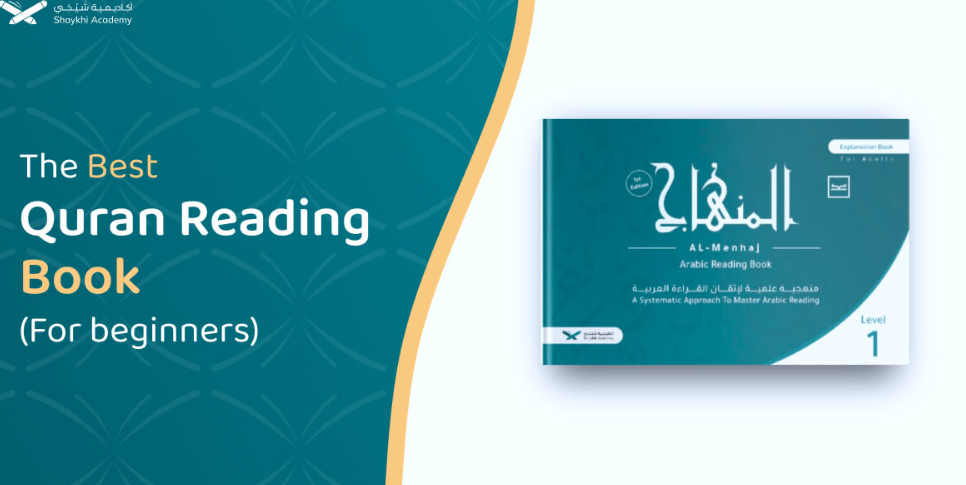
Al-Menhaj Book, authored by Luqman ElKasabany and developed by The Quran Reading Academy team with 25+ years of teaching experience, guides non-native speakers through the Arabic Alphabet and Quran reading fundamentals step-by-step.
Explore The Best Quran Reading Book
2. Learn Proper Harakat Application to Get Better at Reading Quran
The three primary harakat—Fatha (ـَ), Kasra (ـِ), and Damma (ـُ)—control vowel sounds in Arabic. Without mastering these marks, accurate Quran reading remains impossible regardless of letter knowledge.
Fatha produces an “a” sound as in “cat.” Kasra creates an “i” sound like “sit.” Damma generates an “u” sound similar to “put.” Practice each mark separately before combining them.
| Harakat | Symbol | Sound | Example |
| Fatha | ـَ | Short “a” | بَ (Ba) |
| Kasra | ـِ | Short “i” | بِ (Bi) |
| Damma | ـُ | Short “u” | بُ (Bu) |
Master Sukoon for Silent Letter Recognition
Sukoon (ـْ) indicates a letter carries no vowel sound. This mark appears frequently in Quranic text and dramatically affects pronunciation when students ignore it.
The word بِسْمِ (Bismi) contains sukoon on the letter seen. Missing this mark would produce “Bisami” instead of “Bismi,” completely changing the sound and violating Quranic pronunciation rules.
Practice reading words with sukoon slowly. Pause briefly on the silent letter before continuing to the next sound without adding any vowel.
Distinguish Between Tanween and Regular Harakat
Tanween creates double vowel sounds with an “n” ending. The three types—Fathatayn (ـً), Kasratayn (ـٍ), and Dammatayn (ـٌ)—confuse beginners who pronounce them as single vowels.
عَلِيمًا (Aleeman) demonstrates Fathatayn on the final letter. Students often read it as “Aleema” instead of “Aleeman,” missing the nasal sound entirely.
Record yourself reading verses containing tanween marks. Compare your recording with a qualified reciter to identify pronunciation gaps you couldn’t hear while reading.
At The Quran Reading Academy, our Noorani Qaida Course with certified instructors helps students master harakat pronunciation through personalized 1-on-1 sessions.
Start Reading the Quran Today with Our Noorani Qaida Course
3. Understand Makharij Basics to Get Better at Reading Quran
Makharij (articulation points) refer to the specific mouth and throat positions where each letter originates. Incorrect makharij produce distorted pronunciation that even advanced Tajweed knowledge cannot fix.
Arabic contains 17 primary articulation points ranging from the lips to the deep throat. Each letter emerges from its designated point, creating its unique sound quality.
Learn the Five Throat Letters
The letters أ (Hamza), هـ (Haa), ع (Ayn), ح (Haa), and غ (Ghayn) emerge from different throat regions. Most students pronounce these identically, losing the Quran’s phonetic precision completely.
Hamza comes from the deepest throat point. Haa (هـ) rises slightly higher. Ayn originates from the middle throat. This progression requires conscious muscle control that develops through guided practice.
Place your hand on your throat while pronouncing each letter. You’ll feel vibration points shifting as you move through these five sounds correctly.
Master Tongue Articulation Points
Letters like ق (Qaaf), ك (Kaaf), ج (Jeem), and ش (Sheen) require precise tongue positioning against different palate regions. Beginners typically pronounce Qaaf and Kaaf interchangeably.
Qaaf originates from the back of the tongue touching the upper palate deeply. Kaaf comes from a higher, more forward tongue position. This distinction separates words like قَلْب (heart) from كَلْب (dog).
Practice each letter 50 times daily while checking your tongue position with a mirror. This physical awareness builds the muscle memory needed for automatic correct articulation.
Working with qualified Quran tutors at The Quran Reading Academy through our Online Quran Reading Course with Tajweed provides the individualized attention needed to master articulation points, with flexible scheduling available 24/7.
Reading with Tajweed
Start Reading the Quran With Tajweed Today

4. Apply Essential Tajweed Rules to Get Better at Reading Quran
Tajweed rules govern pronunciation quality beyond basic letter reading. These rules preserve the Quran’s revealed form by maintaining specific sound characteristics that change meaning when violated.
Begin with the four fundamental rule categories: Noon Sakinah rules, Meem Sakinah rules, Qalqalah, and Madd. Mastering these covers approximately 70% of Tajweed application in regular reading.
Master the Four Noon Sakinah Rules
When Noon Sakinah (نْ) or Tanween precedes specific letters, four different rules apply: Idhaar, Idghaam, Iqlaab, and Ikhfaa. Each rule changes how you pronounce the Noon sound.
Idhaar (clear pronunciation) occurs with throat letters. مِنْ أَحَدٍ (min ahad) demonstrates this rule. You pronounce the Noon clearly without any nasal merging.
Idghaam (merging) happens with six letters ي، ر، م، ل، و، ن. In مِن رَّبِّهِمْ (mir-rabbihim), the Noon merges completely into the Raa sound.
| Rule | Letters | Effect | Example |
| Idhaar | أ ه ع ح خ غ | Clear Noon | مِنْ أَحَدٍ |
| Iqlaab | ب | Convert to Meem | مِن بَعْدِ |
| Ikhfaa | 15 remaining letters | Nasal hiding | مَن يَعْمَلْ |
Understand Qalqalah Application
Qalqalah produces an echoing bounce on five letters: ق، ط، ب، ج، د. This rule only applies when these letters carry sukoon, either in the middle or end of words.
يُحِطْ (yuhit) demonstrates medial Qalqalah on the letter ط. The sound bounces slightly without adding a full vowel. Beginners often either skip this bounce or exaggerate it excessively.
The echoing intensity increases when Qalqalah occurs at verse endings (Qalqalah Kubra) compared to word-middle positions (Qalqalah Sughra). Listen carefully to these differences in professional recitations.
Start Your Quran Learning Journey Today
Join Quran Reading Academy and begin structured, step-by-step Quran reading with expert guidance.
Try your first class for free5. Develop Consistent Daily Reading Practice to Get Better at Reading Quran
Sporadic reading sessions produce minimal progress compared to daily 20-minute practice. Your brain requires consistent repetition to build automatic recognition patterns for Arabic text.
Morning sessions before daily activities yield better retention than late-night reading when mental fatigue reduces focus. Choose a fixed time that fits your schedule without negotiation.
Follow a Structured Weekly Timetable
Divide your practice across skill categories rather than random reading. Monday and Thursday focus on new letter combinations. Tuesday and Friday target Tajweed rule application. Wednesday strengthens previously learned content.
| Day | Focus Area | Duration | Goal |
| Monday | New letter combinations | 20 min | Learn 5 new patterns |
| Tuesday | Tajweed rules | 20 min | Apply 2 rules correctly |
| Wednesday | Review previous lessons | 20 min | Strengthen retention |
| Thursday | New vocabulary | 20 min | Read 10 new words |
| Friday | Tajweed application | 20 min | Practice fluency |
| Weekend | Surah memorization | 25 min | Combine all skills |
This systematic approach ensures balanced skill development. You won’t excel in letters while remaining weak in Tajweed application or fluency building.
Track Your Progress with Recording
Record your daily reading and listen objectively after 24 hours. Your own voice reveals mistakes your brain ignores during live reading because it auto-corrects errors unconsciously.
Compare weekly recordings to measure improvement. This documentation shows tangible progress that motivates continued practice when you feel discouraged or stagnant.
Create a simple progress journal noting specific mistakes and their corrections. Reviewing this journal prevents recurring errors that become ingrained bad habits over time.
6. Study with Qualified Quran Reading Instructors
Self-study from videos creates confidence in incorrect pronunciation because you cannot hear your own mistakes accurately. Qualified instructors identify subtle errors that videos cannot diagnose or correct personally.
A certified Qari notices if your Qaaf originates too far forward or if you’re merging letters that should remain distinct. These micro-corrections separate mediocre reading from proper Quranic recitation.
Benefit from Personalized Error Correction
Generic instruction cannot address your specific pronunciation weaknesses. One student struggles with heavy letters while another cannot distinguish Haa sounds. Personalized teaching targets individual gaps directly.
At The Quran Reading Academy, certified instructors analyze your articulation points, harakat application, and Tajweed mistakes during 1-on-1 sessions. This customized feedback accelerates improvement by focusing effort where you need it most.
Instructors also adjust teaching pace to match your learning speed. Rushing through lessons before mastering foundations creates gaps that multiply into major reading problems later.
Receive Immediate Pronunciation Feedback
Waiting days or weeks to discover pronunciation mistakes embeds incorrect muscle memory that becomes extremely difficult to correct later. Live instruction provides instant feedback during the exact moment you make errors.
Your instructor demonstrates the correct sound immediately, then has you repeat until achieving accuracy. This real-time correction loop prevents bad habits from forming in the first place.
Video lessons cannot replicate this immediate, personalized correction cycle. They offer information but lack the diagnostic precision that individualized instruction provides for pronunciation development.
7. Memorize Common Quranic Words to Get Better at Reading Quran
Words like الَّذِينَ (those who), وَمَا (and not), and إِنَّ (indeed) appear hundreds of times throughout the Quran. Instant recognition eliminates the mental pause required for letter-by-letter reading.
Start with the most common 50 words, then expand to 100, then 200. This vocabulary foundation allows you to read most verses while only decoding unfamiliar words.
Create Flashcard Sets by Frequency
Organize words by appearance frequency rather than alphabetical order. The most common 10 words deserve daily practice until recognition becomes automatic and effortless.
قَالَ (he said), اللَّهُ (Allah), and الَّذِينَ (those who) appear so frequently that mastering these three words alone improves your reading fluency noticeably.
Review flashcards during transition times like commuting or waiting. These micro-sessions compound into significant vocabulary retention without requiring dedicated study blocks.
Practice Words Within Verse Context
Isolated word memorization doesn’t guarantee recognition within flowing verse text. Practice reading complete verses containing your memorized vocabulary to strengthen contextual recall.
Open Surah Al-Baqarah and highlight every occurrence of الَّذِينَ. Reading these instances repeatedly trains your brain to spot the word pattern within different surrounding text.
This contextual practice bridges the gap between flashcard knowledge and actual Quran reading application. Your goal is automatic recognition during continuous reading, not just isolated recall.
8. Read Quran Alongside Audio Recitation
Listening while reading synchronizes visual letter recognition with correct pronunciation simultaneously. This dual-input method accelerates learning compared to reading or listening separately.
Choose reciters known for clear, moderate-paced recitation like Mishary Rashid Alafasy or Mahmoud Khalil Al-Hussary. Their articulation clarity helps beginners distinguish individual sounds and proper letter pronunciation.
The Quran Reading Academy’s Quran Recitation Course provides structured guidance for developing proper recitation quality through expert-led sessions with certified instructors.
Join Our Quran Recitation Course with a Free Trial

Follow Word-by-Word Recitation
Standard audio plays continuously without pausing between words. Word-by-word recitation software highlights each word as it’s pronounced, allowing perfect synchronization between visual and audio input.
Applications like Quran Explorer or Tarteel offer this feature. You see each word highlighted precisely when the reciter pronounces it, creating immediate visual-audio association.
This method trains your brain to recognize pronunciation patterns while seeing the corresponding Arabic text. After 30 days of daily 15-minute sessions, you’ll notice significant pronunciation improvement.
Practice Shadowing Technique
Shadowing means repeating the recitation immediately after the Qari, maintaining a one-second delay. This technique forces active pronunciation rather than passive listening that produces minimal improvement.
Start with single verses until you can shadow accurately. Gradually extend to complete passages as your fluency develops and pronunciation confidence strengthens.
Recording your shadowing sessions reveals whether you’re actually matching the Qari’s pronunciation or subconsciously inserting errors while thinking you’re pronouncing correctly.
9. Focus on Quran Reading Accuracy Before Speed
Rushing through verses while making pronunciation mistakes builds incorrect muscle memory that becomes extremely difficult to correct later. Slow, accurate reading establishes proper neural pathways from the beginning.
Speed develops naturally through consistent accurate practice. Forced speed without accuracy foundation creates permanent bad habits that limit your ultimate reading quality.
Take 5 seconds per word initially if needed. Accuracy matters infinitely more than speed during your foundation-building phase. Speed without accuracy is worthless for Quran reading.
Implement the Pause-Check-Continue Method
After reading each word, pause briefly to verify you pronounced every letter and harakat correctly. This conscious verification builds accuracy awareness that prevents autopilot errors.
Check specific elements: Did you pronounce the letter from its correct makharij? Did you apply the right harakat? Did you observe any Tajweed rules applicable to that word?
This method feels tedious initially but establishes meticulous accuracy habits. Within three months, verification becomes subconscious and your natural reading speed increases while maintaining precision.
Review Difficult Passages Multiple Times
When you encounter verses that contain unfamiliar letter combinations or complex Tajweed applications, mark them for extra practice. These challenging sections indicate specific skill gaps requiring targeted attention.
Return to difficult passages daily for one week. By the seventh repetition, what seemed impossible initially becomes readable because your brain has processed the pattern through focused repetition.
This targeted practice eliminates weak spots systematically. Your overall reading quality improves as you convert difficult passages into comfortable, familiar text through deliberate repeated exposure.
Start Your Quran Learning Journey Today
Join Quran Reading Academy and begin structured, step-by-step Quran reading with expert guidance.
Try your first class for freeStart Your Quran Reading Journey with The Quran Reading Academy
Improving your Quran reading requires structured guidance, qualified instruction, and proven learning materials that address your specific skill level.
The Quran Reading Academy provides comprehensive Quran reading education with:
- Certified Quran reading instructors with specialized teaching expertise in Tajweed and Arabic literacy
- Al-Menhaj Book: Expertly-designed Learn to Read Quran book for beginners (authored by Luqman ElKasabany, developed by teachers with 25+ years experience)
- 1-on-1 personalized sessions tailored to your exact reading level and learning pace
- Specialized courses for all ages: kids, adults, beginners, sisters, and new Muslims
- Comprehensive curriculum from Noorani Qaida through advanced Tajweed and Qirat
- Affordable pricing starting at $30/month with transparent plans
Check out our top courses to help you read the Quran with confidence:
- Quran Reading Course With Tajweed
- Noorani Qaida Course
- Quran Reading Course for Beginners
- Quran Reading Classes for Adults
- Quran Reading Classes for Sisters
- Quran Reading Classes for Kids
- Quran Hifz Course
- Arabic Reading Practice Course
- Quranic Arabic Course
Book your free class today—it’s the perfect start to learning the Quran

Conclusion
Confident Quran reading rests on layered skills that reinforce one another. Accurate letter recognition, precise harakat application, and correct articulation points work together to preserve pronunciation integrity, ensuring each word is read as revealed without distortion or guesswork.
Tajweed rules and deliberate daily practice refine that foundation. Structured schedules, slow accuracy-focused reading, and regular self-review prevent weak habits from forming, allowing fluency to emerge naturally through repetition rather than rushed performance.
Guided instruction accelerates progress by correcting errors early and tailoring learning to individual needs. Combined with common-word memorization and audio-supported reading, this approach turns fragmented effort into steady improvement, leading to confident, consistent Quran recitation over time.
Related Articles
How to read Quran


Leave a Reply