 How to read Quran
For many Muslims, the desire to read the Quran directly begins with a quiet frustration: the letters feel unfamiliar, the sounds intimidating, and the path unclear. Yet the journey is far less complex than it appears when approached with the right method and steady guidance.
Learning to read the Quran hinges on mastering Arabic letters, vowel marks, and pronunciation rules rather than conversational fluency. Through structured tools like Noorani Qaida, focused Harakat practice, and foundational Tajweed, learners can progress confidently from letter recognition to fluent recitation within a realistic timeframe.
Learn Arabic to Read Quran Through Noorani Qaida Foundation
The most effective way to learn Arabic for Quran reading is starting with Noorani Qaida methodology. This foundational approach teaches you Arabic letters and their sounds systematically, without requiring prior language knowledge.
Noorani Qaida introduces each Arabic letter individually with its proper articulation point (Makhraj). You begin with the simplest letters like Baa (ب) and Taa (ت), gradually progressing to more complex sounds.
Unlike learning conversational Arabic, Noorani Qaida focuses exclusively on reading mechanics. You master letter recognition, vowel marks (Harakat), and letter joining rules within 2-3 months of consistent practice.
Starting with Arabic Letter Recognition
Your first step involves memorizing the 28 Arabic letters in their isolated forms. Each letter has a unique shape and sound completely different from English phonetics.
Practice writing each letter 10-15 times daily. Physical muscle memory reinforces visual recognition, making letters instantly identifiable during reading.
Understanding Arabic Letter Articulation Points
Every Arabic letter originates from a specific Makhraj in your mouth or throat. For example, the letter Qaf (ق) comes from the back of the tongue touching the soft palate.
Proper Makhraj prevents mispronunciation that changes word meanings. The difference between Dhaal (ذ) and Zaa (ز) lies entirely in tongue placement, not sound intensity.
The Quran Reading Academy’s Noorani Qaida Course provides structured lessons with certified instructors who correct your pronunciation in real-time. This prevents fossilized errors that plague self-taught learners.
Start Reading the Quran Today with Our Noorani Qaida Course

Do You Have to Learn Arabic to Read the Quran Fluently?
No, you don’t need conversational Arabic fluency to read the Quran. Quranic reading requires recognition skills, not comprehension or speaking ability. Millions of non-Arab Muslims recite beautifully without understanding conversational Arabic.
Reading the Quran involves decoding written text and applying Tajweed rules. These are mechanical skills learned through systematic practice, similar to reading music notation without composing songs.
However, learning basic Arabic vocabulary enhances your spiritual connection. Knowing that “Ar-Rahman” means “The Most Merciful” deepens your emotional engagement during recitation.
Quranic Arabic Versus Modern Standard Arabic
Quranic Arabic uses Classical Arabic grammar and vocabulary preserved since revelation. Modern Standard Arabic, while similar, includes contemporary terms and simplified structures.
For Quran reading purposes, you only need Classical Arabic recognition. This actually simplifies your learning path since you’re focusing on one consistent text style.
The Quranic Arabic Course at The Quran Reading Academy teaches vocabulary and grammar specifically for Quran comprehension, not general conversation.
Join Quranic Arabic Course With a Free Trial

Learn Arabic to Read Quran Free Using Structured Resources
Free resources exist for learning Arabic Quran reading, but they require strong self-discipline and proper guidance selection. YouTube channels offering Noorani Qaida lessons provide visual demonstrations of letter pronunciation.
Download free Arabic alphabet charts and practice sheets from reputable Islamic educational websites. Print these materials and create a dedicated study folder for daily practice sessions.
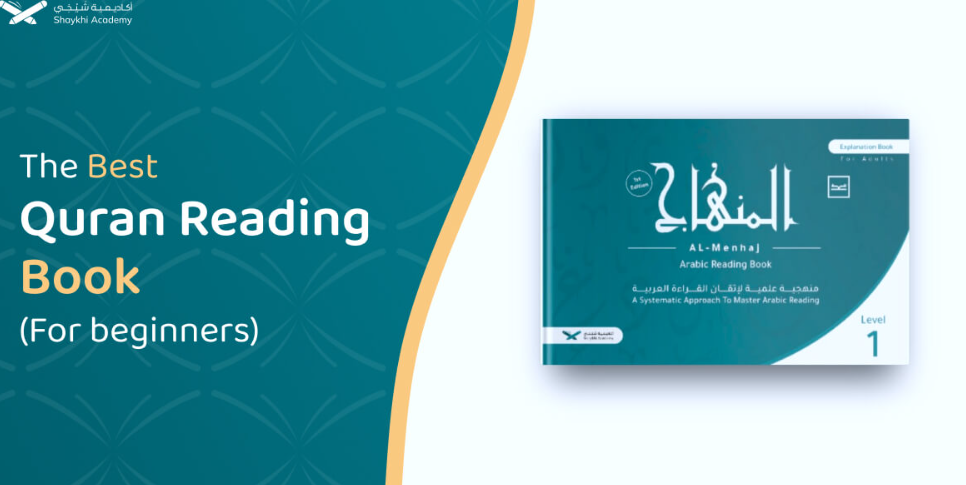
Al-Menhaj Book offers comprehensive beginner lessons combining letter recognition with basic Tajweed rules. This resource bridges the gap between alphabet learning and actual Quran reading.
Explore The Best Quran Reading Book
However, free resources lack personalized error correction. Without a qualified teacher, you might develop pronunciation mistakes that become difficult to unlearn later.
Creating Your Free Learning Schedule
Dedicate 20-30 minutes daily to Arabic letter practice. Consistency matters more than session length; daily exposure builds stronger neural pathways than occasional long sessions.
Week 1-2: Master individual letter recognition and basic sounds. Week 3-4: Learn Harakat (Fatha, Kasra, Damma) and their effects on letters.
| Week | Focus Area | Daily Practice Time |
| 1-2 | Individual Letters | 20 minutes |
| 3-4 | Harakat Vowels | 25 minutes |
| 5-6 | Letter Joining | 30 minutes |
| 7-8 | Simple Words | 30 minutes |
Learn Arabic to Read Quran Online Free Through Interactive Platforms
Online platforms offer interactive Arabic learning without financial commitment. Some websites provide free letter tutorials with audio pronunciation guides.
Mobile applications such as “Learn Quran Tajwid” include gamified letter recognition exercises. These apps track your progress and repeat letters you struggle with more frequently.
Join free online study circles through Islamic community forums. Peer accountability increases consistency, and group members can share pronunciation tips and resources.
The Quran Reading Academy offers a free trial class where certified tutors assess your current level and create a personalized learning roadmap. This complements your free learning with professional direction.
Utilizing Free Tajweed Resources
After mastering basic letter reading, introduce fundamental Tajweed rules. Start with Noon Sakinah and Tanween rules (Idhaar, Idghaam, Iqlab, Ikhfa).
Free Tajweed charts visually categorize rules with color coding. For example, Idhaar letters (ء ه ع ح غ خ) trigger clear pronunciation without nasal sound.
Master Arabic Harakat Before Starting Quran Reading Practice
Harakat are vowel marks determining how you pronounce each letter. The three primary Harakat—Fatha (َ), Kasra (ِ), and Damma (ُ)—completely change letter sounds.
Fatha creates an “a” sound (Ba becomes “Ba”). Kasra creates an “i” sound (Ba becomes “Bi”). Damma creates an “u” sound (Ba becomes “Bu”).
Without Harakat mastery, you cannot read a single word correctly. Every Quranic word depends on these marks for proper pronunciation and meaning.
Understanding Sukoon and Shadda Marks
Sukoon (ْ) indicates no vowel sound after the letter, creating a pause in air flow. This appears frequently in Quran and requires complete sound stoppage.
Shadda (ّ) doubles the letter’s sound, adding emphasis. When combined with Harakat, like Fatha with Shadda, you pronounce the letter twice with the vowel.
Practice words containing both marks using Noorani Qaida exercises. Start slowly, focusing on accurate execution rather than reading speed.
Start Your Quran Learning Journey Today
Join Quran Reading Academy and begin structured, step-by-step Quran reading with expert guidance.
Try your first class for freeApply Basic Tajweed Rules While Learning Arabic for Quran
Tajweed rules ensure beautiful, correct recitation that preserves the Quran’s revealed pronunciation. Learning these rules alongside alphabet mastery prevents developing bad reading habits.
Start with Qalqalah (echo sound) on five specific letters: Qaf, Taa, Baa, Jeem, and Dal. When these letters carry Sukoon, they produce a slight bouncing sound.
The Quran Tajweed Course provides systematic rule introduction, starting with foundational concepts before advancing to complex applications like prolongation rules (Madd).
Join Our Quran Tajweed Course with a Free Trial

Distinguishing Between Heavy and Light Letters
Arabic letters divide into heavy (Tafkheem) and light (Tarqeeq) categories. Heavy letters like Saad (ص) and Daad (ض) require full mouth resonance.
Light letters like Seen (س) and Zay (ز) use minimal mouth space. This distinction prevents reading errors that alter word meanings entirely.
| Heavy Letters | Light Letters |
| ص ض ط ظ | س ز ت ذ |
| Full mouth resonance | Minimal mouth space |
| Deep throat sound | Front mouth sound |
The letter Raa (ر) switches between heavy and light based on surrounding Harakat, making it unique among Arabic letters.
Practice Short Surahs to Learn Arabic Reading Through Quran
Once you complete Noorani Qaida, begin practicing with short Surahs from Juz Amma. These Surahs contain simple vocabulary and clear Tajweed rule applications.
Start with Surah Al-Ikhlas, which contains only four verses with straightforward letter combinations. Read each verse 10 times daily until fluency develops.
قُلْ هُوَ ٱللَّهُ أَحَدٌ
Qul Huwa Allahu Ahad
“Say, He is Allah, the One.” (Al-Ikhlas 112:1)
This verse demonstrates Qalqalah on the letter Dal, Madd on “Huwa,” and proper heavy letter pronunciation with “Allah.”
Recording and Reviewing Your Recitation
Record yourself reading each Surah and listen critically. Compare your recitation with professional Qaris like Sheikh Mishary Alafasy or Sheikh Abdul Basit.
Note specific letters or words you consistently mispronounce. Create a practice list focusing exclusively on these problematic areas during dedicated review sessions.
Online Quran Reading Course with Tajweed includes one-on-one sessions where certified instructors identify your specific weaknesses and provide targeted correction exercises.
Start Reading the Quran With Tajweed Today
Enroll in Structured Classes to Learn Arabic for Quran Systematically
Self-study has limitations, especially for pronunciation nuances invisible to untrained ears. Professional instruction accelerates your progress and prevents fossilized errors.
Certified Qaris provide real-time feedback on Makhraj accuracy, something no book or video can replicate. They hear subtle mistakes you cannot detect yourself.
Structured courses follow proven curricula tested across thousands of students. This systematic approach ensures you don’t skip critical foundational elements.
Benefits of Live Online Quran Classes
Live classes offer flexibility without sacrificing instruction quality. You receive personalized attention from qualified tutors while studying from home on your schedule.
The Quran Reading Academy’s Quran Reading Classes connect you with native Arabic speakers who understand non-Arab learner challenges. They use teaching methodologies specifically designed for English speakers.
Start Your Quran Reading Classes Today
One-on-one sessions allow unlimited question asking and mistake repetition without embarrassment. Your teacher adapts pacing to your individual learning speed and style.
Start Your Quran Learning Journey Today
Join Quran Reading Academy and begin structured, step-by-step Quran reading with expert guidance.
Try your first class for freeStart Your Quran Reading Journey with The Quran Reading Academy
Learning Arabic to read the Quran transforms your relationship with Allah’s words from translation dependence to direct connection. The systematic approach outlined above, when followed consistently, produces confident Quran readers within 6-12 months.
The Quran Reading Academy offers comprehensive courses for every learning stage:
- Noorani Qaida Course for complete beginners starting from zero
- Quran Tajweed Course for proper rule application
- Quran Recitation Course for beautiful, fluent reading
- Certified native Arab instructors with years of teaching experience
- Flexible scheduling for students across all time zones
- Al-Menhaj Book integration for structured progression
Book your free trial class today and receive a personalized assessment of your current level. Start reading Allah’s words directly this month, Insha’Allah.
Check out our top courses to help you read the Quran with confidence:
- Quran Reading Course With Tajweed
- Noorani Qaida Course
- Quran Reading Course for Beginners
- Quran Reading Classes for Adults
- Quran Reading Classes for Sisters
- Quran Reading Classes for Kids
- Quran Hifz Course
- Arabic Reading Practice Course
- Quranic Arabic Course
Book your free class today—it’s the perfect start to learning the Quran
Conclusion
Reading the Quran in Arabic is a skill built through structure, not talent. By starting with letter recognition, correct articulation points, and consistent Harakat practice, learners establish a solid base that prevents long-term pronunciation errors and accelerates progress.
Free resources and self-study can open the door, but accurate recitation depends on guided correction. Tajweed rules, heavy and light letters, and sound precision require trained ears and systematic instruction to preserve the Quran’s authentic pronunciation.
With daily consistency and a proven learning sequence, direct Quran reading becomes achievable within months. Structured courses and qualified teachers transform effort into clarity, allowing learners to move from hesitant decoding to confident, spiritually connected recitation.
Related Articles
How to read Quran
Leave a Reply