 Arabic

Unmarked Arabic can feel like a wall of silent letters—beautiful, structured, yet intimidating without familiar vowel guides. Many learners hesitate when harakat disappear, unsure how to pronounce words confidently. Yet fluent readers rely on deeper systems—patterns, grammar, and context—that make vowels almost predictable.
Strong pattern recognition, high-frequency vocabulary, essential grammar rules, contextual reading, and steady daily practice form the backbone of reading Arabic without harakat. With guided Quranic application, real-world texts, and structured feedback, learners transition from dependence on marks to confident, independent fluency.
1. Master Common Arabic Word Patterns to Read Arabic Without Harakat
Understanding Arabic word patterns forms your foundation for reading unmarked Arabic text. Arabic operates on root-and-pattern systems where three-letter roots fit into predictable templates.
Most Arabic words derive from three-consonant roots that follow standard patterns. When you recognize these patterns, you automatically know which vowels belong between consonants even without harakat marks.
Learn the Six Most Frequent Arabic Word Patterns First
Start with these essential patterns that appear in approximately 60% of Arabic texts:
فَعَلَ (fa’ala) – past tense verb pattern يَفْعَلُ (yaf’alu) – present tense verb pattern فَاعِل (fa’il) – active participle pattern
Practice identifying these patterns daily in familiar Quranic verses. Your brain will soon recognize them automatically during reading sessions.
Recognize Arabic Pattern Variations Through Systematic Practice
Each base pattern has predictable variations. The pattern فَعَلَ becomes فَعَّلَ when doubled, intensifying the verb’s meaning.
Regular exposure to these variations builds your pattern recognition skills. Within three months of focused practice, you’ll identify most common patterns instantly without conscious effort.
Our Arabic Reading Practice Course at The Quran Reading Academy specializes in building this exact skill through structured, expert-led training sessions.
Join Arabic Reading Practice Course With a Free Trial
Start Your Quran Learning Journey Today
Join Quran Reading Academy and begin structured, step-by-step Quran reading with expert guidance.
Try your first class for free2. Build Strong Vocabulary Recognition Skills Without Vowel Marks
Vocabulary memorization accelerates your ability to read Arabic without harakat significantly. When you know a word’s meaning and pronunciation, missing vowels become irrelevant. Focus on memorizing 500 high-frequency Arabic words first.
Study Arabic Words in Meaningful Context Not Isolation
Memorize words within complete sentences from Quranic verses for example. Context provides natural clues about grammatical functions and proper pronunciation patterns.
إِيَّاكَ نَعْبُدُ وَإِيَّاكَ نَسْتَعِينُ
Iyyaka na’budu wa iyyaka nasta’een
“You alone we worship, and You alone we ask for help.” (Al-Fatihah 1:5)
In this verse, recognizing نَعْبُدُ (na’budu) and نَسْتَعِينُ (nasta’een) as verbs helps you pronounce them correctly even without visible harakat marks.
Create Personal Vocabulary Categories for Faster Learning
Group words by themes: worship terms, family words, nature vocabulary. Categorization strengthens memory retention and recall speed during actual reading.
Our certified instructors at The Quran Reading Academy use thematic vocabulary lists that match students’ Quran reading progression, ensuring relevant and practical learning.
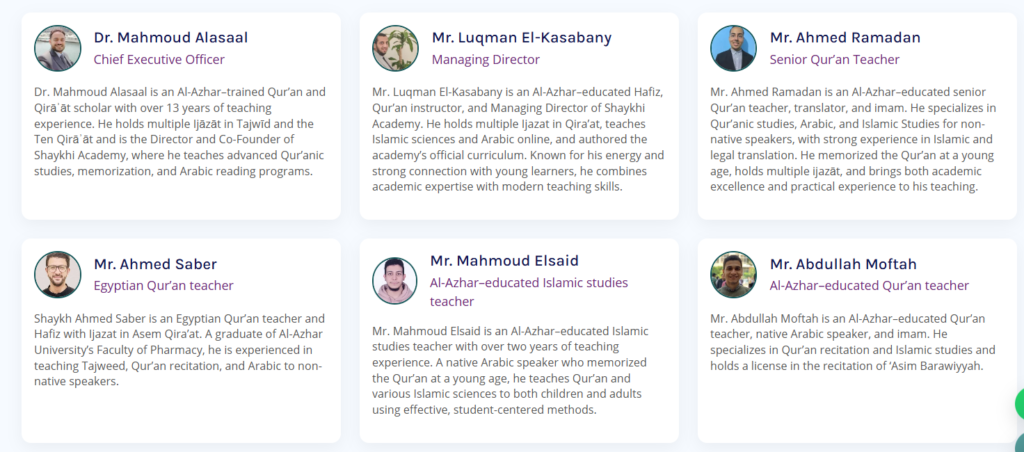
Meet our certified native Arabic teachers
3. Understand Arabic Grammar Rules to Read Arabic Without Harakat Accurately
Grammar knowledge reveals which vowels belong where even when harakat are absent. Arabic grammar follows consistent rules that determine word endings and internal vowel patterns.
Subject-verb agreement rules, for instance, dictate specific vowel patterns. A masculine singular verb requires different voweling than feminine plural forms.
Master Basic Grammatical Cases for Proper Vowel Placement
Arabic uses three grammatical cases that affect word endings: nominative (raf’), accusative (nasb), and genitive (jarr). Each case corresponds to specific vowel sounds.
Nominative case typically ends with damma sound (ُ). Accusative uses fatha (َ). Genitive employs kasra (ِ). Understanding sentence structure tells you which case applies.
| Grammatical Case | Vowel Sound | Common Usage |
| Nominative (Raf’) | Damma (u) | Subjects, predicates |
| Accusative (Nasb) | Fatha (a) | Direct objects, adverbs |
| Genitive (Jarr) | Kasra (i) | After prepositions, possessives |
Apply Verb Conjugation Rules for Accurate Pronunciation
Verb conjugations follow predictable patterns based on subject pronouns. First-person singular verbs start differently than third-person plural forms.
قُلْ هُوَ اللَّهُ أَحَدٌ
Qul huwa Allahu ahad
“Say, He is Allah, the One.” (Al-Ikhlas 112:1)
The verb قُلْ (qul) follows command form rules. Recognizing this grammatical function ensures correct pronunciation without visible vowel marks.
Start Your Quran Learning Journey Today
Join Quran Reading Academy and begin structured, step-by-step Quran reading with expert guidance.
Try your first class for free4. Practice Reading Familiar Quranic Verses Without Harakat Marks
Starting with memorized Quranic passages removes pronunciation anxiety. Your familiarity provides built-in vowel knowledge while you develop unmarked reading skills.
Select five verses you’ve memorized perfectly. Write them without harakat on paper. Practice reading your handwritten unmarked versions daily.
Progress From Memorized to Semi-Familiar Text Gradually
After mastering memorized verses, move to passages you’ve heard frequently but haven’t memorized. This intermediate step bridges the gap to completely unfamiliar text.
Listen to recitations of these semi-familiar verses, then practice reading them without harakat. Audio reinforcement corrects pronunciation mistakes before they become habits.
Verify Your Pronunciation Using Mushaf With Harakat
After reading unmarked text, check your accuracy against a standard Mushaf showing harakat. This feedback loop identifies specific weaknesses in your pattern recognition.
Our Noorani Qaida Course systematically builds this self-correction skill through guided practice with certified tutors who monitor your progress closely.
Start Reading the Quran Today with Our Noorani Qaida Course

5. Develop Contextual Reading Skills to Read Arabic Without Harakat
Context provides powerful clues about correct pronunciation and word meanings. The surrounding sentence structure often eliminates pronunciation ambiguity completely.
Reading entire Arabic sentences rather than isolated words activates contextual understanding. Your brain uses sentence meaning to determine appropriate vowels automatically.
Arabic sentence structure follows verb-subject-object or subject-predicate patterns. Identifying these patterns reveals which vowels fit grammatically.
In verbal sentences, the verb typically starts with fatha. In nominal sentences, subjects usually carry damma. These structural rules guide pronunciation.
Start Your Quran Learning Journey Today
Join Quran Reading Academy and begin structured, step-by-step Quran reading with expert guidance.
Try your first class for free6. Read Arabic Newspapers and Modern Texts Without Harakat
Contemporary Arabic texts rarely include harakat except in children’s books. Newspapers, websites, and modern literature train real-world reading skills effectively.
Start with news articles on familiar topics. Your background knowledge about the subject matter provides context that compensates for missing vowel marks.
Select Appropriate Difficulty Levels for Steady Progress
Begin with simplified news services designed for Arabic learners. These sources use basic vocabulary and straightforward sentence structures.
Gradually transition to standard Arabic newspapers as your confidence grows. This progressive difficulty ensures consistent skill development without overwhelming frustration.
Practice Arabic Reading Speed and Comprehension Together
Reading speed naturally increases as pattern recognition improves. However, never sacrifice comprehension for speed during practice sessions.
Set weekly goals for both speed and understanding. Track your progress using timed reading exercises with comprehension questions afterward.
7. Use Digital Tools to Support Reading Arabic Without Harakat
Technology offers valuable support during your transition to unmarked Arabic reading. Several apps and websites provide immediate feedback and pronunciation assistance.
Digital Quran apps let you toggle harakat on and off. Practice reading without marks, then verify pronunciation by revealing vowels instantly.
Leverage Audio Recitations for Pronunciation Verification
Listening to professional Quran recitations while following unmarked text reinforces correct pronunciation patterns. This multisensory approach accelerates learning significantly.
Repeat each verse after the reciter, checking your pronunciation against the audio. This technique builds muscle memory for proper articulation.
Install Arabic Keyboard for Regular Typing Practice
Typing Arabic text without harakat strengthens your mental association between letters and sounds. Regular typing practice complements reading skill development.
Compose short messages or journal entries in Arabic daily. This active production reinforces receptive reading abilities through practical application.
Start Your Quran Learning Journey Today
Join Quran Reading Academy and begin structured, step-by-step Quran reading with expert guidance.
Try your first class for free8. Apply Consistent Daily Practice to Read Arabic Without Harakat
Consistency determines success more than practice duration. Twenty minutes daily produces better results than three hours weekly.
Create a fixed daily reading schedule that fits your routine. Morning sessions often work best when your mind feels fresh and focused.
Combine Multiple Learning Methods in Each Session
Effective practice sessions include varied activities: pattern recognition drills, vocabulary review, grammar exercises, and actual reading practice.
Divide your twenty-minute session into five-minute segments addressing different skills. This variety maintains engagement and targets all necessary competencies.
| Time | Activity | Purpose |
| 5 min | Pattern recognition | Strengthen template identification |
| 5 min | Vocabulary review | Build word recognition speed |
| 5 min | Grammar drill | Reinforce vowel placement rules |
| 5 min | Reading practice | Apply all skills together |
Track Your Progress With Measurable Goals
Set specific monthly targets: read five new pages without harakat, recognize twenty additional word patterns, or master thirty new vocabulary items.
Regular assessment maintains motivation and identifies areas requiring extra attention. Celebrate small victories to sustain long-term commitment.
Start Your Quran Learning Journey Today
Join Quran Reading Academy and begin structured, step-by-step Quran reading with expert guidance.
Try your first class for freeStart Your Quranic Reading Journey With The Quran Reading Academy
Reading Arabic without harakat transforms your relationship with Quranic texts and classical literature. These expert-taught methods produce confident, independent readers within six months of consistent practice.
The Quran Reading Academy offers specialized programs designed specifically for this critical transition:
- Native Arab certified instructors with proven teaching expertise
- Arabic Reading Practice Course focused on unmarked text mastery
- Personalized learning plans matching your current skill level
- Interactive sessions with immediate pronunciation feedback
- Flexible scheduling accommodating Western time zones
Book your free trial lesson today and experience how expert guidance accelerates your Arabic reading confidence beyond what self-study alone can achieve.
Check out our top courses to help you read the Quran with confidence:
- Quran Reading Course With Tajweed
- Noorani Qaida Course
- Quran Reading Course for Beginners
- Quran Reading Classes for Adults
- Quran Reading Classes for Sisters
- Quran Reading Classes for Kids
- Quran Hifz Course
- Arabic Reading Practice Course
- Quranic Arabic Course
Book your free class today—it’s the perfect start to learning the Quran
Conclusion
Reading Arabic without harakat becomes achievable once you master core word patterns, memorize high-frequency vocabulary, and understand grammatical case endings. These systems work together, allowing you to predict vowels naturally instead of guessing.
Contextual awareness further strengthens accuracy. Familiar Quranic verses, structured grammar drills, and exposure to modern Arabic texts train your mind to interpret sentence structure and meaning simultaneously, eliminating uncertainty step by step.
Consistent daily practice, supported by audio recitations and guided instruction, accelerates progress dramatically. Within months of focused effort, unmarked Arabic shifts from intimidating symbols to clear, readable text—unlocking deeper engagement with the Quran and classical literature.


Leave a Reply