 How to read Quran

Many sincere readers feel a quiet distance from the Quran—not from lack of faith, but from unfamiliarity with its language. Arabic letters, symbols, and sounds can seem like a locked script, even when the heart longs to engage directly with every verse.
Reading the Quran word by word becomes possible through a clear progression: mastering letters, understanding how they connect, applying vowel marks, practicing slowly, and integrating basic Tajweed. With structured steps and consistent review, non-Arabic speakers can build accurate, independent recitation.
1. Master the Arabic Alphabet to Learn Quran Word by Word
Learning the Arabic alphabet forms the absolute foundation for reading Quran word by word. Without recognizing individual letters, understanding complete words becomes impossible.
The Arabic alphabet contains 28 letters, each with unique shapes that change based on their position in a word. Unlike English, Arabic reads from right to left, which initially confuses many beginners.
Start by memorizing letters in their isolated forms first. Write each letter repeatedly while pronouncing its name aloud. This multisensory approach strengthens both visual recognition and auditory memory simultaneously.
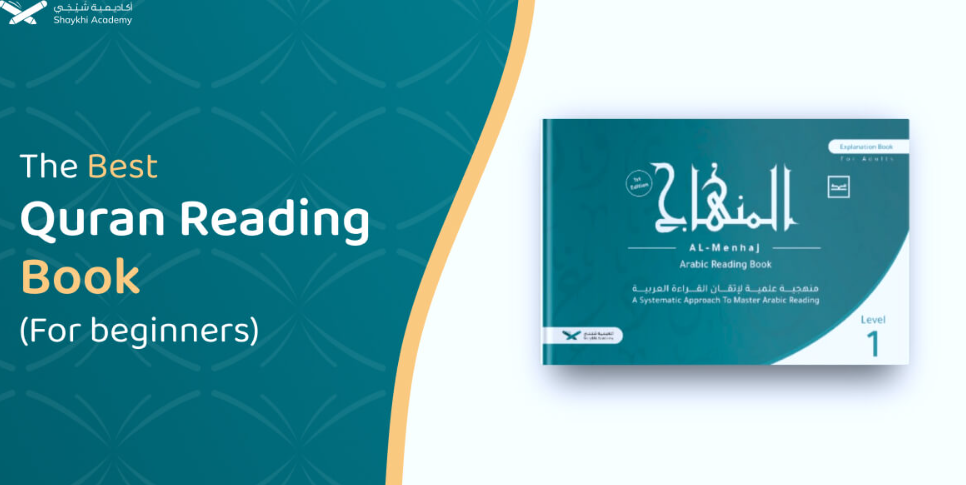
Developed by The Quran Reading Academy team, drawing on over 25 years of teaching experience, Al-Menhaj Book is a comprehensive, step-by-step guide. Authored by Luqman ElKasabany, it is specifically designed to teach non-native speakers the Arabic Alphabet and the foundational skills necessary for reading.
Explore The Best Quran Reading Book
Distinguish Between Letter Forms in Different Positions
Each Arabic letter transforms when appearing at the beginning, middle, or end of words. For example, the letter “ع” (Ain) appears as ع when isolated, but changes to ـعـ in the middle position.
Practice connecting letters systematically. Begin with simple two-letter combinations before advancing to three and four-letter words. This gradual progression prevents overwhelming beginners.
Focus on similar-looking letters like “ب” (Ba), “ت” (Ta), and “ث” (Tha). These differ only by dot placement, making them common sources of reading errors.
Memorize Proper Letter Pronunciation from the Start
Correct pronunciation must accompany letter recognition from day one. Many letters have sounds completely foreign to English speakers, such as “ض” (Daad) and “ظ” (Dhaad).
Listen to qualified instructors demonstrating each letter’s articulation. Recording your own voice and comparing it helps identify pronunciation gaps effectively.
| Letter | Name | Sound Description |
| ق | Qaaf | Produced from the back of the tongue against the soft palate |
| ع | Ain | Guttural sound from the middle of the throat |
| ح | Ha | Breathy sound from the upper throat |
Master Arabic letter pronunciation from the outset with personalized 1-on-1 sessions in The Quran Reading Academy’s Noorani Qaida Course. Our certified instructors ensure a proper foundation in Arabic through this essential course.
Start Reading the Quran Today with Our Noorani Qaida Course

2. Learn How to Join Arabic Letters Word by Word
After mastering individual letters, joining them correctly becomes your next crucial milestone. Arabic words flow continuously with letters connecting in specific patterns that English speakers rarely encounter.
Understanding connection rules prevents the disjointed, choppy reading that characterizes many beginners. Some letters never connect to following letters regardless of position.
Identify Connecting and Non-Connecting Letters
Six Arabic letters refuse to connect forward: ا (Alif), د (Dal), ذ (Dhal), ر (Ra), ز (Zay), and و (Waw). These letters break the visual flow within words.
Practice writing words containing these non-connectors. For example, “دَرَسَ” (Darasa – he studied) shows Dal and Ra breaking connections while Seen continues the flow.
Create flashcards with various letter combinations. Regular exposure to connection patterns builds automatic recognition faster than memorization alone.
Practice Two-Letter and Three-Letter Combinations
Start with simple combinations like “بَ + تَ” forming “بَتَ” before attempting complex words. This incremental approach builds confidence while preventing frustration.
Focus on common Quranic letter combinations that appear repeatedly. Words like “قَالَ” (Qala – he said) and “كَانَ” (Kana – he was) occur frequently throughout the Quran.
3. Understand Harakat Symbols to Read Quran Word by Word
Harakat (vowel marks) transform Arabic letters into readable words with precise pronunciation. Without these diacritical marks, determining vowel sounds becomes nearly impossible for beginners.
The Quran uses complete Tashkeel (vocalization), making it easier to read than unmarked Arabic texts. Each Harakat symbol indicates specific vowel sounds essential for accurate recitation.
Master the Three Primary Short Vowels
Fatha (ـَ) produces an “a” sound, Kasra (ـِ) creates an “i” sound, and Damma (ـُ) generates an “u” sound. These three symbols control most Arabic pronunciation.
Practice reading letters with different Harakat. Notice how “بَ” (ba), “بِ” (bi), and “بُ” (bu) change only the vowel sound while keeping the consonant identical.
بِسْمِ اللَّهِ الرَّحْمَٰنِ الرَّحِيمِ
Bismillahir-Rahmanir-Raheem
“In the name of Allah, the Entirely Merciful, the Especially Merciful.” (Al-Fatihah 1:1)
This opening verse demonstrates all primary Harakat in natural Quranic context.
Recognize Sukoon and Tanween Markings
Sukoon (ـْ) indicates the absence of vowels, creating a stopping point or consonant cluster. This symbol frequently appears in Quranic words and changes reading rhythm significantly.
Tanween (ـً ـٍ ـٌ) represents doubled short vowels producing “an,” “in,” or “un” sounds. These markings typically appear at word endings in formal Arabic grammar.
| Marking | Symbol | Sound | Example |
| Fatha | ـَ | Short ‘a’ | مَ (ma) |
| Kasra | ـِ | Short ‘i’ | مِ (mi) |
| Damma | ـُ | Short ‘u’ | مُ (mu) |
| Sukoon | ـْ | No vowel | مْ (m) |
4. Practice Reading Individual Quranic Words Slowly
After understanding letters and Harakat separately, combining them into complete words requires deliberate, focused practice. Reading too quickly before mastering basics creates poor habits.
Start with single words from familiar Surahs like Al-Fatihah and Al-Ikhlas. These short chapters contain simple vocabulary perfect for building initial confidence.
Break Each Word into Individual Letters First
Before reading any Quranic word fluently, identify every letter component separately. Point to each letter while naming it, then apply its Harakat marking.
For example, the word “الرَّحْمَٰنِ” (Ar-Rahman) breaks down as: Alif-Lam-Ra-Ha-Mim-Alif-Noon. Examine the Shaddah (ـّ) on Ra indicating doubled pronunciation.
This analytical approach prevents guessing and builds genuine reading comprehension. Many students skip this critical decoding phase and struggle indefinitely.
Use Your Finger to Track Letter Progression
Physical tracking dramatically improves focus and accuracy for beginners learning to read Quran word by word. Your finger guides eyes through unfamiliar letter sequences systematically.
Move deliberately from right to left, pausing at each letter component. This controlled pace allows proper vowel application and prevents skipping difficult sections.
The Quran Reading Academy’s Quran Course for Beginners offers step-by-step guidance for students who are developing their letter recognition and tracking skills, ensuring proper foundation from day one.
Enroll in Our Quran Reading Course for Beginners with a Free Trial

5. Apply Basic Tajweed Rules When Reading Word by Word
Tajweed rules ensure Quranic recitation maintains its authentic pronunciation as revealed to Prophet Muhammad (peace be upon him). Even beginners must understand fundamental rules early.
Basic Tajweed doesn’t mean complicated—it means pronouncing letters from correct articulation points and applying simple elongation rules. These foundations prevent major recitation errors.
Learn Proper Noon Sakinah and Tanween Rules
Noon Sakinah (نْ) and Tanween (ـً ـٍ ـٌ) follow four specific rules depending on the letter that follows them. These rules change pronunciation significantly.
Idhaar (clear pronunciation) occurs when followed by throat letters. Idghaam (merging) happens with specific merging letters. Iqlab (conversion) and Ikhfa (concealment) complete the four categories.
Recognize Madd (Elongation) Indicators
Madd extends vowel sounds for specific counts. Natural Madd (Madd Tabee’ee) extends two counts when Harakat meets a corresponding long vowel letter.
For example, Fatha before Alif, Kasra before Ya, or Damma before Waw creates natural elongation. This occurs constantly throughout Quranic recitation.
At The Quran Reading Academy, our Quran Tajweed Course teaches students to identify and apply Madd rules correctly through guided practice with certified instructors.
Join Our Quran Tajweed Course with a Free Trial

6. Read Short Surahs Word by Word Completely
Transitioning from isolated word practice to complete Surah reading marks significant progress. Short Surahs from Juz Amma provide ideal starting points for this advancement.
These chapters contain simple vocabulary and shorter verses, making them manageable for beginners while providing complete reading contexts.
Start with Reading Surah Al-Ikhlas and Al-Falaq Word by Word
Surah Al-Ikhlas contains only four verses with straightforward vocabulary. Each word demonstrates basic letter combinations and Harakat application without overwhelming complexity.
Read each word separately first, then connect two words, gradually building to complete verses. This incremental approach maintains comprehension while developing fluency.
قُلْ أَعُوذُ بِرَبِّ الْفَلَقِ
Qul a’udhu bi-Rabbil-falaq
“Say, I seek refuge in the Lord of daybreak.” (Al-Falaq 113:1)
This opening verse demonstrates clear word boundaries perfect for word-by-word practice.
Practice Reading Each Verse Multiple Times
Repetition embeds correct pronunciation patterns into muscle memory. Read each verse five times minimum before advancing to the next.
Focus on consistency across repetitions. Your fifth reading should sound identical to your first, indicating proper retention rather than lucky guessing.
Start Your Quran Learning Journey Today
Join Quran Reading Academy and begin structured, step-by-step Quran reading with expert guidance.
Try your first class for free7. Increase Your Quran Reading Speed Gradually and Carefully
Speed development must follow accuracy—never precede it. Rushing through words before mastering them creates pronunciation errors that become increasingly difficult to correct.
Natural fluency emerges automatically after sufficient accurate practice. Forcing speed prematurely undermines the entire learning foundation.
Maintain Accuracy Over Speed Initially
For your first three months minimum, prioritize perfect letter pronunciation and Harakat application over reading pace. Slow, correct reading surpasses fast, inaccurate recitation infinitely.
Use a timer to track improvement objectively. If your reading speed increases while maintaining accuracy, you’re progressing correctly.
Practice the Same Passages Repeatedly
Return to previously mastered Surahs weekly even after advancing further. This cyclical review prevents forgetting and continuously refines your pronunciation quality.
Many students abandon mastered material completely, then discover they’ve forgotten previously learned content. Regular review prevents this frustrating backsliding.
Working with qualified Quran tutors at The Quran Reading Academy through our Arabic Reading Practice Course provides structured review schedules that prevent knowledge loss while systematically advancing your reading capabilities.
Join Arabic Reading Practice Course With a Free Trial

8. Review and Revise Previously Learned Portions Regularly
Memory retention requires systematic review schedules, not just initial learning. Without structured revision, previously mastered material fades rapidly.
Implement a review system where you revisit earlier Surahs weekly while learning new content simultaneously. This dual approach maintains existing skills while expanding knowledge.
Create a Weekly Review Schedule
Dedicate specific days to pure review versus new learning. For example, review on weekends while learning new material weekdays.
Alternate between different Surahs during review sessions. Rotating prevents monotony while ensuring comprehensive coverage of previously learned content.
Test Yourself Without Looking at the Mushaf
Attempt reciting memorized portions from memory periodically. This reveals which sections require additional reinforcement versus truly mastered material.
Record these practice sessions. Listening objectively helps identify persistent pronunciation errors you might miss during live recitation.
Start Your Quran Learning Journey Today
Join Quran Reading Academy and begin structured, step-by-step Quran reading with expert guidance.
Try your first class for freeStart Your Quran Reading Journey with The Quran Reading Academy
Mastering Quran reading word by word requires expert guidance, proven curriculum, and consistent practice with qualified feedback. Self-study helps, but personalized instruction accelerates progress exponentially.
The Quran Reading Academy offers comprehensive Quran literacy education designed specifically for non-Arabic speakers:
Certified Quran reading instructors with specialized teaching expertise in foundational reading
Al-Menhaj Book: Expertly-designed Learn to Read Quran book authored by Luqman ElKasabany, developed by teachers with 25+ years experience
1-on-1 personalized sessions tailored precisely to your current reading level
24/7 flexible scheduling across all time zones for maximum convenience
Specialized courses including Noorani Qaida Course, Quran Course for Beginners, and Online Quran Reading Course with Tajweed
Affordable pricing with transparent monthly plans
Free Trial Class requiring no credit card—experience our teaching quality risk-free
- Quran Reading Course With Tajweed
- Noorani Qaida Course
- Quran Reading Course for Beginners
- Quran Reading Classes for Adults
- Quran Reading Classes for Sisters
- Quran Reading Classes for Kids
- Quran Hifz Course
- Arabic Reading Practice Course
- Quranic Arabic Course
Book your free class today—it’s the perfect start to learning the Quran

Conclusion
Reading the Quran word by word rests on strong fundamentals: recognizing Arabic letters, understanding their positional forms, joining them correctly, and applying Harakat with precision. Each layer builds clarity, ensuring words are read consciously rather than guessed or memorized by shape.
Slow, deliberate practice anchors accuracy before speed. Breaking words into letters, tracking visually, and repeating short surahs reinforces correct pronunciation while preventing bad habits. Progress emerges naturally when consistency and patience guide every reading session.
Sustained improvement depends on structured review and guided feedback. Revisiting earlier passages, applying basic Tajweed rules, and practicing under qualified instruction preserve accuracy while expanding fluency, allowing readers to approach the Quran with confidence, presence, and growing linguistic independence.
Related Articles
How to read Quran


Leave a Reply