 Quran
If you are looking for the best Quran Surah for healing, Surah Al-Fatihah is the clearest answer when it comes to a specific Surah connected to healing surah quran through authentic Prophetic practice. The Quran itself is also described as Shifa (healing) and mercy for believers, while other Surahs and verses are recited for protection, comfort, and spiritual well-being.
In this guide, we’ll explore the Quranic Surahs and verses on healing, explain their significance in Islam, and clarify how Quranic healing through recitation and Ruqyah differs from medical treatment.
Which is best Quran Surah for healing?
Surah Al-Fatihah is the clearest answer to the question, “Which quran healing surah?” It has a particularly strong connection to healing through Ruqyah, based on an authentic Prophetic narration in which Al-Fatihah was recited as a form of healing.
The Quran also describes itself as Shifa (healing) and mercy for believers. This means Quranic healing is not limited to one Surah. Other Surahs and verses may provide spiritual comfort, protection, and strength, but Al-Fatihah has a distinctive place because of its established use in Ruqyah.
When seeking the best Quran Surah for healing, Muslims can recite Al-Fatihah with sincere faith, make Dua to Allah, and place their trust in Him. This spiritual practice should complement, not replace, appropriate medical care when dealing with physical or mental health conditions.
What Does the Prophet ﷺ Teach Us About Surah Al-Fatihah as Ruqyah?
The special role of Surah Al-Fatihah in Islamic healing is supported by an authentic hadith. In Sahih al-Bukhari 5736, Abu Sa’id Al-Khudri (may Allah be pleased with him) narrated that a companion recited Surah Al-Fatihah as Ruqyah for a man who had been stung, and the man recovered. When the companions later told Prophet Muhammad ﷺ what had happened, he acknowledged the practice.
This narration provides a clear basis for understanding why Surah Al-Fatihah is one of the most significant Quranic Surahs for Ruqyah. It teaches Muslims to seek healing from Allah through Quranic recitation without treating any Surah as an independently guaranteed medical cure.
Why Is Surah Al-Fatihah Considered a Healing Surah?
Surah Al-Fatihah is considered the best Quran Surah for healing because it was used for Ruqyah during the time of Prophet Muhammad ﷺ. In an authentic hadith, a companion recited Al-Fatihah over a person who had been affected by a scorpion sting, and the person recovered. The Prophet ﷺ approved of this practice.
Al-Fatihah also contains powerful meanings of Tawhid, worship, reliance on Allah, and seeking guidance and help from Him. Its verses remind believers that Allah is the ultimate source of help and mercy.
For this reason, Al-Fatihah has a unique position among the healing Surahs of the Quran. Its role is primarily spiritual and devotional; it should not be understood as a substitute for professional medical diagnosis or treatment.
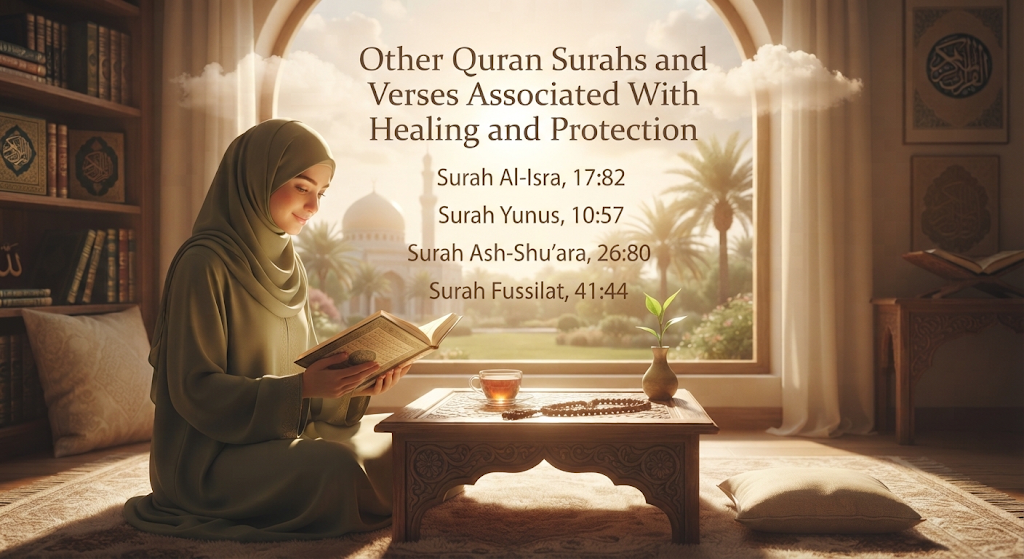
Other Quran Surahs and Verses Associated With Healing and Protection
Although Surah Al-Fatihah has the strongest specific connection to Ruqyah, several other Quranic Surahs and verses are commonly recited for protection, comfort, and seeking Allah’s help. They can therefore be relevant when looking for the best Quran Surah for healing or health.
Surah Al-Isra, 17:82
وَنُنَزِّلُ مِنَ ٱلۡقُرۡءَانِ مَا هُوَ شِفَآءٞ وَرَحۡمَةٞ لِّلۡمُؤْمِنِينَ وَلَا يَزِيدُ ٱلظَّٰلِمِينَ إِلَّا خَسَارٗا
“And We send down of the Quran that which is healing and mercy for the believers.”
This is one of the clearest verses describing the Surah for health in the Quran as Shifa and mercy, emphasizing its spiritual impact on believers.
{ يَا أَيُّهَا النَّاسُ قَدْ جَاءَتْكُم مَّوْعِظَةٌ مِّن رَّبِّكُمْ وَشِفَاءٌ لِّمَا فِي الصُّدُورِ وَهُدًى وَرَحْمَةٌ لِّلْمُؤْمِنِينَ }
“O mankind, there has come to you instruction from your Lord and healing for what is in the hearts…”
This verse connects Quranic healing particularly with what affects the heart, including spiritual doubts, distress, and weaknesses.
Surah Ash-Shu’ara, 26:80
“وَإِذَا مَرِضْتُ فَهُوَ يَشْفِينِ”
“And when I am ill, it is He who cures me.”
These words from Prophet Ibrahim ﷺ emphasize that Allah is the ultimate source of healing and cure.
Surah Fussilat, 41:44
وَلَوْ جَعَلْنَاهُ قُرْآنًا أَعْجَمِيًّا لَقَالُوا لَوْلَا فُصِّلَتْ آيَاتُهُ ۖ أَأَعْجَمِيٌّ وَعَرَبِيٌّ ۗ قُلْ هُوَ لِلَّذِينَ آمَنُوا هُدًى وَشِفَاءٌ ۖ وَالَّذِينَ لَا يُؤْمِنُونَ فِي آذَانِهِمْ صَمَمٌ وَهُوَ عَلَيْهِمْ عَمًى ۚ أُولَئِكَ يُنَادَوْنَ مِنْ مَكَانٍ بَعِيدٍ
“Had We revealed it as a non-Arabic Quran, they would have argued, ‘If only its verses were made clear [in our language]. Why is it [recited] in a foreign tongue [to] an Arab [audience]?’ Say, ‘It is a guide and a healing to the believers. As for those who disbelieve, there is deafness in their ears and it is blindness for them. They are [like those who are] being called from a faraway place [and cannot hear properly].'”
The Quran is described as guidance and healing for those who believe, reinforcing its role in spiritual guidance and reassurance. Together, these verses explain why Muslims may turn to the best Quran Surah for healing, comfort, guidance, and strength, while physical illnesses should still receive appropriate medical care.
Healing Verses and Surahs in the Quran: A Quick Guide?
If you are looking for a Quran Surah for healing, it helps to understand the purpose and context of different Quranic passages. Some verses explicitly describe the Quran as healing, while authentic Prophetic narrations highlight particular recitation practices.
| Quranic passage | What it teaches |
|---|---|
| Surah Al-Fatihah | Used as Ruqyah in an authentic Prophetic narration |
| Surah Al-Ikhlas | Affirms the oneness of Allah and is recited in the Sunnah alongside the Mu’awwidhatayn |
| Surah Al-Falaq and Surah An-Nas | Recited by the Prophet ﷺ as part of his nightly practice of seeking Allah’s protection |
| Surah Yunus 10:57 | Describes the Quran as instruction, healing for what is in the hearts, guidance, and mercy |
| Surah Al-Isra 17:82 | Describes the Quran as healing and mercy for believers |
| Surah Ash-Shu’ara 26:80 | Reminds believers that Allah is the One who grants healing |
This guide distinguishes between verses that describe Shifa and passages used in established devotional practices. It does not mean that every passage is a specifically prescribed cure for a particular illness. Muslims can recite the Quran and make Dua while also seeking appropriate medical care.
How Does Quranic Healing Work in Islam?
Quranic healing, or Shifa, refers to seeking Allah’s help and healing through the recitation, reflection, and application of His words. It is based on faith that Allah is the ultimate source of healing while recognizing the spiritual benefits of the Quran.
One common practice is Ruqyah, which involves reciting Quranic verses and authentic supplications while asking Allah for protection and healing. Surah Al-Fatihah has a particularly strong connection to this practice.
Quranic healing can provide spiritual comfort, hope, reassurance, and strength, especially during difficult times. However, it should not be treated as a replacement for medical diagnosis or treatment. Muslims can combine Dua and Quranic recitation with appropriate healthcare while placing their trust in Allah.
How Did the Prophet ﷺ Recite the Three Quls?
Aisha (may Allah be pleased with her) reported that when Prophet Muhammad ﷺ went to bed each night, he would recite Surah Al-Ikhlas, Surah Al-Falaq, and Surah An-Nas into his cupped hands, blow into them, and wipe his hands over the parts of his body he could reach. He did this three times.
This authentic narration highlights a practical Sunnah involving the three short Surahs, commonly known as the Three Quls. It is especially useful for readers who want to understand how Quranic recitation and seeking Allah’s protection are reflected in the Prophet’s practice.
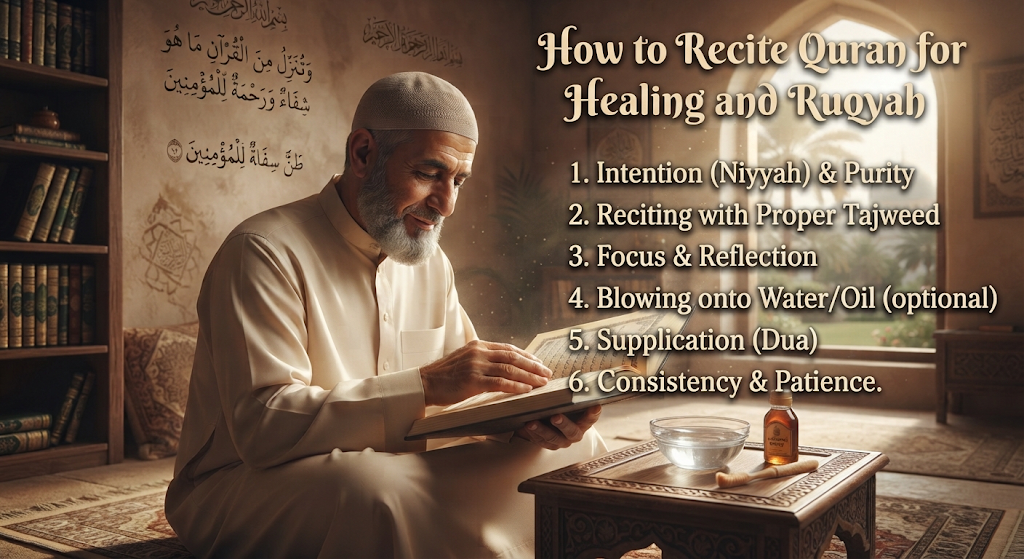
How to Recite Quran for Healing and Ruqyah
When using the Quran for Ruqyah, the intention should be to seek a Surah in quran for healing and protection from Allah rather than treating the recitation itself as an independent source of power.
A simple approach is to:
- Make a sincere intention and ask Allah for healing and protection.
- Recite Surah Al-Fatihah, which has a strong authentic connection to Ruqyah.
- Recite other established passages, such as Ayat Al-Kursi, Al-Ikhlas, Al-Falaq, and An-Nas.
- Make Dua for healing, protection, and well-being.
- Recite with understanding, sincerity, and Tawakkul (reliance on Allah).
Quranic recitation can be part of a Muslim’s spiritual practice during illness or hardship. For physical or psychological conditions, however, Ruqyah should be practiced alongside appropriate professional medical care rather than instead of it.
Can Quran Recitation Heal Physical and Emotional Illness?
The Quran is described as Shifa (healing) and mercy for believers, and reciting it can provide spiritual comfort, hope, patience, and reassurance during illness. Ruqyah is also an established Islamic practice of seeking Allah’s protection and healing through Quranic recitation and authentic supplications.
For emotional or spiritual difficulties, Quran recitation may help a person find calm, strengthen faith, and cope with hardship. For physical illness, however, Muslims should not assume that reciting a particular best Quran Surah for healing guarantees a medical cure.
The balanced approach is to recite the Quran, make Dua, and seek Allah’s help while also obtaining appropriate medical care. Healing ultimately comes from Allah, while doctors and treatments are among the means a person may take.
Is There a Specific Surah for Good Health or Health Recovery?
There is no single Surah in the Quran specifically prescribed as a guaranteed cure for physical illness or as the best Quran Surah for healing. However, the Quran as a whole is described as Shifa (healing), and certain Surahs and verses have a special place in Islamic practice.
Surah Al-Fatihah is the strongest specific example because of its established use in Ruqyah. Other passages, including Ayat Al-Kursi, Al-Ikhlas, Al-Falaq, and An-Nas, are commonly recited for protection and spiritual well-being.
Therefore, if you are searching for a quran surah for good health recovery, the balanced Islamic approach is to recite the Quran, make Dua, and seek Allah’s help while also taking appropriate medical means. The Quran offers spiritual guidance and comfort, while healing ultimately comes from Allah.
Start Your Quran Learning Journey Today
Join Quran Reading Academy and begin structured, step-by-step Quran reading with expert guidance.
Try your first class for freeWhat Is the Best Quran Surah for Healing?
If you are asking, “What is the best Quran Surah for healing?”, Surah Al-Fatihah is the strongest specific answer. Its connection to Ruqyah is established through authentic Prophetic practice, making it particularly significant for Muslims seeking spiritual healing through Quranic recitation.
However, the Quran does not teach that one Surah should be treated as a guaranteed medical cure. The Quran is described as Shifa and mercy, while healing comes from Allah. Surah Al-Fatihah, along with other Quranic passages, can therefore be recited with sincere faith, Dua, and Tawakkul.
For physical or psychological illness, Quranic recitation can be part of a believer’s spiritual practice, but it should be combined with appropriate professional medical care when needed.
Are There Specific Quran Verses for Healing From Illness?
The Quran includes verses that speak directly about healing, Allah’s mercy, and His power to cure. However, these verses should be understood in their full context rather than presented as guaranteed treatments for specific diseases.
For example:
- Surah Al-Isra (17:82): Describes the Quran as healing and mercy for believers.
- Surah Yunus (10:57): Describes the Quran as guidance, mercy, and healing for what is in the hearts.
- Surah Ash-Shu’ara (26:80): Prophet Ibrahim ﷺ says, “And when I am ill, it is He who cures me.”
These verses offer a meaningful foundation for reflecting on Shifa in the Quran and remembering that healing ultimately comes from Allah. Muslims may recite them, make Dua, and seek comfort through faith while obtaining appropriate medical assessment and treatment for illness.
A Simple Daily Quran Recitation Routine
Building a consistent Quran-reading habit can help you stay connected to Allah and make recitation a regular part of your day. Here is a simple routine based on established Quranic recitation practices:
- Morning: Begin your day with Quran recitation and Dua, including Surah Al-Ikhlas, Al-Falaq, and An-Nas.
- During illness or hardship: Recite Surah Al-Fatihah as Ruqyah and ask Allah sincerely for healing and ease.
- Before sleeping: Follow the Prophet’s ﷺ reported practice of reciting Al-Ikhlas, Al-Falaq, and An-Nas, then blowing into the cupped hands and wiping them over the body, repeating this three times.
You can adapt your routine to your circumstances and available time. The aim is consistency and sincere worship, not following an invented schedule or assuming that a specific number of recitations guarantees recovery.
Quran recitation and Dua can accompany medical treatment; they should not replace professional care when you are unwell.
How Quran Reading Academy Can Help You Learn the Healing Surahs Correctly
Knowing which Quran Surah for healing to recite is important, but learning to read the Quran correctly is equally valuable. Proper pronunciation, Tajweed, and understanding the meaning of the verses can help you approach Quran recitation with greater confidence and mindfulness.
At Quran Reading Academy, students can learn Quran recitation with qualified teachers through structured online lessons. Whether you want to improve your recitation of Surah Al-Fatihah, learn the shorter Surahs used in Ruqyah, or build a consistent Quran-reading routine, guided instruction can make the learning process easier.
The goal is not simply to memorize healing Surahs, but to develop a stronger and more meaningful relationship with the Quran through accurate recitation, understanding, and regular practice.
Learn Quran Recitation With Quran Reading Academy
Learning the Quran correctly takes more than simply reading the words. With the guidance of a qualified teacher, you can improve your Tajweed, pronunciation, memorization, and understanding while developing a consistent Quran-reading habit.
Quran Reading Academy offers online Quran lessons designed to help students learn from the comfort of home. Whether you are a beginner or want to improve your existing recitation, personalized instruction can help you progress with confidence.
Start Your Quran Learning Journey Today
If you want to read Surah Al-Fatihah and other Quranic Surahs correctly, now is a great time to begin. Join Quran Reading Academy and learn Quran recitation with structured lessons and experienced teachers.
Our Quran Courses
- Quran Reading Classes
- Quran Reading Classes for Kids
- Quran Reading Classes for Adults
- Quran Reading Classes for Female/Sisters
- Quran Reading Classes for New Muslims
- Quran Reading Course for Beginners
- Online Quran Reading Course with Tajweed
- Noorani Qaida Course
- Quran Course for Beginners
- Quran Recitation Course
- Quran Hifz Course
- Online Quran Qirat Classes
- Quranic Arabic Course
Start Your Quran Learning Journey Today
Join Quran Reading Academy and begin structured, step-by-step Quran reading with expert guidance.
Try your first class for freeConclusion
If you are looking for the best Quran Surah for healing, the best Surah in quran for health, Surah Al-Fatihah is the clearest specific answer because of its established connection to Ruqyah. At the same time, the Quran as a whole is described as Shifa and mercy for believers.
Quran recitation, Dua, and Ruqyah can provide spiritual comfort and help strengthen a believer’s connection with Allah. For physical or psychological illness, they should be combined with appropriate medical care rather than treated as a replacement for it.
Learning to recite the Quran correctly makes this practice even more meaningful. With Quran Reading Academy, you can learn Quran recitation and Tajweed with qualified teachers and build a consistent connection with the Quran.
Book your Quran lesson today and take the next step toward confident, meaningful Quran recitation.
FAQs
Which Surah in the Quran is for healing?
Surah Al-Fatihah is the clearest specific answer because of its established use in Ruqyah. The Quran as a whole is also described as Shifa (healing) and mercy for believers.
Is there a Quran Surah for health recovery?
The Quran can be recited while seeking Allah’s help and healing, but Islam does not establish one Surah as a guaranteed cure for illness. Quranic recitation, Dua, and medical treatment can be used together.
What are the healing Surahs in the Quran?
Commonly recited passages include Surah Al-Fatihah, Al-Ikhlas, Al-Falaq, and An-Nas, as well as Ayat Al-Kursi. Their purposes include Ruqyah, protection, remembrance, and spiritual comfort.
Can Quran recitation replace medical treatment?
No. Quran recitation and Ruqyah can be part of a believer’s spiritual practice, but they should not replace appropriate medical diagnosis or treatment. Muslims can seek medical care while placing their trust in Allah.
How should I recite the Quran for healing?
Recite Quranic passages sincerely, make Dua to Allah, and place your trust in Him. Surah Al-Fatihah has a particularly strong basis in authentic Ruqyah practice. If you are dealing with an illness, also seek appropriate professional care.



Leave a Reply