 Quran
When anxiety, sadness, or emotional distress feels overwhelming, turning to the Quran Surah for anxiety and depression can provide comfort, hope, and a reminder of Allah’s mercy. There is no single Surah prescribed as a medical cure for anxiety or depression, but several Surahs offer powerful messages of reassurance, patience, protection, and relief.
There is no single Quran Surah for anxiety and depression that is specifically prescribed as a medical treatment. However, several Surahs contain verses that can bring comfort, strengthen hope, encourage patience, and help Muslims turn to Allah during emotional distress.
If you are looking for the best Quran Surah for anxiety, Surah Ash-Sharh (Al-Inshirah) and Surah Ad-Duha are especially comforting because they focus on relief after hardship, reassurance, and Allah’s care. For sadness and prolonged hardship, Surah Yusuf offers powerful lessons about patience, trust, and hope.
Other beneficial choices include:
- Surah Al-Fatihah – for seeking Allah’s guidance, mercy, and help.
- Surah Ar-Rahman – for reflecting on Allah’s mercy and blessings.
- Surah Al-Falaq and Surah An-Nas – for seeking protection from fear, harmful thoughts, and distress.
- Surah Ar-Ra’d 13:28 – reminds believers that hearts find tranquility through the remembrance of Allah.
The best Surah for depression in the Quran is therefore not necessarily one specific chapter. Choose passages that speak to your emotional state while reading slowly, reflecting on their meaning, and turning to Allah through dua and dhikr.
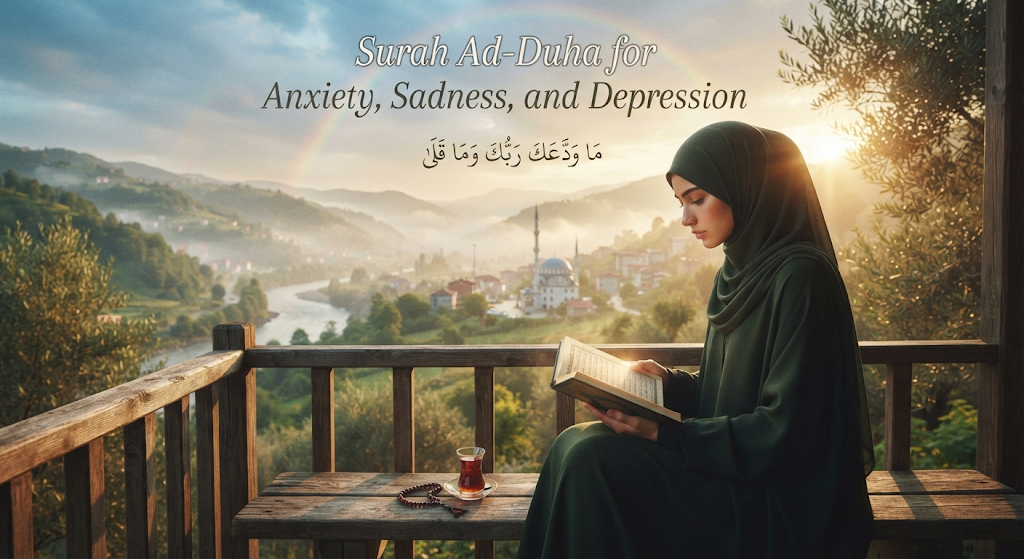
Surah Ad-Duha for Anxiety, Sadness, and Depression
Surah Ad-Duha (Surah 93) is one of the most comforting Surahs to read when you are experiencing sadness, loneliness, or emotional heaviness. It reminds the believer that Allah has not abandoned them and that difficult periods do not mean Allah’s mercy has disappeared.
The Surah begins with reassuring signs from Allah and reminds the Prophet Muhammad ﷺ that his Lord had not forsaken him. It also points to Allah’s past blessings and promises that what comes next can be better.
For someone searching for the best surah in quran for depression or a surah in quran for anxiety, Surah Ad-Duha can provide spiritual reassurance and encourage hope. It is especially meaningful when you feel alone, discouraged, or uncertain about the future.
Rather than viewing the Surah as a medical cure for depression, read it as a source of comfort, hope, reflection, and connection with Allah. Take time to understand its verses and consider how their messages relate to what you are experiencing.
Surah Ash-Sharh (Al-Inshirah) for Anxiety and Emotional Stress
Surah Ash-Sharh (Al-Inshirah), Surah 94, focuses on Allah’s reassurance to the Prophet Muhammad ﷺ and the relief, support, and ease that accompany hardship. The Surah begins by reminding him of Allah’s favor in expanding his chest, relieving his burden, and raising his mention.
Its most well-known message is repeated twice: “Indeed, with hardship comes ease” (94:5-6). This does not mean that every difficult situation will disappear immediately. Rather, the verses remind believers that hardship is accompanied by ease and encourage them not to lose hope during difficult times.
This makes Surah Ash-Sharh a meaningful Quran Surah for anxiety and emotional distress. Reading it with reflection can remind you to remain patient, trust Allah, and continue moving forward even when circumstances feel overwhelming.
For clinical anxiety or depression, however, the Surah should be understood as spiritual support rather than a substitute for professional treatment. Quran recitation, prayer, and dua can be part of a faith-based approach while appropriate mental-health care is sought when needed.
Is There an Authentic Hadith About Reading a Specific Surah for Anxiety?
Islamic teachings include authentic evidence for the spiritual value of Quran recitation and ruqyah (recitation for healing). For example, Sahih al-Bukhari narrates an incident in which a companion recited Surah Al-Fatihah as ruqyah for a person who had been stung, and the Prophet Muhammad ﷺ approved of this practice.
This narration supports the use of Al-Fatihah in ruqyah, but it does not establish that one particular Surah is a guaranteed cure for clinical anxiety or depression.
When choosing a Quran Surah for anxiety and depression, it is helpful to distinguish between authentic religious teachings and personal reading practices. You may reflect on Surah Ad-Duha for reassurance or Surah Ash-Sharh for its reminder of ease after hardship, without claiming that either Surah has a specific, guaranteed medical effect.
Similarly, avoid assigning a fixed number of repetitions or promising a particular outcome unless there is reliable evidence for that specific practice. Read the Quran with sincerity, seek Allah’s help through dua, and remember that spiritual practices can complement appropriate professional mental-health care.
Surah Yusuf: Finding Hope During Long Periods of Hardship
Surah Yusuf (Surah 12) offers more than a story of hardship. It allows believers to reflect on how they respond when life feels uncertain, painful, or beyond their control. Prophet Yusuf عليه السلام experienced betrayal, separation, injustice, and imprisonment, yet he continued to act with patience, integrity, and trust in Allah.
When reading the Surah during a difficult period, consider its lessons in relation to your own circumstances. You might ask yourself: What can I remain patient with? What is still within my control? How can I maintain hope while I wait for relief? These reflections can turn Quran reading into a more meaningful spiritual practice rather than simply reading the words without considering their message.
Surah Yusuf can be particularly meaningful for someone dealing with loss, loneliness, family difficulties, uncertainty, or prolonged hardship. Its story reminds the reader that a painful chapter does not necessarily represent the end of the story.
This makes Surah Yusuf a valuable quran surah for depression and quran surah to cure anxiety from a spiritual and reflective perspective. It does not replace professional mental-health treatment, but its lessons on patience, hope, and trust in Allah can complement appropriate care.

What Is the Best Quran Surah for Anxiety and Depression?
There is no single Quran Surah for anxiety and depression that is specifically prescribed as a medical treatment. However, several Surahs contain verses that can bring comfort, strengthen hope, encourage patience, and help Muslims turn to Allah during emotional distress.
If you are looking for the best Quran Surah for anxiety, Surah Ash-Sharh (Al-Inshirah) and Surah Ad-Duha are especially comforting because they focus on relief after hardship, reassurance, and Allah’s care. For sadness and prolonged hardship, Surah Yusuf offers powerful lessons about patience, trust, and hope.
Other beneficial choices include:
- Surah Al-Fatihah – for seeking Allah’s guidance, mercy, and help.
- Surah Ar-Rahman – for reflecting on Allah’s mercy and blessings.
- Surah Al-Falaq and Surah An-Nas – for seeking protection from fear, harmful thoughts, and distress.
- Surah Ar-Ra’d 13:28 – reminds believers that hearts find tranquility through the remembrance of Allah.
The best Surah for depression in the Quran is therefore not necessarily one specific chapter. Choose passages that speak to your emotional state while reading slowly, reflecting on their meaning, and turning to Allah through dua and dhikr.
Which Quran Surah Should You Read for Different Emotional Struggles?
Different Quranic passages offer different messages for reflection. If you are unsure where to begin, use this guide to choose a Surah based on the kind of reassurance or guidance you are seeking.
| When You Feel… | Surah to Reflect On | Key Message |
|---|---|---|
| Lonely or discouraged | Surah Ad-Duha (93) | Remember Allah’s care and mercy. |
| Overwhelmed by difficulties | Surah Ash-Sharh (94) | Reflect on the promise that hardship comes with ease. |
| Hurt by betrayal or facing prolonged hardship | Surah Yusuf (12) | Learn from the themes of patience, integrity, and hope. |
| Seeking guidance and help | Surah Al-Fatihah (1) | Turn to Allah through worship and supplication. |
| Focused on worries rather than blessings | Surah Ar-Rahman (55) | Reflect on Allah’s mercy and the blessings of creation. |
| Seeking refuge in Allah from fear and harmful whispers | Surah Al-Falaq (113) and Surah An-Nas (114) | Seek Allah’s protection and refuge. |
How to use this guide: Choose one passage, read it with a reliable translation if needed, and reflect on its message. You do not need to read every Surah at once or follow a prescribed number of repetitions.
How to Reflect on Quran Verses When You Feel Overwhelmed?
When anxiety or sadness makes it difficult to process your thoughts, reflecting on a few Quranic verses can be more manageable than trying to read a long passage at once. The aim is to understand the message and consider how it relates to your life.
Try these three questions as you read:
- What Does This Verse Teach Me About Allah? Notice what the verse reveals about Allah’s mercy, wisdom, guidance, or promises. For example, reflecting on Surah Ash-Sharh (94:5–6) can remind you of the Quranic message that hardship comes with ease.
- What Guidance Can I Take From This Verse? Consider whether the verse encourages patience, gratitude, trust in Allah, or seeking His help. Choose one lesson to remember rather than trying to apply every message at once.
- How Can I Respond to This Message Today? Turn your reflection into one small, realistic action. You might make dua, reach out to someone you trust, address a problem within your control, or give yourself time to rest.
You do not need to find an immediate answer to every difficulty. Quranic reflection is an act of worship and learning, not a test of how quickly you can overcome difficult emotions. Allow yourself time to understand the verses, and seek appropriate support if emotional distress becomes persistent or overwhelming.
What If You Cannot Concentrate While Reading the Quran?
Anxiety, sadness, and mental exhaustion can sometimes make it difficult to focus, even during activities that usually bring comfort. If your attention wanders while reading the Quran, do not assume that you are failing spiritually. Give yourself time and return to the verses gently.
Here are a few practical ways to make reading more manageable:
- Read a few verses at a time: You do not need to complete a whole Surah in one sitting. Choose a small passage and focus on its meaning.
- Follow the translation: If the Arabic meaning is difficult to understand, use a reliable translation alongside the original text.
- Listen while following the text: Listening to a Quran recitation as you read along may help you stay engaged with the verses.
- Avoid judging your progress: If you lose focus, return to the passage when you are ready. Do not turn Quran reading into another source of pressure.
- Choose a quieter environment: Reduce distractions where possible and select a time when you feel relatively comfortable.
Remember that the goal is to approach the Quran with sincerity and learn from its guidance, not to force yourself to concentrate perfectly. If difficulty concentrating persists alongside severe anxiety, low mood, or problems with daily activities, consider speaking with a qualified healthcare professional.
Quran Reading vs. Listening: Which Should You Choose?
Both reading the Quran and listening to its recitation can be meaningful ways to stay connected with Allah during periods of anxiety, sadness, or emotional exhaustion. The best choice depends on your circumstances and what helps you engage with the Quran.
When Reading the Quran May Help
Reading allows you to follow the verses at your own pace, review their meanings, and pause for reflection. If you are learning Quranic Arabic, following the text can also support your recitation and understanding.
- Read a few verses instead of setting a demanding target.
- Use a reliable translation if you do not understand Arabic.
- Pause when a verse reminds you of Allah’s mercy, patience, or guidance.
When Listening to the Quran May Be More Practical
If you feel tired or find it difficult to concentrate, listening to a recitation may be a manageable alternative. You can choose a familiar Surah, listen in a quiet place, and follow along with the written text if that feels helpful. Listening can also help you become familiar with correct pronunciation and rhythm as you continue learning to recite.
How to Make Dua When You Feel Anxious or Depressed?
When anxiety, sadness, or worry feels overwhelming, making dua can help you turn to Allah, express what you are experiencing, and ask for strength and relief. You do not need elaborate words; you can speak sincerely to Allah in your own words while also remembering authentic supplications taught in the Sunnah.
1. Dua for Anxiety, Worry, and Sadness
The Prophet Muhammad ﷺ taught this supplication:
اللَّهُمَّ إِنِّي أَعُوذُ بِكَ مِنَ الْهَمِّ وَالْحَزَنِ، وَالْعَجْزِ وَالْكَسَلِ، وَالْجُبْنِ وَالْبُخْلِ، وَضَلَعِ الدَّيْنِ وَغَلَبَةِ الرِّجَالِ
“O Allah, I seek refuge in You from worry and grief, incapacity and laziness, cowardice and miserliness, the burden of debt, and being overpowered by people.”
You can learn this dua gradually and recite it when you feel worried or burdened. Its meaning reminds you to seek Allah’s help with both emotional struggles and life’s difficulties.
2. Dua for Patience During Difficult Times
The Quran teaches believers to ask Allah for patience and steadfastness:
رَبَّنَا أَفْرِغْ عَلَيْنَا صَبْرًا وَثَبِّتْ أَقْدَامَنَا
“Our Lord, pour upon us patience and make our feet firm.”
This supplication can be meaningful when you face uncertainty, prolonged hardship, or situations beyond your control.
3. How to Make Dua When You Cannot Find the Words
If you feel emotionally exhausted, begin simply. You can ask Allah for comfort, guidance, patience, or help with a specific difficulty. You may also recite a short authentic supplication and reflect on its meaning.
There is no need to force yourself to feel better immediately or assume that difficult emotions mean your dua is inadequate. Continue seeking support from trusted people and qualified healthcare professionals when needed.
How to Build a Gentle Quran Routine on Difficult Days
When anxiety or low mood makes everyday tasks feel difficult, maintaining a Quran routine does not have to mean completing a long reading session. A small, realistic practice can help you stay connected to your faith without turning worship into another source of pressure.
- Set a Small, Achievable Goal: Choose a goal that fits your energy level that day. You might read a few verses of Surah Ad-Duha, listen to a short recitation, or reflect on one verse and its meaning. You can gradually increase your reading when you feel ready.
- Connect Quran Reading to an Existing Habit: Choose a time that naturally fits your day, such as after one of your daily prayers or before going to bed. Linking Quran reading to an established habit can make it easier to maintain consistently.
- Allow Your Routine to Change: Some days, you may have the energy to read and reflect. On other days, listening or reading a short translation may be more manageable. Adjusting your routine is more practical than setting a demanding target that becomes difficult to sustain.
- Focus on Consistency, Not Performance: Avoid measuring your spiritual connection by the number of pages you complete or expecting every session to make your sadness disappear. The purpose is to worship Allah, learn His words, and reflect on their guidance, not to demand an immediate emotional result.
- Make Room for Other Forms of Support:A gentle Quran routine can complement healthy daily habits, supportive relationships, adequate rest, and professional mental health care when needed. If anxiety or depression continues to affect your daily life, seek guidance from a qualified healthcare professional.
Choose a Quran practice you can approach with sincerity and flexibility. Even a short session can be a meaningful part of your day, without replacing other forms of care and support.
Surah Al-Fatihah for Spiritual Healing and Inner Peace
Surah Al-Fatihah is central to Muslim worship and is recited in every unit of the obligatory prayer. It is also a meaningful choice for anyone seeking spiritual comfort during periods of anxiety, sadness, or emotional distress.
The Surah centers on Allah’s mercy, guidance, worship, and help. Its repeated acknowledgment of Allah as the Most Merciful and the believer’s direct request, “Guide us to the straight path,” can encourage a sense of dependence on Allah and hope when life feels difficult.
For someone searching for a Quran Surah for anxiety and depression, reflecting on Al-Fatihah can turn recitation into a moment of prayer and connection with Allah. Rather than treating it as a guaranteed medical cure, focus on its spiritual message of seeking Allah’s mercy, guidance, and support.
When emotional difficulties persist or interfere with daily life, Quran recitation can be practiced alongside appropriate professional mental-health support.
Start Your Quran Learning Journey Today
Join Quran Reading Academy and begin structured, step-by-step Quran reading with expert guidance.
Try your first class for freeSurah Ar-Rahman for Comfort, Gratitude, and Hope
which quran surah for depression? Surah Ar-Rahman (Surah 55) repeatedly draws attention to Allah’s mercy and the blessings He has given His creation. Its message can be especially meaningful when anxiety or sadness makes it difficult to notice the good that remains in your life.
To make your reading more reflective, read the Surah slowly and with attention to its meaning rather than rushing through the verses. When you come across reminders of Allah’s blessings, pause briefly and identify a blessing you can be grateful for. You can then make a simple dua, asking Allah for peace, strength, and help through whatever you are facing.
You may also include Surah Ar-Rahman in your regular Quran routine, such as reading it after one of your daily prayers or listening to its recitation while following along with the translation. The goal is not to repeat the Surah a specific number of times as a guaranteed treatment, but to use its verses as an opportunity for dhikr, gratitude, reflection, and connection with Allah.
For anyone searching for the best Quran Surah for anxiety or best depression surah in quran, Surah Ar-Rahman can therefore be a meaningful source of spiritual comfort. However, persistent or severe anxiety and depression may require professional mental-health support alongside spiritual practices.
Surah Al-Falaq and Surah An-Nas for Fear, Negative Thoughts, and Seeking Protection
Surah Al-Falaq (113) and Surah An-Nas (114) are the final two Surahs of the Quran and are commonly recited as part of seeking Allah’s protection. They can be especially meaningful when a person is experiencing fear, worry, intrusive thoughts, or a sense of vulnerability.
- Surah Al-Falaq: Seeking Protection From External Harm: Surah Al-Falaq teaches the believer to seek refuge in Allah from different forms of harm. Reflecting on its meaning can reinforce the understanding that Allah is the ultimate source of protection and help.
- Surah An-Nas: Seeking Protection From Inner Whispers: Surah An-Nas focuses particularly on seeking refuge in Allah from the whispering that can affect the heart and mind. Its message can be comforting when repetitive worries or negative thoughts feel difficult to control.
Which Surah of quran is for depression? For someone looking for a Quran Surah for anxiety or a surah for depression in quran, these two Surahs can be included in a daily routine of Quran recitation, dua, and remembrance of Allah. They offer spiritual protection and reassurance, but they should not be presented as a medical cure for clinical anxiety or depression.
If distressing thoughts become persistent, overwhelming, or interfere with everyday life, seeking professional mental-health support remains important.
Quranic Verses for Anxiety, Sadness, and Emotional Distress
Beyond complete Surah, certain Quran Surah for anxiety and depression can offer powerful reminders of Allah’s mercy, ease, and ability to help. Reflecting on their meanings can make Quran reading more personal when you are experiencing emotional distress.
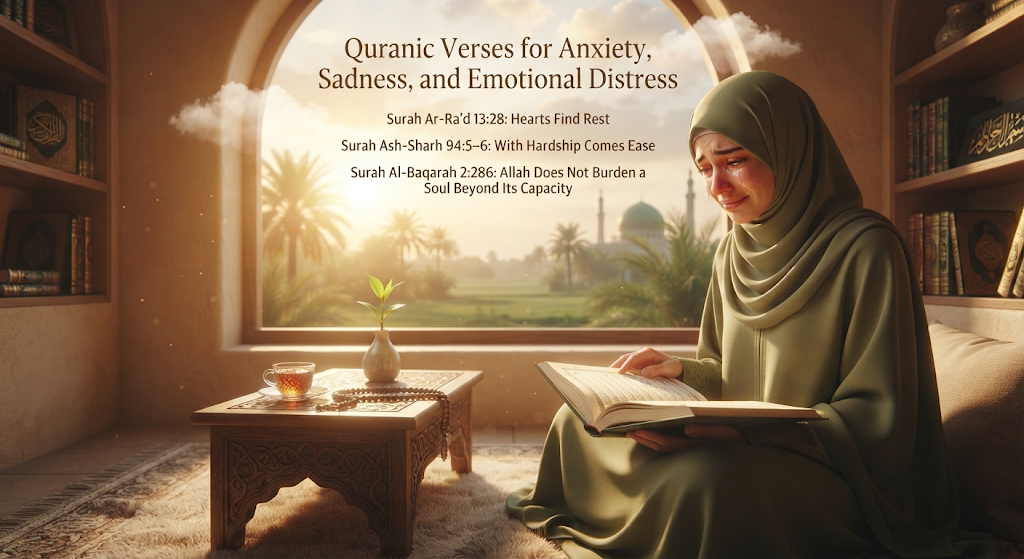
- Surah Ar-Ra’d 13:28: Hearts Find Rest: Allah says that hearts find rest through the remembrance of Allah. This verse highlights the connection between dhikr and inner tranquility. When feeling anxious or overwhelmed, reading the verse slowly and remembering Allah can become a meaningful spiritual practice.
- Surah Ash-Sharh 94:5-6: With Hardship Comes Ease: The repeated reminder that “with hardship comes ease” offers hope during difficult circumstances. Reflecting on these verses can encourage patience and remind you that hardship does not define your entire future.
- Surah Al-Baqarah 2:286: Allah Does Not Burden a Soul Beyond Its Capacity: This verse reminds believers that Allah does not burden a soul beyond its capacity. When life feels overwhelming, reflecting on this message can encourage trust in Allah while helping you approach difficulties one step at a time.
These verses should be approached as spiritual reminders rather than medical prescriptions. Quran recitation, dhikr, dua, and prayer can provide spiritual support, while professional care may be necessary when anxiety or depression becomes persistent or severe.
Can the Quran Cure Anxiety and Depression?
The Quran can provide spiritual comfort, hope, guidance, and reassurance during periods of anxiety, sadness, or emotional distress. Reading and reflecting on its verses can strengthen a person’s connection with Allah and encourage patience, trust, and remembrance.
However, it is important not to describe the Quran as a guaranteed medical cure for Quran Surah for anxiety and depression. Clinical depression and anxiety disorders can involve complex psychological, emotional, and physical factors and may require assessment and treatment from qualified professionals.
A balanced approach can include both spiritual and professional support. You can continue reading the Quran, making dua, praying, and practicing dhikr while also seeking appropriate mental-health care when needed.
If symptoms are persistent, severe, or affecting sleep, relationships, work, worship, or daily activities, speaking with a qualified mental-health professional is an important step. Seeking treatment does not mean having weak faith; it can be part of taking the means available to you while placing your trust in Allah.
Start Your Quran Learning Journey Today
Join Quran Reading Academy and begin structured, step-by-step Quran reading with expert guidance.
Try your first class for freeHow to Read the Quran When You Feel Anxious or Depressed
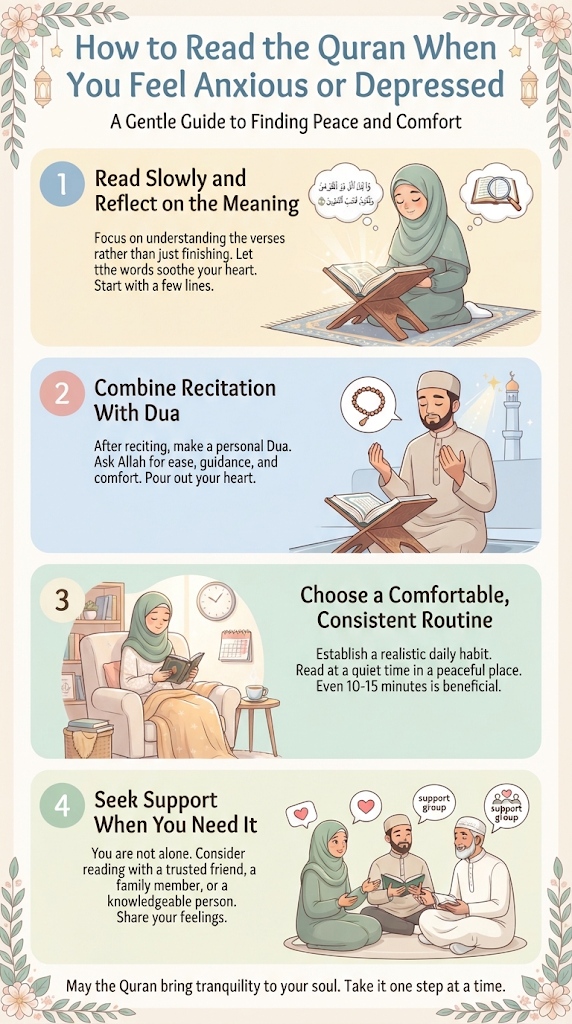
When you feel anxious, sad, or emotionally overwhelmed, you do not need to finish a specific number of pages to benefit spiritually from Quran reading. Focus on consistency, understanding, and sincere reflection rather than quantity.
- Read Slowly and Reflect on the Meaning: Choose a Surah or a few verses that speak to your situation. Read them slowly, and if possible, read a reliable translation to understand the message. Pause when a verse gives you hope, reminds you of Allah’s mercy, or encourages patience.
- Combine Recitation With Dua: After reading, take a moment to make dua in your own words. Ask Allah for peace, strength, guidance, and relief from your difficulties. This can make Quran reading a more personal act of worship rather than simply completing a reading target.
- Choose a Comfortable, Consistent Routine: You might read for a few minutes after one of your daily prayers, before sleeping, or at another quiet time. A manageable routine is often easier to maintain than setting an unrealistic reading goal.
- Seek Support When You Need It: Quran reading can provide spiritual support, but you do not have to face serious emotional difficulties alone. If anxiety or depression is persistent or interfering with your daily life, consider speaking with a qualified mental-health professional while continuing your spiritual practices.
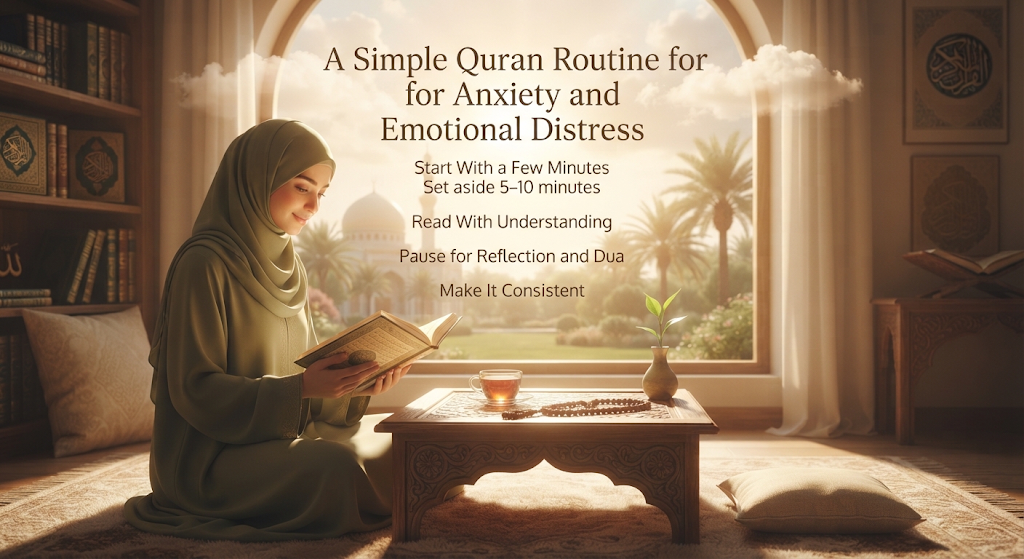
A Simple Routine for Quran Surah for anxiety and depression
If you are looking for a Quran Surah for anxiety and depression, creating a simple and consistent reading routine can make Quran reflection easier to maintain. The goal is not to read a specific Surah a fixed number of times as a guaranteed treatment, but to build a regular connection with the Quran and Allah.
- Start With a Few Minutes: Set aside 5-10 minutes at a time that works for you, such as after Fajr, Maghrib, or before bed. Begin with a manageable amount of Quran rather than setting a demanding target.
- Read With Understanding: Choose a Surah such as Ad-Duha, Ash-Sharh, Yusuf, or Ar-Rahman, and read its translation alongside the Arabic text when needed. Focus on one message that relates to what you are experiencing.
- Pause for Reflection and Dua: After reading, spend a few moments reflecting on the verses and making dua. You can ask Allah for patience, guidance, peace, and strength while trusting Him through your circumstances.
- Make It Consistent: A short daily practice can be more sustainable than occasional long reading sessions. Over time, Quran recitation, reflection, prayer, and dhikr can become a meaningful part of your spiritual routine.
Remember that this routine is spiritual support, not a replacement for mental-health treatment. If anxiety or depression is persistent or significantly affecting your life, seek appropriate professional support alongside your Quran practice.
Does Anxiety or Depression Mean You Have Weak Faith?
No. Experiencing anxiety or depression does not automatically mean that you have weak faith. Emotional struggles are part of the human experience, and experiencing sadness, fear, or psychological distress does not make a person a bad Muslim.
Islam encourages believers to turn to Allah through prayer, dua, Quran recitation, dhikr, patience, and trust, but it also recognizes the importance of taking appropriate means to address difficulties. Seeking professional mental-health support is not a rejection of faith.
It can be helpful to think of spiritual and professional support as complementary. Quran reading may strengthen your sense of hope and connection with Allah, while a qualified mental-health professional can help address persistent symptoms through appropriate care.
If you are struggling, avoid blaming yourself for your emotional state. Instead, seek help, continue your acts of worship according to your ability, and remember that asking for support is not a sign of spiritual failure.
When Should You Seek Professional Help for Anxiety or Depression?
Quran Surah for anxiety and depression, dua, prayer, and dhikr can provide valuable spiritual support, but they should not prevent you from seeking professional help when emotional difficulties become persistent or severe.
Consider speaking with a qualified mental-health professional if anxiety or depression:
- Continues for an extended period or keeps returning.
- Makes it difficult to work, study, sleep, worship, or manage daily responsibilities.
- Causes intense fear, hopelessness, or persistent emotional distress.
- Leads you to withdraw from family, friends, or activities you normally value.
- Becomes difficult to manage despite your usual coping strategies.
Seeking professional support does not mean that your faith is weak. Spiritual practices and mental-health care can exist together. You can continue reading the Quran and making dua while receiving appropriate support for your emotional or psychological needs.
Learn to Read and Understand the Quran With Quran Reading Academy
Reading the Quran becomes more meaningful when you can recite its verses correctly and understand the messages they convey. Quran Reading Academy provides online Quran classes designed to help students build a stronger and more confident relationship with the Quran.
With qualified Quran teachers and one-on-one online lessons, students can improve their Quran reading, recitation, Tajweed, and memorization while learning at a flexible pace. Understanding how to read and reflect on Surahs such as Ad-Duha, Ash-Sharh, and Yusuf can make your Quran journey more intentional and spiritually enriching.
Whether you are a beginner or looking to improve your existing Quran skills, learning with a structured program can help you develop a consistent Quran-reading routine from the comfort of your home.
Our Quran Courses
- Quran Reading Classes
- Quran Reading Classes for Kids
- Quran Reading Classes for Adults
- Quran Reading Classes for Female/Sisters
- Quran Reading Classes for New Muslims
- Quran Reading Course for Beginners
- Online Quran Reading Course with Tajweed
- Reading and Memorizing the Quran Course
- Noorani Qaida Course
- Quran Course for Beginners
- Quran Tajweed Course
- Quran Recitation Course
- Quran Hifz Course
- Online Quran Qirat Classes
- Quranic Arabic Course
- Arabic Reading Practice Course
Start Your Quran Learning Journey Today
Join Quran Reading Academy and begin structured, step-by-step Quran reading with expert guidance.
Try your first class for freeConclusion
When anxiety, sadness, or emotional distress feels overwhelming, the Quran can be a powerful source of spiritual comfort, hope, and reassurance. Surahs such as Ad-Duha, Ash-Sharh, Yusuf, Al-Fatihah, and Ar-Rahman offer meaningful reminders of Allah’s mercy, patience, relief, and guidance.
There is no single Quran Surah for anxiety and depression that should be considered a guaranteed medical cure. Instead, read the Quran with understanding and reflection, make dua, practice dhikr, and seek professional support when emotional difficulties require it. Caring for your mental health does not conflict with your faith.
With consistent Quran reading and proper guidance, you can build a deeper connection with Allah and develop a more meaningful relationship with His Book. Quran Reading Academy can help you strengthen your Quran reading, recitation, Tajweed, and understanding through personalized online lessons.
FAQs
What Is the Best Quran Surah for Anxiety?
Surah Ash-Sharh (Al-Inshirah) and Surah Ad-Duha are often especially comforting for anxiety because they remind believers of Allah’s mercy and the possibility of ease after hardship.
Is There a Surah in the Quran Specifically for Depression?
No Surah is specifically designated in the Quran as a medical treatment for clinical depression. However, many Surahs provide spiritual guidance and comfort that can help a believer cope with sadness and emotional distress.
Which Surah Should I Read When I Feel Anxious?
You can read Ad-Duha, Ash-Sharh, Al-Fatihah, Ar-Rahman, Al-Falaq, or An-Nas, depending on which message speaks most meaningfully to your situation. Reading with understanding and reflection is more important than choosing a particular Surah as a guaranteed remedy.
Can Reading the Quran Help With Anxiety and Depression?
Quran reading can provide spiritual comfort, hope, remembrance of Allah, and emotional reassurance. However, it should not replace professional treatment for diagnosed anxiety or depression. Spiritual practices and appropriate mental-health care can be used together.
Is There a Specific Surah That Cures Depression?
There is no basis for claiming that one specific Surah is a guaranteed medical cure for depression. The Quran can be a source of spiritual healing and guidance, while clinical depression may require professional assessment and treatment.
Related Articles
Quran








Leave a Reply