 Fatawa

| Key Takeaways |
| A person in a state of janabah (major ritual impurity) cannot read Quran — from a phone, from memory, or from a physical Mushaf — until they perform ghusl. |
| Touching the physical Mushaf is forbidden for anyone in a state of major ritual impurity, regardless of whether it is a printed copy or a phone screen displaying Quran. |
| A menstruating woman or one in nifas (postnatal bleeding) differs from the junub: the stronger scholarly opinion permits them to read Quran by memory or from a phone without touching the Mushaf directly. |
| A person in a state of minor ritual impurity (without wudu) may read Quran from memory or a phone, but must not touch the physical Mushaf pages without wudu. |
| Dhikr, tasbih, and tahlil are permissible for a junub person at all times — only Quranic recitation is restricted until ghusl is performed. |
Many Muslims today use Quran apps on their phones as their primary way of connecting with the Book of Allah — reading during commutes, before sleep, or in quiet moments throughout the day.
This makes the question of purity especially relevant: what happens when you are in a state of major ritual impurity? Can the phone screen change the ruling?
Can You Read Quran Without Ghusl on Phone?
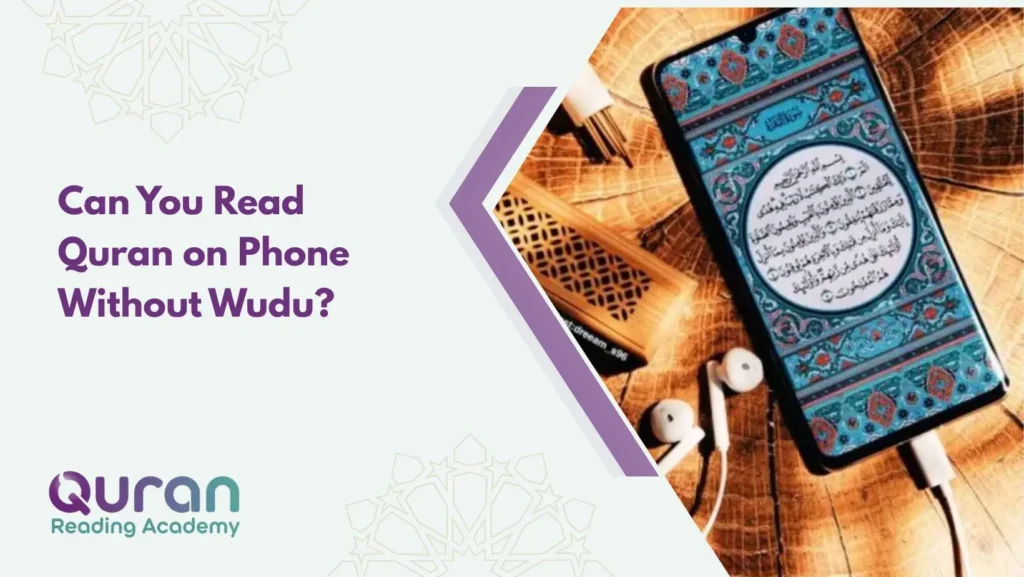
A person in a state of janabah cannot read the Quran on their phone until they perform ghusl. This ruling holds whether the Quran is displayed on a phone screen, a tablet, or a computer monitor.
The four major madhabs — Hanafi, Maliki, Shafi’i, and Hanbali — are in agreement on this point. The restriction applies to recitation itself, not merely to physical contact with a bound Mushaf.
This is a question I encounter regularly from students at The Quran Reading Academy, particularly adult beginners who are just establishing their daily reading habits.
The reasoning behind the ruling is clear: the prohibition on a junub person reading Quran is tied to the sanctity of Allah’s words, not to the material object in which they appear.
A phone screen displaying Surah Al-Baqarah carries the same words — and the same spiritual weight — as any printed Mushaf.
If you are working toward consistent Quran reading and want to understand proper etiquette around recitation, our guide on Quran reading etiquettes and manners covers this topic in depth.
For students who are building their reading from the ground up, the Quran Reading Course for Beginners at The Quran Reading Academy provides a structured, etiquette-conscious learning environment from the very first lesson.
Enroll in Our Quran Reading Course for Beginners with a Free Trial

What Does “State of Janabah” Mean in Islamic Jurisprudence?
Janabah is a state of major ritual impurity that occurs after sexual intercourse or ejaculation. It is referred to as hadath akbar — a major ritual impurity that requires ghusl (full ritual bath) to be lifted, as opposed to the minor impurity (hadath asghar) that requires only wudu.
A person in this state is called junub. The restrictions placed on a junub person are more stringent than those on someone who simply lacks wudu. Understanding this distinction is foundational for every Muslim learning to manage their worship correctly.
The Difference Between Major and Minor Ritual Impurity
| State | Arabic Term | Cause | Removes With | Quran Reading Ruling |
| Minor impurity | Hadath asghar | Breaking wudu | Wudu | Permitted by memory or phone; Mushaf touch restricted |
| Major impurity | Hadath akbar | Janabah | Ghusl | Prohibited entirely until ghusl |
| Menstruation / Nifas | Haid / Nifas | Natural cycle | Ghusl after cycle ends | Permitted by memory/phone in stronger scholarly view |
This table reflects the core distinctions that govern recitation rights. Many students conflate these states, which leads to unnecessary confusion about what is and is not permissible.
Shots Videos from Our Courses
Start Your Quran Learning Journey Today
Join Quran Reading Academy and begin structured, step-by-step Quran reading with expert guidance.
Try your first class for freeCan You Read Quran in a State of Janabah at All?
No — reading Quran in a state of janabah is not permitted in any form, according to the agreed-upon position of the four schools of Islamic jurisprudence.
This prohibition covers recitation from the Mushaf, recitation from memory, and recitation from a digital screen. The junub person must perform ghusl first.
The Quran itself emphasizes the importance of ritual purity in approaching Allah’s words. Allah says:
لَّا يَمَسُّهُۥٓ إِلَّا ٱلْمُطَهَّرُونَ
Lā yamassuhū illā l-muṭahharūn
“None touch it except the purified.” (Al-Waqi’ah 56:79)
While scholars have discussed whether this verse refers to the preserved tablet or to the physical Mushaf in the hands of humans, it establishes an overarching principle: approaching the Quran requires a state of purification. This principle underpins the ruling on janabah.
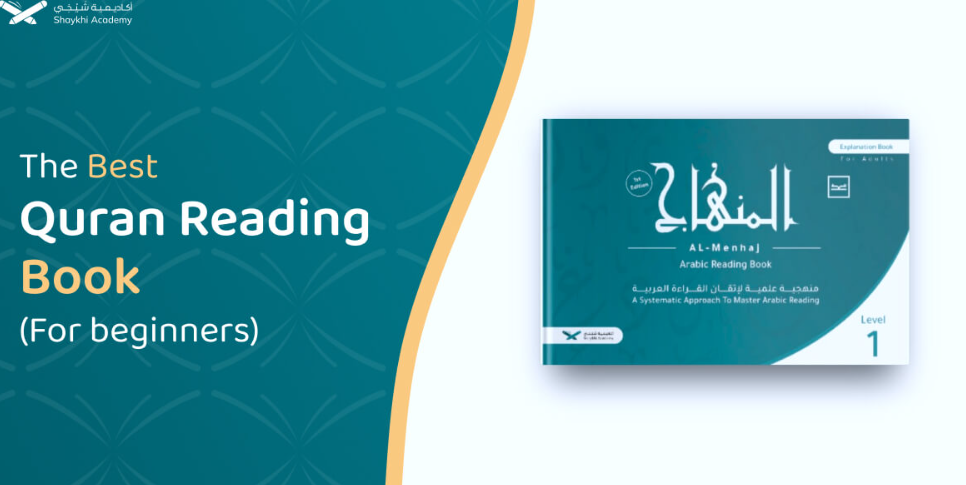
If you are still developing your foundational reading skills, the Al-Menhaj Book — authored by Luqman ElKasabany and developed by The Quran Reading Academy’s experienced instructors — provides a structured path from Arabic letter recognition all the way to confident Quran reading. Starting with a strong foundation means that every time you sit down with the Mushaf, your reading is accurate and purposeful.
Explore The Best Quran Reading Book for FREE
What Is Permitted for a Junub Person While Waiting for Ghusl?
While Quranic recitation is prohibited, several forms of worship remain fully permissible for a junub person. This is a mercy in the religion, ensuring that a Muslim is never completely cut off from remembrance of Allah.
A junub person may engage in:
- Dhikr — including SubhanAllah, Alhamdulillah, Allahu Akbar
- Tahlil — saying La ilaha illallah
- Tasbih — glorification formulas not taken from Quranic text as recitation
- Du’a — supplication in any language
The key distinction scholars draw is between reading Quran as Quran — with the intention of recitation — and utterances that are also found in the Quran but said as dhikr or du’a.
A junub person saying “Alhamdulillah” or “Bismillah” is not reciting Quran; they are making dhikr, which remains permitted.
Start Your Quran Learning Journey Today
Join Quran Reading Academy and begin structured, step-by-step Quran reading with expert guidance.
Try your first class for freeDoes the Phone Screen Change the Ruling on Quran Recitation for a Junub Person?
Using a phone app does not change the ruling for a junub person — Quranic recitation remains prohibited regardless of the medium. Some Muslims assume that because a phone is not a Mushaf, the same restrictions do not apply. This assumption, while understandable, is not supported by scholarly consensus.
The prohibition for the junub person is tied to the act of reciting the words of Allah — not to touching a physical bound copy.
Scholars who distinguish between touching the Mushaf and reciting from memory are not creating a loophole for phone screens; they are addressing two separate rulings. The recitation prohibition applies equally to a phone screen.
For students who want to understand these distinctions properly, our detailed guide on how to read the Quran explains the foundations of approaching Quranic reading correctly.
Can Menstruating Women and Those in Nifas Read the Quran?
The stronger scholarly opinion, held by major contemporary scholars including Sheikh Ibn Baz (rahimahullah), is that menstruating women and those in postnatal bleeding (nifas) may read Quran from memory or from a phone without directly touching the Mushaf pages, unlike the junub person who must delay all recitation until ghusl.
The reasoning behind this distinction is practical and compassionate: the state of menstruation or nifas extends over many days — sometimes up to ten days for nifas or more.
Preventing a woman from all Quranic recitation for this extended period would cause her to lose memorization, miss daily reading habits, and face undue hardship.
The junub person, by contrast, can perform ghusl immediately and resume recitation within minutes.
A Summary of the Scholarly Positions
| Ruling | Junub Person | Menstruating / Nifas Woman |
| Read Quran by memory | ❌ Prohibited | ✅ Permitted (stronger opinion) |
| Read Quran from phone | ❌ Prohibited | ✅ Permitted (stronger opinion) |
| Touch physical Mushaf pages | ❌ Prohibited | ❌ Prohibited |
| Dhikr and du’a | ✅ Permitted | ✅ Permitted |
It is worth noting that some scholars do hold that menstruating women and those in nifas are also prohibited from Quranic recitation, by analogy with the junub person.
However, the preponderant position — and the fatwa of Sheikh Ibn Baz — is that they are not equivalent cases, and recitation by memory or from a digital device without direct Mushaf contact is permissible for them.
Read Also: Can You Read Quran on Phone Without Wudu?
Our Students Reviews
Start Your Quran Learning Journey Today
Join Quran Reading Academy and begin structured, step-by-step Quran reading with expert guidance.
Try your first class for freeRead Also: Can I Read Quran Without Wudu?
Start Your Quran Reading Journey with The Quran Reading Academy
Understanding purity rules is one part of approaching the Quran with the reverence it deserves. The other part is reading it correctly — with proper Tajweed, accurate pronunciation, and a systematic approach to learning.
The Quran Reading Academy offers:
- Certified, experienced instructors with up to 25 years of teaching experience
- Specialized courses for kids, adults, sisters, and new Muslims
- Structured learning through the Al-Menhaj Book for complete beginners
- Flexible online classes designed for non-Arabic speakers worldwide
Book your free trial lesson today and take your first step toward confident, correct Quran recitation — Insha’Allah.
Check out our top courses to help you read the Quran with confidence:
- Quran Reading Course With Tajweed
- Noorani Qaida Course
- Quran Reading Course for Beginners
- Quran Reading Classes for Adults
- Quran Reading Classes for Sisters
- Quran Reading Classes for Kids
- Quran Hifz Course
- Arabic Reading Practice Course
- Quranic Arabic Course
Book your free class today—it’s the perfect start to learning the Quran

Conclusion
The ruling on reading Quran without ghusl — whether on a phone or otherwise — is clear and consistent across the four schools of Islamic jurisprudence: a junub person must complete ghusl before reciting any portion of the Quran, regardless of the medium used. The phone screen is not a loophole; the words of Allah carry their sanctity in every format.
Understanding the distinction between the junub person and the menstruating or postnatal woman, and knowing what worship remains open during states of impurity, empowers every Muslim to manage their spiritual life with clarity. The religion does not abandon you during these states — dhikr, du’a, and remembrance remain open doors.
Use every moment of purification as a renewed invitation to return to the Quran with full presence and proper etiquette.
Start Your Quran Learning Journey Today
Join Quran Reading Academy and begin structured, step-by-step Quran reading with expert guidance.
Try your first class for freeRead Also: Is It Fard to Read Quran?
Frequently Asked Questions About Reading Quran Without Ghusl
Can you read Quran without ghusl if you use a phone app instead of a Mushaf?
No. Using a phone app does not change the ruling for a junub person. Quranic recitation is prohibited in a state of janabah regardless of the medium — phone, tablet, or physical Mushaf. The restriction applies to reciting the words of Allah, not only to touching a bound copy. Ghusl is required before any recitation.
Can you read Quran without ghusl if you recite from memory only?
No. Reciting from memory is also prohibited for a junub person. The ruling covers all forms of Quranic recitation — from a physical Mushaf, a digital screen, or from memory. All four schools of Islamic jurisprudence are in agreement on this point. Ghusl must be performed first.
Can a menstruating woman read Quran on her phone without ghusl?
Yes, according to the stronger scholarly opinion. A menstruating woman or one in nifas may read Quran from memory or from a phone without directly touching the physical Mushaf pages. Her situation differs from the junub person because her state extends over multiple days, making a blanket prohibition on recitation unduly burdensome and likely to cause loss of memorization.
Is it permissible to make dhikr or du’a in a state of janabah?
Yes. Dhikr, tasbih, tahlil, and du’a are all permissible for a junub person. The prohibition applies specifically to Quranic recitation — reading or reciting verses of the Quran with the intention of recitation. Saying “SubhanAllah,” “Alhamdulillah,” or making personal supplication does not fall under this restriction.
Does touching the phone screen displaying Quran require wudu?
Scholars generally hold that touching a phone screen displaying Quran does not carry the same ruling as touching the physical pages of a Mushaf. However, a person in a state of janabah still cannot recite from that screen. For someone in minor impurity (without wudu), touching the phone screen is considered permissible by many contemporary scholars, though wudu remains recommended for full respect of the Quran.







Leave a Reply