 Fatawa
| Key Takeaways |
| Reading the Quran is not individually obligatory (fard ‘ayn) for every Muslim according to mainstream scholarly consensus. |
| Scholars classify regular Quran recitation as a confirmed Sunnah and highly recommended act, not a binding individual duty. |
| Huffaz (those who have memorized the Quran) face stronger scholarly emphasis on regular recitation to prevent forgetting their memorization. |
| Classical scholars considered it disliked (makruh) for a Muslim to go more than forty days without completing a full recitation. |
| Every Muslim is spiritually encouraged to recite the Quran regularly, as it intercedes for its companions on the Day of Judgment. |
Many Muslims — especially those still learning to read Arabic — carry a quiet anxiety about whether they are sinning by not reading the Quran every single day.
Reading the Quran is one of the most virtuous acts a Muslim can perform, and the evidence for its immense reward is overwhelming.
However, classical Islamic scholarship draws a careful, important distinction between what is obligatory and what is deeply encouraged — and understanding that distinction will change how you relate to this noble book.
Is It Fard to Read the Quran for Every Muslim?
Reading the Quran is not fard (obligatory) in the sense of being an individual religious duty imposed on every Muslim. Mainstream Islamic scholarship classifies regular Quran recitation as a confirmed Sunnah and a highly meritorious act — not a binding obligation whose neglect results in sin.
Scholars note that neither the Quran nor authentic Sunnah establishes a specific recitation quota as individually compulsory for all Muslims.
This is a nuanced and important distinction. The Quranic commands to recite — such as Allah’s words to His Prophet ﷺ — are understood by scholars as guidance and encouragement, not as establishing a universal fard ‘ayn (individual obligation) on every believer.
In the science of Islamic legal theory (Usul al-Fiqh), a command that praises an act or describes its virtue does not automatically make that act obligatory.
What the Quran Says About Recitation
Allah ﷻ addresses His Prophet ﷺ with the command:
وَأَنْ أَتْلُوَ ٱلْقُرْءَانَ
Wa an atluw al-Qur’ān
“And to recite the Quran.” (An-Naml 27:92)
This verse — alongside similar commands — establishes the profound importance of recitation. Scholars acknowledge its weight, but classify such commands within the broader framework of strong encouragement rather than compulsory individual duty.
Designed to establish Arabic literacy from the ground up, our Quran Reading Classes for New Muslims require no previous experience.
Start Reading Quran With a Free Trial Today
What Scholars Have Said About a Muslim Who Habitually Neglects the Quran?
Classical jurists, hadith scholars, and commentators did not rule that a Muslim who goes a week without reading the Quran has committed a sin. What they did emphasize is that a Muslim who habitually neglects the Quran — particularly one who has memorized it — falls into blameworthy territory.
Ibn Qudamah stated in Al-Mughni that it is disliked (makruh) to delay completing a full recitation of the Quran beyond forty days without a valid excuse.
Imam Ahmad’s position, as cited in the same text, was that forty days represents the outer limit of acceptable spacing between khatms (completions). This framing — using the language of karahah (dislike) rather than tahrim (prohibition) — reveals the scholarly category these scholars were working within.
Does Every Muslim Have to Read the Quran Regularly?
Every Muslim is strongly and repeatedly encouraged to read the Quran regularly — and there is no doubt that abandoning it entirely is spiritually harmful. However, “strongly encouraged” and “obligatory” are two distinct legal categories in Islamic jurisprudence, and conflating them does a disservice to both the religion and the believer.
The Prophet ﷺ said:
“Recite the Quran, for it will come on the Day of Resurrection as an intercessor for its companions.” (Sahih Muslim 804)
This hadith uses a clear imperative — iqra’u (recite!) — which reflects the enormous value and spiritual urgency of recitation. Yet scholars of Usul al-Fiqh have consistently analyzed this type of command within its full textual and legal context, not in isolation.
The Spiritual Harm of Complete Neglect of Reading the Quran
While recitation is not fard, completely abandoning the Quran is considered a serious spiritual failing. Allah ﷻ tells us that the Prophet ﷺ will say on the Day of Judgment:
وَقَالَ ٱلرَّسُولُ يَٰرَبِّ إِنَّ قَوْمِى ٱتَّخَذُوا۟ هَٰذَا ٱلْقُرْءَانَ مَهْجُورًا
Wa qāla r-rasūlu yā rabbi inna qawmī ttakhadhū hādhā l-Qur’āna mahjūrā
“And the Messenger will say: ‘My Lord, indeed my people have taken this Quran as abandoned.'” (Al-Furqan 25:30)
This verse stands as a profound warning. A Muslim who never opens the Quran has distanced themselves from something Allah described as guidance and light — regardless of the legal classification.
Shots Videos from Our Courses
Start Your Quran Learning Journey Today
Join Quran Reading Academy and begin structured, step-by-step Quran reading with expert guidance.
Try your first class for freeIs Reading Quran Fard or Sunnah?
Reading the Quran is classified as Sunnah mu’akkadah (a confirmed, emphasized Sunnah) by most scholars — not fard. Fard ‘ayn refers to individual obligations like the five daily prayers and fasting Ramadan, where neglect constitutes sin.
Recitation does not reach that threshold according to mainstream scholarly consensus, though it remains among the most virtuous voluntary acts in Islam.
| Category | Definition | Example | Quran Recitation? |
| Fard ‘Ayn | Individually obligatory | Five daily prayers | No |
| Fard Kifayah | Communally obligatory | Funeral prayer | No |
| Sunnah Mu’akkadah | Emphasized Sunnah | Regular Quran reading | Yes |
| Mandub / Mustahabb | Recommended | Extra voluntary prayers | Partially applicable |
Understanding this table helps a Muslim calibrate correctly. Missing a fard is sin. Neglecting an emphasized Sunnah is a spiritual loss — a deprivation — but the scholars did not assign it the same legal weight.
A Special Case: Those Who Have Memorized the Quran
Ibn ‘Abidin رحمه الله stated in Al-Durr al-Mukhtar that a hafiz (one who has memorized the Quran) should complete a full recitation at least once every forty days.
For memorizers, the emphasis intensifies significantly — because neglecting regular review leads to forgetting what was memorized, which scholars treat with greater seriousness.
If you’re working toward memorization, our Quran Reading Classes for Adults include structured review systems built into every lesson plan.
Book your FREE trial class to start reading Quran

Do You Have to Read the Quran to Be a Muslim?
No — you do not have to be able to read the Quran in Arabic to be a Muslim. Islam’s entry point is the Shahada, and a person’s status as a Muslim is not contingent on Arabic literacy.
However, pursuing Quran reading is one of the most meaningful acts of worship a Muslim can take on — and the rewards are extraordinary even for those who struggle.
The Prophet ﷺ said that the one who recites the Quran while finding it difficult still receives a double reward. This narration, recorded in Sahih Muslim, is one of the most comforting pieces of guidance for adult beginners and new Muslims who feel ashamed of their slow, halting recitation.
Every Muslim Can Start Reading Quran at Any Level
At The Quran Reading Academy, we work with students who have never read a single Arabic letter in their lives. Our Quran Reading Classes for New Muslims are specifically designed to build Arabic reading skills from absolute zero — no prior knowledge required. The goal is not perfection from day one; it is consistent, sincere engagement with the Book of Allah.
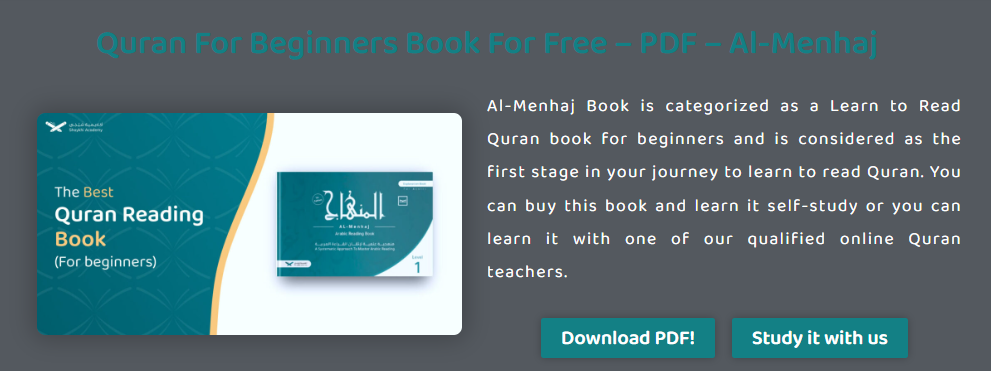
For complete beginners, the Al-Menhaj Book — authored by Quran teacher and platform manager Luqman ElKasabany — provides a structured, step-by-step path into Arabic reading for non-native speakers. It removes the confusion of where to start.
What Is the Recommended Frequency for Reading Quran?
Classical scholars recommended completing a full Quran recitation within a range of three days to one month, depending on a person’s ability and circumstances.
The Prophet ﷺ is reported to have advised Abdullah ibn ‘Amr not to complete the Quran in less than three days. Forty days was generally accepted as the outer limit before recitation habits become blameworthy.
For most non-Arabic speaking Muslims learning to read, the practical question is not how fast to complete the Quran — it is how to build a consistent daily reading habit that grows over time.
Even five to ten minutes of recitation practice daily produces measurable improvement within weeks.
Our detailed daily Quran reading plan and schedule can help you build a structured, sustainable reading routine that fits your actual life — not an idealized one.
Read Also: Can You Read Quran Without Ghusl on Phone?
Our Students Reviews
Start Your Quran Learning Journey Today
Join Quran Reading Academy and begin structured, step-by-step Quran reading with expert guidance.
Try your first class for freeRead Also: Can You Read Quran on Phone Without Wudu?
Start Reading Quran Today with The Quran Reading Academy
The distinction between obligatory and recommended does not reduce the Quran’s importance — it clarifies your relationship with it. Every Muslim who can read the Quran carries a blessing; every Muslim who is working toward it carries a sincere intention Allah honors.
The Quran Reading Academy offers:
- Certified instructors with up to 25 years of teaching experience
- Courses for kids, adults, beginners, and new Muslims
- The Al-Menhaj Book — a proven foundational reading curriculum for non-Arabic speakers
- Flexible online scheduling with a free trial lesson
Check out our top courses to help you read the Quran with confidence:
- Quran Reading Course With Tajweed
- Noorani Qaida Course
- Quran Reading Course for Beginners
- Quran Reading Classes for Adults
- Quran Reading Classes for Sisters
- Quran Reading Classes for Kids
- Quran Hifz Course
- Arabic Reading Practice Course
- Quranic Arabic Course
Book your free class today—it’s the perfect start to learning the Quran

Conclusion
Reading the Quran is not fard in the technical sense of individual obligation — but it is one of the most spiritually significant acts a Muslim can embrace. The scholars’ careful distinction between obligation and encouragement is not a loophole; it is an invitation to engage with this Book out of love rather than fear of sin.
Whatever your current level — whether you can recite fluently or are still learning your first Arabic letters — Allah honors your effort. The Quran is not reserved for scholars or native Arabic speakers. It is for every Muslim willing to draw close to it, one letter at a time.
Start Your Quran Learning Journey Today
Join Quran Reading Academy and begin structured, step-by-step Quran reading with expert guidance.
Try your first class for freeRead Also: Can I Read Quran Without Wudu?
Frequently Asked Questions About Reading Quran
Is it a sin to not read Quran every day?
Not reading the Quran every day is not classified as a sin by mainstream Islamic scholarship. Scholars distinguish between obligatory acts — whose neglect constitutes sin — and emphasized Sunnah acts, which Quran recitation falls under. However, completely abandoning the Quran over long periods is considered a serious spiritual deprivation that a Muslim should sincerely work to correct.
Does every Muslim have to read the Quran in Arabic?
Every Muslim is encouraged to learn to read the Quran in Arabic, as the original Arabic text carries the full spiritual and linguistic weight of revelation. However, there is no scholarly ruling making Arabic literacy a binding individual obligation. Reading a verified translation alongside working toward Arabic recitation is widely accepted for those actively learning.
Is reading Quran fard or sunnah according to Islamic scholars?
According to classical Islamic scholarship, regular Quran recitation is classified as Sunnah mu’akkadah — a confirmed, emphasized Sunnah — not fard. Neither the Quran nor authenticated hadith establishes a specific recitation minimum as an individual obligation. Scholars who discussed the forty-day outer limit for completing a recitation used the language of dislike (makruh), not prohibition (haram).
Can I learn to read Quran as an adult with no Arabic background?
Absolutely — and you are not alone. At The Quran Reading Academy, a significant portion of students are adults who have never read Arabic before. With the right structured method — beginning with the Al-Menhaj Book and progressing through our Quran Reading Course for Beginners — most adult students begin reading connected Quranic text within a few months of consistent practice.






Leave a Reply