 Times for Reading

Yes, can you read Quran after Fajr. There is no general prohibition on reciting the Quran after completing the Fajr prayer. In fact, the time after Fajr can be a peaceful opportunity to recite, reflect on the verses, and begin your day with the Quran.
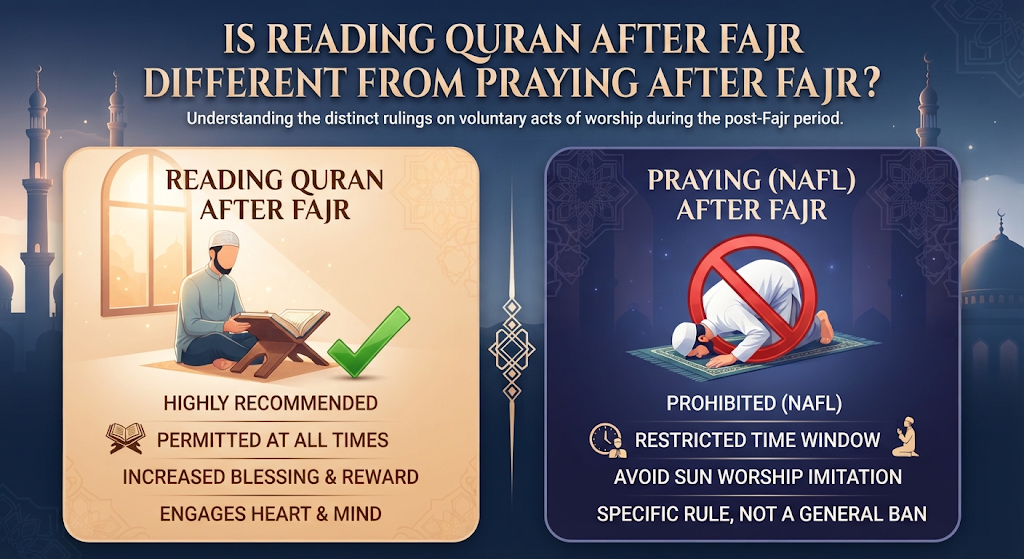
It is important to distinguish between Quran recitation and voluntary prayer. Some voluntary prayers are restricted after Fajr until the sun rises, but these restrictions do not mean that you must stop reading the Quran. You can continue reciting from the Mushaf, memorize verses, review what you have learned, or read Quran from a phone.
If you have enough time after Fajr, you can make Quran recitation part of your daily routine, for example, by reading a few pages, completing a specific portion, or reviewing previously memorized surahs.
Can You Read Quran Before Fajr?
Yes, you can read Quran before Fajr. Quran recitation is permissible during the night and in the time leading up to Fajr, making the early hours a suitable opportunity for reading, memorization, or revision.
If you wake up before Fajr, you can use this quiet time to recite Quran before praying. You may also combine Quran reading with other acts of worship, such as making dua or praying Tahajjud, depending on your routine.
For many Muslims, reading Quran before Fajr can be a practical way to establish a regular habit. Whether you choose to read before Fajr or after it, the most important thing is to maintain a consistent connection with the Quran.
What Can You Do After Fajr Before Sunrise?
The time between Fajr and sunrise can be used for several beneficial acts of worship and Quran-related activities. You do not have to stop engaging with the Quran simply because you have completed the Fajr prayer.
a. Read and Reflect on the Quran
You can continue reading Quran after Fajr and use the quiet morning hours to focus on the verses and their meanings. Rather than rushing through your daily portion, take a moment to reflect on what you are reading.
Quran 17:78 (Surah Al-Isra) refers to the Fajr (dawn) prayer and the special recitation of the Quran during it.
“Indeed, the recitation of dawn is ever witnessed.”
(أَقِمِ الصَّلَاةَ لِدُلُوكِ الشَّمْسِ إِلَى غَسَقِ اللَّيْلِ وَقُرْآنَ الْفَجْرِ ۖ إِنَّ قُرْآنَ الْفَجْرِ كَانَ مَشْهُودًا)
The recitation is described as “ever witnessed,” meaning both the night angels and the day angels gather and bear witness to this prayer.
b. Review Quran Memorization
If you are memorizing Quran, the period after Fajr can be used to review previously memorized verses or practice new passages. Regular revision can help you maintain what you have already learned.
c. Make Dhikr and Dua
After Fajr, you can also spend time making dhikr and dua. Combining Quran recitation with remembrance of Allah can help you begin your day with purposeful worship.
d. Listen to Quran Recitation
If you are unable to read at a particular moment, you can listen to a Quran recitation while following along with the verses or simply listening attentively.
What About Voluntary Prayer?
The period after Fajr has specific restrictions concerning certain voluntary prayers until the sun has risen. These restrictions should not be confused with Quran recitation. You can continue reading, listening to, and reflecting on the Quran after Fajr.
This makes the time before sunrise a practical opportunity to build a consistent Quran routine without treating the restrictions on prayer as restrictions on all forms of worship.
Is It Better to Read Quran Before or After Fajr?
Both before Fajr and after Fajr can be suitable times for reading Quran. There is no need to limit your Quran recitation to one of these times. The better choice for your daily routine is often the time when you can read consistently, attentively, and without unnecessary distractions.
a. Reading Quran Before Fajr
The time before Fajr can be especially suitable if you wake up early and want to combine Quran recitation with other acts of worship. You may read a portion of Quran, review memorized verses, or reflect on the meanings before the Fajr prayer begins.
b. Reading Quran After Fajr
After completing Fajr, you can continue reading Quran during the morning. This can be particularly practical if you prefer to make Quran recitation the first regular activity of your day.
You can set a simple daily target, such as reading a few pages or reviewing a specific portion, and gradually develop a consistent habit.
Which Time Should You Choose?
Rather than worrying about whether before Fajr or after Fajr is better, choose a time that you can maintain consistently.
If you naturally wake before Fajr, use that opportunity. If you prefer reading after completing your Fajr prayer, that is also a practical choice. What matters is maintaining a regular connection with the Quran and approaching its recitation with attention and sincerity.
Why Is Fajr Quran Recitation Special?
Fajr has a special connection with Quran recitation. Allah says:
Surah Al-Isra(17:78) refers to the Fajr prayer and the recitation of the Quran during the break of dawn
أَقِمِ ٱلصَّلَوٰةَ لِدُلُوكِ ٱلشَّمْسِ إِلَىٰ غَسَقِ ٱلَّيْلِ وَقُرْءَانَ ٱلْفَجْرِ ۖ إِنَّ قُرْءَانَ ٱلْفَجْرِ كَانَ مَشْهُودًۭا
Aqimis-salaha liduluki-sh-shamsi ila ghasaqi-l-layli wa qur’ana-l-fajr, inna qur’ana-l-fajr kana mashhuda.
This highlights the significance of reciting at dawn and makes Fajr an important time to engage with the Quran.
The Quran Describes Dawn Recitation as “Witnessed”
The verse in Surah Al-Isra (17:78) specifically draws attention to the recitation at dawn. This is one reason Fajr is associated with a special opportunity for Quran recitation and worship.
However, this does not mean that Quran reading is limited to Fajr or that every recitation after Fajr has the same specific description. Muslims can read the Quran throughout the day, while Fajr offers a particularly meaningful time to begin the day with Allah’s words.
A Simple 15-Minute Quran Routine After Fajr
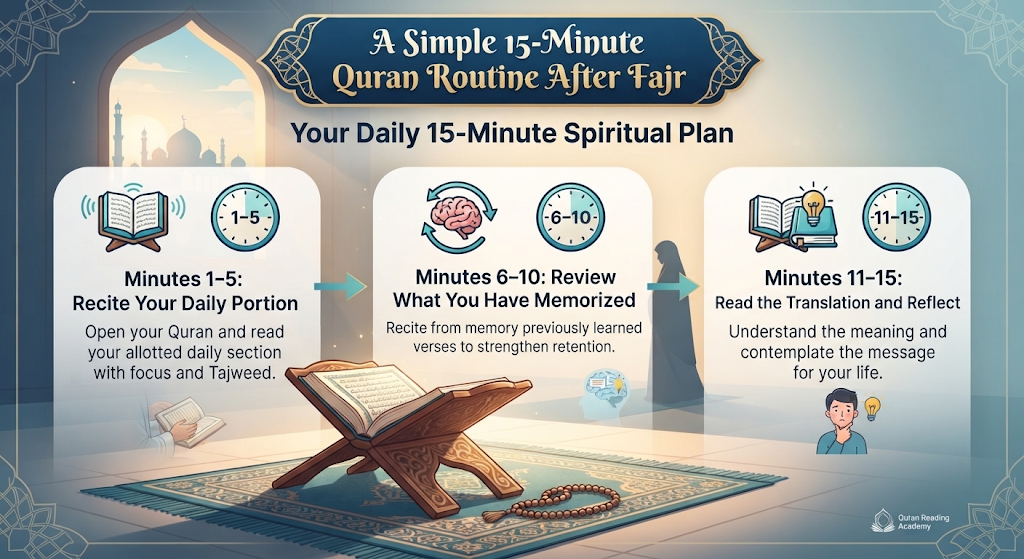
If you want to make Quran reading after Fajr a lasting habit, you do not need to begin with a long reading session. A simple 15-minute Quran routine can give you a clear structure and make daily recitation easier to maintain.
Minutes 1-5: Recite Your Daily Portion
Begin by reciting a manageable portion of Quran. This could be a few pages, a section you are currently studying, or a portion from a reading plan. Focus on correct pronunciation and attentive recitation rather than simply trying to finish as much as possible.
Minutes 6-10: Review What You Have Memorized
Use the next few minutes to review previously memorized verses or surahs. Regular revision can help you stay connected to the portions you have already learned. If you are currently memorizing Quran, you can also use this time to repeat a small number of new verses.
Minutes 11-15: Read the Translation and Reflect
Finish your routine by reading the translation of the verses you recited and reflecting on their meaning. Understanding what you recite can make your Quran routine more purposeful and help you connect the verses with your daily life.
Make Your Routine Sustainable
You do not have to follow exactly 15 minutes every day. On busy mornings, even a shorter session can help you maintain the habit. When you have more time, you can extend your recitation, memorization, or study.
The goal is not simply to complete a certain number of pages after Fajr. It is to develop a consistent and meaningful relationship with the Quran.
What Are the Benefits of Reading Quran After Fajr?
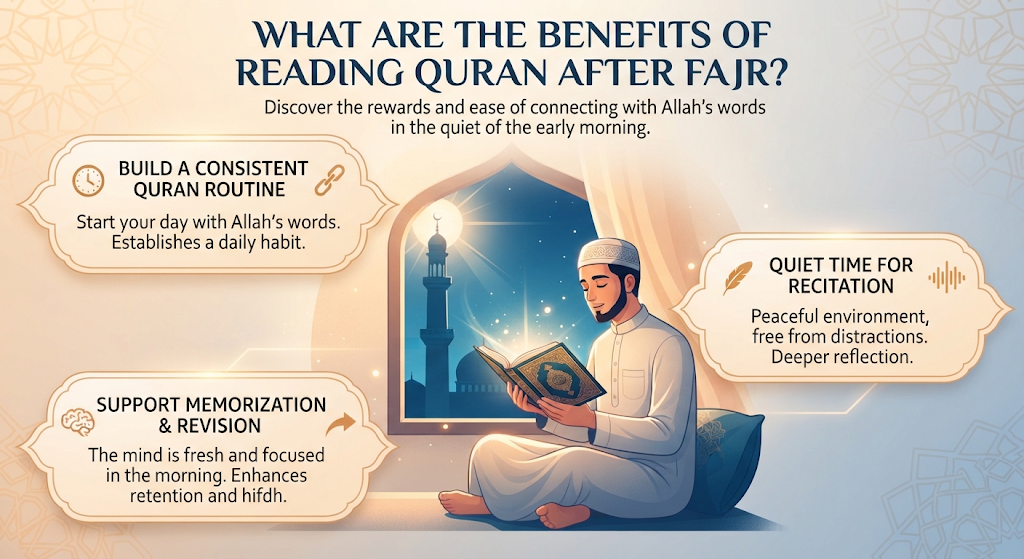
Can you read Quran after Fajr? can be a meaningful way to begin your day with worship. More importantly, choosing a regular time for Quran recitation can make it easier to develop a consistent habit rather than leaving your reading to an uncertain time later in the day.
It Helps You Build a Consistent Quran Routine
Reading Quran immediately after Fajr can give your daily recitation a clear place in your schedule. Instead of waiting for a free moment, you can make Quran reading part of your morning routine.
You can start with a manageable goal, such as a few pages or a specific portion of Quran each day, and gradually build from there. Consistency allows you to maintain your connection with the Quran even on busy days.
The Morning Can Offer a Quiet Time for Recitation
For many people, the early morning provides fewer distractions than later parts of the day. After Fajr, you can set aside a few minutes to read without rushing between work, study, family responsibilities, or other tasks.
A quiet environment can also give you more opportunity to focus on the verses, their meanings, and your personal reflection rather than simply trying to finish a daily portion.
It Can Support Quran Memorization and Revision
The time after Fajr can also be used for Quran memorization and revision. If you are learning new verses, you can dedicate part of your morning to repeating them. If you already have memorized portions, you can use the same time to review them regularly.
A structured routine can make memorization and revision easier to maintain over time, especially when you combine independent practice with guidance from a qualified Quran teacher.
What Is the Best Time to Read Quran: Before or After Fajr?
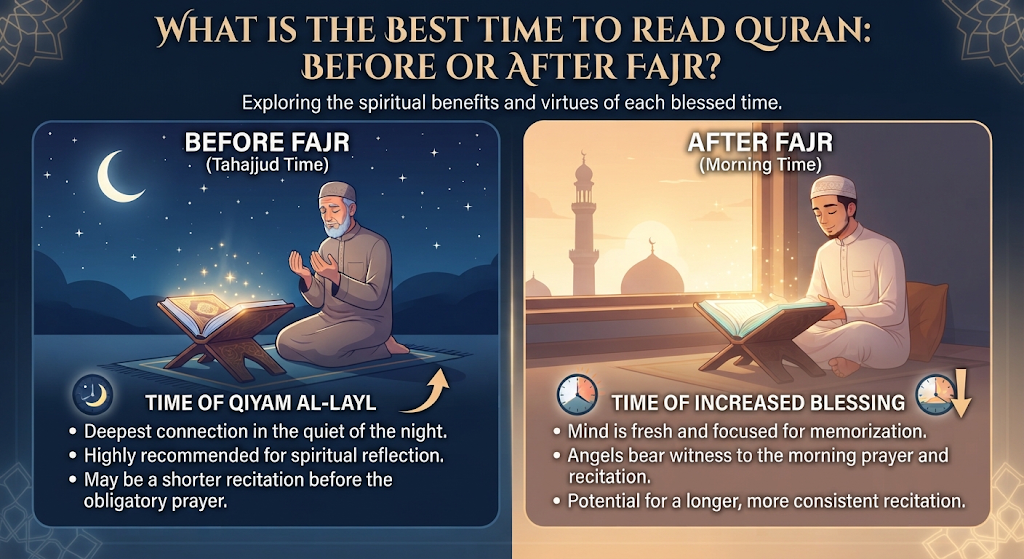
Both before Fajr and after Fajr can be suitable times to read Quran. There is no need to limit your Quran reading to one specific time if another part of your day works better for your routine.
a. Reading Quran Before Fajr
The time before Fajr is part of the night and can be especially suitable for those who prefer quiet, uninterrupted worship. If you wake up for Tahajjud or simply have time before the Fajr prayer, you can use those moments for Quran recitation, memorization, or revision.
b. Reading Quran After Fajr
Can you read Quran after Fajr? is another practical opportunity to read Quran and establish a consistent morning habit. You can continue reciting after completing the prayer, even during the period before sunrise.
Which Time Should You Choose?
The best time is often the one you can maintain consistently. If you regularly wake before Fajr, reading then may work well. If you find it easier to stay focused after the Fajr prayer, make that your regular Quran-reading time.
What matters most is maintaining a sincere and consistent connection with the Quran rather than becoming overly concerned about finding one perfect time.
Can You Read Quran After Fajr Until Sunrise?
Yes, can you read Quran after Fajr until sunrise? The period between the Fajr prayer and sunrise can be used for Quran recitation, memorization, revision, dhikr, and reflection.
The restriction on certain voluntary prayers after Fajr should not be confused with a restriction on reading the Quran. If you finish Fajr and want to remain seated and recite until sunrise, you may continue reading.
However, when the sun is actually rising, there are specific rulings concerning prayer during that time. This does not mean that Quran recitation itself suddenly becomes prohibited. If you want to perform a particular prayer around sunrise, check its specific ruling with a qualified Islamic scholar.
Start Your Quran Learning Journey Today
Join Quran Reading Academy and begin structured, step-by-step Quran reading with expert guidance.
Try your first class for freeCan You Read Quran From a Phone After Fajr?
Yes, you can read Quran from your phone after Fajr. If using a digital Quran makes it easier for you to maintain a regular reading routine, you can use your phone to recite, review memorized verses, or follow along with a Quran app.
The important consideration is to treat the Quran with the appropriate respect and attentiveness, whether you are reading from a physical Mushaf or a digital screen. You can also use your phone for listening to Quran recitation or following a guided lesson.
If you are unsure about specific rules concerning touching a physical Mushaf, wudu, or other matters of ritual purity, consult a qualified Islamic scholar, as details can differ among scholars and schools of thought.
Common Misunderstandings About Reading Quran After Fajr
There are several common misunderstandings about what Muslims can and cannot do after Fajr. Understanding the distinction between Quran recitation and prayer can help you follow the correct practice.
- You Cannot Read Quran After Fajr: You can read Quran after completing the Fajr prayer. The restrictions associated with the period after Fajr concern certain voluntary prayers, not ordinary Quran recitation.
- Quran Can Only Be Read Before or During Fajr: Quran recitation is not limited to Fajr. You can read the Quran before Fajr, after Fajr, during the day, or at night. Fajr is a meaningful time for recitation, but it is not the only permissible time.
- You Must Read a Specific Number of Pages After Fajr: There is no universal requirement that every Muslim must read a specific number of Quran pages after Fajr. You can choose a manageable portion based on your circumstances and maintain it consistently.
- Reading Quran After Fajr Is the Same as Performing Voluntary Prayer: Quran recitation and voluntary prayer are different acts of worship. A restriction concerning certain voluntary prayers after Fajr should not be interpreted as a prohibition on reading, listening to, or reflecting on the Quran.
- You Need a Long Morning Session to Benefit From Quran Reading: A long session is not necessary to establish a Quran routine. Even a short, focused period of recitation can become part of your daily practice when you maintain it consistently.
Inside Our Live Classroom
We believe in complete transparency. Take a look inside our virtual classrooms to experience our premium teaching tools and engaging learning environment firsthand.
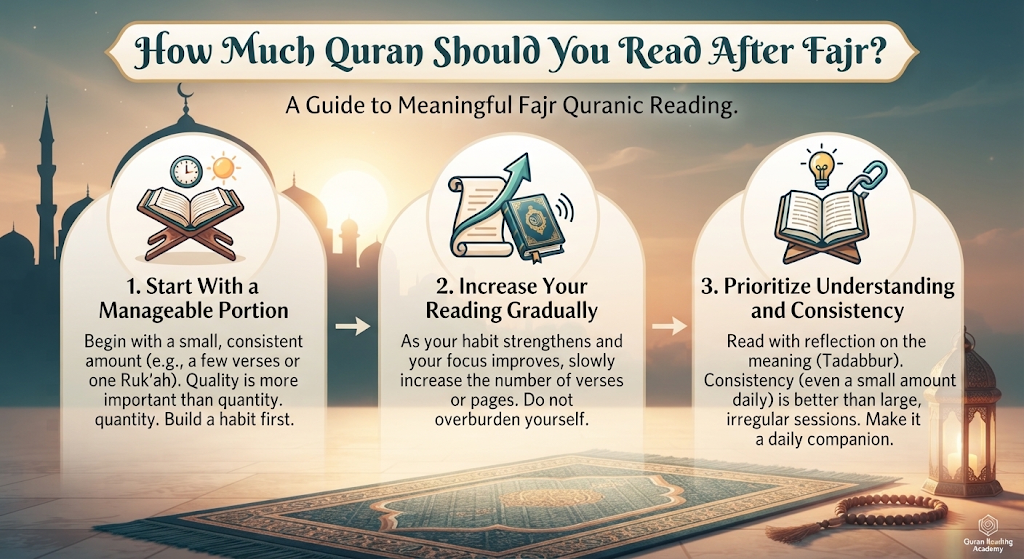
How Much Quran Should You Read After Fajr?
There is no single required number of Quran pages that every Muslim must read after Fajr. The right amount depends on your available time, your Quran-reading goals, and whether you are reading, memorizing, or reviewing.
a. Start With a Manageable Portion
If you are building a new habit, you can begin with a small portion, such as a few pages or a short surah. A realistic goal is easier to maintain than setting a large target that becomes difficult to complete every day.
b. Increase Your Reading Gradually
As your routine becomes established, you can gradually increase the amount you read after Fajr. You might dedicate more time on days when your schedule allows and keep a shorter session on busy mornings.
c. Prioritize Understanding and Consistency
Your Quran routine does not have to be measured only by the number of pages completed. Reciting carefully, understanding the meanings, reviewing memorization, and reflecting on the verses can all make your reading more meaningful.
The best routine is one that helps you maintain a consistent connection with the Quran without turning your daily reading into a source of unnecessary pressure.
How to Build a Daily Quran Reading Routine After Fajr
Making Quran reading part of your routine is easier when you give it a clear and realistic place in your morning. You do not need a complicated plan; consistency can start with a few simple steps.
1. Choose a Realistic Daily Goal
Decide how much time or how many pages you can comfortably read each morning. Start with a goal you can maintain rather than choosing an amount that may become difficult on busy days.
2. Keep Your Quran Ready
Prepare your physical Mushaf, Quran app, or reading material before Fajr. Having everything ready can make it easier to begin your recitation immediately after prayer.
3. Combine Recitation With Understanding
After reciting your selected portion, spend a few minutes reading its translation or reflecting on its meaning. This can make your Quran routine more intentional rather than focusing only on completing pages.
4. Use the Same Time Consistently
Try to connect your Quran reading with a specific point in your morning routine, such as immediately after Fajr. A consistent cue can make the habit easier to remember and maintain.
5. Track Your Progress Without Pressure
You can keep a simple record of the surahs or portions you have read and reviewed. Use it as a way to stay organized, not as a source of pressure. If you miss a day, simply return to your routine the next morning.
A sustainable Quran routine is not about reading the largest amount possible. It is about creating a regular opportunity to recite, understand, and remain connected to the words of Allah.
Build a Consistent Quran Reading Habit With Quran Reading Academy
Knowing when you can read Quran is only the beginning. Building a consistent relationship with the Quran becomes easier when you have a clear learning plan and guidance that fits your level and schedule.
Learn Quran With Structured Online Guidance
At Quran Reading Academy, learners can study Quran online with qualified teachers and structured lessons designed to support steady progress. Whether you are learning to read Quran, improving your recitation, memorizing surahs, or helping your child develop a regular Quran routine, online learning provides the flexibility to practice consistently.
You can choose lessons that fit your schedule and receive guidance on Quran reading, pronunciation, recitation, and memorization according to your learning goals.
Start Building Your Quran Routine Today
If you want to turn your Quran reading into a consistent daily habit, Quran Reading Academy can help you take the next step. Build your skills with structured online Quran lessons and make regular Quran learning part of your routine.
Start learning Quran online today and make every day an opportunity to strengthen your connection with the Quran.
Start Your Quran Learning Journey Today
Join Quran Reading Academy and begin structured, step-by-step Quran reading with expert guidance.
Try your first class for freeConclusion
So, can you read Quran after Fajr? Yes. Quran recitation is permissible after Fajr, including during the time before sunrise. The restriction on certain voluntary prayers after Fajr should not be confused with a restriction on reading the Quran.
Whether you choose to read before Fajr or after Fajr, the most important goal is to establish a consistent habit that allows you to recite, reflect, memorize, and continue growing in your relationship with the Quran.
With the right guidance and a routine that fits your schedule, you can make Quran learning a meaningful part of every day.
FAQs
Can I Read Quran Immediately After Fajr?
Yes. Can you read Quran after Fajr? After completing the Fajr prayer. The restriction on certain voluntary prayers after Fajr does not prohibit Quran recitation.
Can I Read Quran Before Fajr?
Yes. You can read Quran before Fajr during the night or in the time leading up to the Fajr prayer. This can also be a convenient time for memorization, revision, or quiet recitation.
Can I Read Quran After Fajr Before Sunrise?
Yes. You can continue reading Quran after Fajr and before sunrise. The period after Fajr is not a prohibited time for Quran recitation.
Is Reading Quran After Fajr Better Than Reading It at Night?
Both can be beneficial. The best time depends on when you can recite with focus and maintain a consistent routine. Some people prefer the quiet before Fajr, while others find it easier to read immediately after Fajr.
How Long Should I Read Quran After Fajr?
There is no required duration for Quran reading after Fajr. You can begin with a few minutes and gradually increase your reading time according to your schedule and Quran goals.








Leave a Reply