 Fatawa
| Key Takeaways |
| Forcing a child to read Quran is not haram; scholars consider it a parental obligation rooted in Islamic responsibility. |
| Physical violence that causes harm or breeds hatred toward the Quran is prohibited — this crosses the line scholars draw. |
| Encouragement, gradual progression, and age-appropriate methods produce far better long-term results than harsh coercion alone. |
| Parents are accountable before Allah for their children’s religious education, including foundational Quran reading skills. |
Many Muslim parents in Western contexts struggle with a quiet, persistent worry: am I doing something wrong by insisting my child sit down and read Quran when they’d rather be anywhere else?
The tension between obligation and compassion is real, and it deserves a clear, honest answer grounded in Islamic scholarship — not vague reassurance.
Is It Haram to Force Your Child to Read Quran?
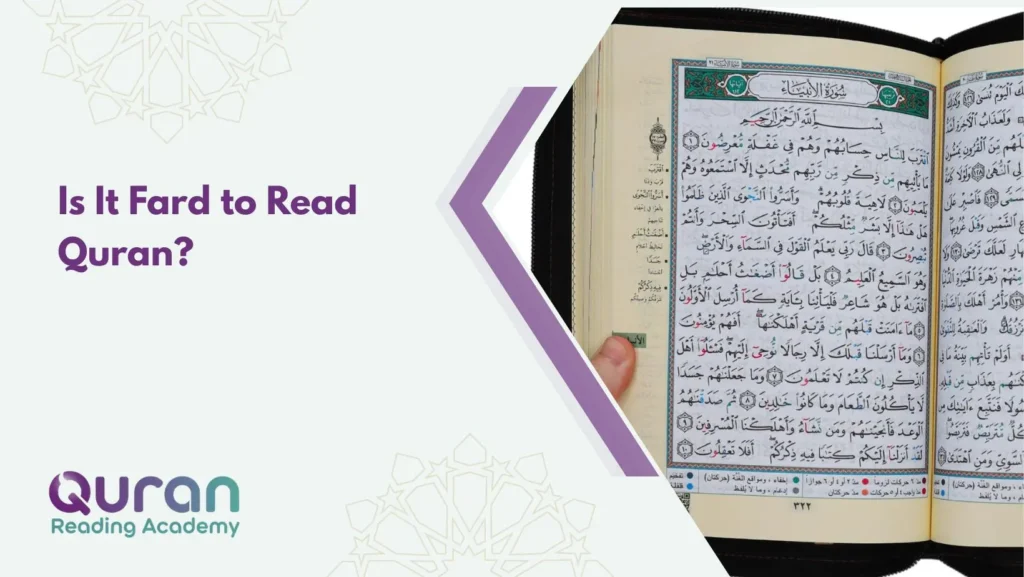
No — it is not haram to require your child to read and learn the Quran. Islamic scholarship is consistent and clear on this point: compelling children toward Quran education is not only permitted but considered an obligation upon Muslim parents.
The prohibition that scholars identify is specifically against physical violence or psychological methods severe enough to cause the child to develop hatred toward the Quran itself.
This distinction matters enormously in practice. A parent who sets firm, non-negotiable expectations for daily Quran reading — and uses rewards, gentle correction, and structured lessons — is acting within the bounds of Islamic guidance.
A parent who uses harsh physical punishment that traumatizes the child risks achieving the opposite of their intention: a child who associates the Quran with fear and pain.
Shots Videos from Our Courses
Start Your Quran Learning Journey Today
Join Quran Reading Academy and begin structured, step-by-step Quran reading with expert guidance.
Try your first class for freeWhat Did Classical Scholars Say About Compelling Children to Read the Quran?
The Hanafi scholar Al-Hamawi stated plainly in Ghamz ‘Uyun al-Basa’ir that a father may compel his young child toward learning the Quran, the Arabic language, and Islamic manners — because this is a religious obligation that falls upon the parent.
Ibn Nujaym echoed this in Al-Bahr Al-Ra’iq, and Ibn Abidin’s Hashiyah confirms the same position within the Hanafi school.
Hanbali scholarship is equally direct. Al-Buhuti, in Daqa’iq Uli al-Nuha, noted that a father should begin his son with the Quran to build the habit of recitation and should teach him the full text unless genuine difficulty makes that impossible.
The Parent’s Accountability Before Allah
The Quran itself frames this as a matter of guardianship and accountability. Allah says:
يَا أَيُّهَا الَّذِينَ آمَنُوا قُوا أَنْفُسَكُمْ وَأَهْلِيكُمْ نَارًا
Yā ayyuhā alladhīna āmanū qū anfusakum wa-ahlīkum nārā
“O you who have believed, protect yourselves and your families from a fire.” (At-Tahrim 66:6)
This verse is foundational to the scholarly consensus on parental duty. Teaching a child to read the Quran is inseparable from protecting them — and the parent will be asked about whether they fulfilled this trust.
The Prophet ﷺ said:
“Each of you is a shepherd, and each of you is responsible for his flock… A man is the shepherd of his household and is responsible for them.” (Sahih Bukhari 893)
If you are looking for structured support to fulfill this obligation, The Quran Reading Academy offers dedicated Quran Reading Classes for Kids led by certified Qari instructors who understand how to engage young learners — including reluctant ones — with patience and expertise.
Book your kid a FREE trial in the best Quran reading classes
Where Is the Line Drawn Between Firmness and Harm?
Parents are permitted to be firm, consistent, and insistent. What they are not permitted to do is cross into methods that cause genuine harm or that result in the child despising the Quran. This is the line scholars consistently identify, and it has both a spiritual dimension and a practical one.
Harshness that makes a child cry out of pain, or that creates a deeply negative emotional association with Quran recitation, defeats the entire purpose.
The goal of Quran education is not merely that the child can decode Arabic letters — it is that they develop a lifelong relationship with the Book of Allah.
The Scholarly Position on Physical Discipline
Classical scholars did permit limited, non-harmful physical prompting for serious religious obligations.
The most cited example is the hadith on Salah: the Prophet ﷺ said,
“Command your children to pray when they become seven years old, and beat them for it (prayer) when they become ten years old.” (Sunan Abu Dawud 495)
Some scholars extended this principle to Quran memorization, given that preserving the Quran is a fard kifayah — a collective obligation upon the Muslim community. What this never permitted was violence causing physical injury or emotional damage.
Why Does Method Matter as Much as the Mandate?
From years of working with young students at The Quran Reading Academy, one pattern becomes clear consistently: children who were forced through trauma rarely sustain Quran reading into their teenage years.
Children who were held to firm, non-negotiable expectations within an encouraging environment almost always continue — and often develop genuine love for recitation.
The method shapes the outcome. Obligation and warmth are not opposites.
Start Your Quran Learning Journey Today
Join Quran Reading Academy and begin structured, step-by-step Quran reading with expert guidance.
Try your first class for freeHow to Encourage Your Child to Read Quran Without Breaking Their Spirit?
Firmness does not require harshness. Experienced Quran teachers recognize several approaches that maintain parental authority while building genuine engagement in the child.
1. Start With What Is Achievable
Begin with short, manageable portions. Even five minutes of focused Quran reading daily builds the habit without overwhelming a young learner. Gradually increase the duration as the child’s reading skills and stamina develop.
Our Quran Reading Plan for Beginners offers a structured approach you can adapt for children at home.
2. Use Positive Reinforcement Before Correction
Praise specific achievements — not just general effort. “MashaAllah, you read that letter qaf perfectly today” is more effective than a generic “good job.”
Children respond to precision. They need to know exactly what they did right so they can repeat it.
Connect the Quran to Meaning, Not Just Mechanics
Even young children benefit from knowing what they are reading. When a child understands that Surah Al-Fatiha is the prayer they will recite in every Salah for the rest of their life, the motivation to read it correctly becomes intrinsic — not just parental.
For foundational reading, the Noorani Qaida Course at The Quran Reading Academy builds this reading foundation systematically, letter by letter, before moving into full Quranic text.
Start Reading the Quran Today with a FREE Trial in Our Noorani Qaida Course

Is Forcing Your Child to Hifz Permissible?
Memorizing the Quran — hifz — carries its own status in Islamic jurisprudence. Classical scholars classified it as fard kifayah: a collective obligation where enough members of the Muslim community must know the full Quran by heart to preserve it.
What is fard ‘ayn — obligatory on every individual — is memorizing what is required for valid Salah.
Parents are permitted, within this framework, to require their children to work toward Quran memorization.
Al-Buhuti and Ibn Sah’nun both addressed this, noting that a child of strong memory and intellectual capacity should be taught the full Quran, while a child who genuinely struggles should be taught at minimum what is required for prayer.
Hifz Is Not a Race
One of the most common mistakes parents make is comparing their child’s memorization pace to another child’s.
Quran memorization is not a competition. A child who retains three verses solidly and recites them in Salah correctly has achieved something of genuine value.
If your child is ready to begin structured memorization, our Quran Reading Classes — Memorizing program pairs students with certified instructors who set realistic, age-appropriate goals and track retention — not just initial memorization.
Join Our Quran Hifz Course with a Free Trial
Practical Guidance for Parents Navigating This Question
Obligation and wisdom must work together. Here is a simple framework drawn from Islamic scholarly guidance and practical teaching experience:
| Approach | Permitted | Notes |
| Daily Quran reading requirement | ✅ Yes | Core parental duty |
| Firm, consistent expectations | ✅ Yes | Consistent with Islamic guardianship |
| Withholding privileges as consequence | ✅ Yes | Non-harmful correction |
| Praise and rewards for progress | ✅ Strongly recommended | Builds intrinsic motivation |
| Mild, non-injurious physical prompt | ✅ Conditionally | Only for serious obligations, no harm |
| Physical punishment causing pain or injury | ❌ No | Prohibited — crosses scholarly line |
| Methods that cause hatred of the Quran | ❌ No | Defeats the entire purpose |
The goal is a child who reads Quran — and, over time, chooses to read Quran. Compulsion plants the seed; wisdom helps it grow.
For parents who feel they need expert support rather than managing this alone, exploring our Quran Reading Classes for Beginners can take the pressure off the parent-child relationship by placing structured learning in the hands of a patient, experienced teacher.
You can also review common mistakes when reading the Quran to understand what your child should be building toward from the start.
Our Students Reviews
Start Your Quran Learning Journey Today
Join Quran Reading Academy and begin structured, step-by-step Quran reading with expert guidance.
Try your first class for freeBegin Your Child’s Quran Reading Journey with The Quran Reading Academy
Fulfilling your duty as a Muslim parent does not mean doing it alone. The Quran Reading Academy offers structured, expert-led Quran education for children at every level — from complete beginners to those refining their Tajweed.
- Certified Qari instructors with years of experience teaching young learners
- Structured progression using the Al-Menhaj Book and Noorani Qaida methodology
- One-on-one live sessions tailored to your child’s pace and personality
- Flexible scheduling designed for families in Western time zones
- Book a free trial class and experience the difference structured guidance makes
Check out our top courses to help you read the Quran with confidence:
- Quran Reading Course With Tajweed
- Noorani Qaida Course
- Quran Reading Course for Beginners
- Quran Reading Classes for Adults
- Quran Reading Classes for Sisters
- Quran Reading Classes for Kids
- Quran Hifz Course
- Arabic Reading Practice Course
- Quranic Arabic Course
Book your free class today—it’s the perfect start to learning the Quran
Conclusion
The question of whether forcing a child to read Quran is haram has a clear answer rooted in centuries of Islamic scholarship: it is not. Parental authority over a child’s religious education is not optional — it is an amanah, a trust, that Allah will ask about.
What matters is how that authority is exercised. Firmness paired with wisdom, consistency paired with compassion, and high expectations paired with genuine support — this is the model our tradition points toward.
The Quran deserves to be taught with the same care and love it was revealed with. When parents approach this responsibility with both conviction and gentleness, Insha’Allah, the results follow.
Start Your Quran Learning Journey Today
Join Quran Reading Academy and begin structured, step-by-step Quran reading with expert guidance.
Try your first class for freeRead Also: Can a Non-Muslim Read the Quran?
Frequently Asked Questions About Forcing Children to Read Quran
Is it haram to make your child memorize the Quran against their will?
No, it is not haram. Classical scholars across the Hanafi, Shafi’i, and Hanbali schools explicitly permitted parents to compel their children toward Quran memorization. The obligation on parents to provide religious education is established in the Quran and Sunnah. What is prohibited is using methods that cause genuine harm or breed hatred toward the Quran itself.
At what age should parents start requiring Quran reading from their children?
Most scholars and experienced Quran teachers recommend beginning Quran reading education around age five to six, starting with Arabic letter recognition. Formal structured requirements become more appropriate around age seven — the same age the Prophet ﷺ identified for beginning Salah instruction. Early exposure should emphasize familiarity and positive association before firm requirements are established.
What if my child refuses to read Quran completely?
Address the root cause before escalating consequences. Refusal often signals that the method is not matching the child’s learning style, the sessions are too long, or a negative association has developed. A change of teacher, shorter daily sessions, or connecting Quran reading to Salah as a real, lived practice can shift the dynamic. Persistent severe refusal warrants a thoughtful, patient reset — not harsher pressure.
Can a Quran teacher force my child to read Quran?
A teacher operates within the limits set by the parent and the institution. Teachers at reputable academies like The Quran Reading Academy use structured accountability — expectations, gentle correction, and positive reinforcement — not coercion. Parents should always ask about the methodology used before enrolling their child to ensure it aligns with their values and the child’s needs.




Leave a Reply