 Times for Reading
| Key Takeaways |
| Reading Quran while traveling without wudu is permitted by scholarly consensus, whether reciting from memory or a digital screen. |
| Touching or holding a physical Mushaf without wudu is prohibited according to the majority of scholars. |
| The Prophet ﷺ recited Quran while riding his camel, establishing a clear precedent for recitation during travel. |
| Travelers may recite freely from memory or view a Mushaf without touching it, covering all common travel scenarios. |
| A minor ritual impurity (hadath asghar) does not prevent Quran recitation — only physical contact with the Mushaf is restricted. |
Travel strips away our usual routines. The prayer mat stays packed, the quiet corner of your home is miles behind you, and you find yourself wondering whether you can still connect with the Quran in the middle of an airport, a moving car, or a crowded train.
Reading Quran while traveling is something millions of Muslims do every day — yet many carry unnecessary uncertainty about what is and isn’t permitted.
Is Reading Quran While Traveling Without Wudu Permitted?
Yes — reading Quran while traveling without wudu is fully permitted by the unanimous consensus (ijma’) of Islamic scholars. A traveler in a state of minor impurity may recite Quran from memory or read from a digital device freely, at any point during their journey.
The restriction that exists applies specifically to physically touching the Mushaf, not to the act of recitation itself.
This is not a concession unique to travel — it applies equally to every Muslim in a state of minor ritual impurity, whether at home or abroad.
Travel simply brings the question to the forefront because we find ourselves reciting in cars, airports, and public spaces far more often than we usually consider. The ruling remains identical regardless of where you are.
If you are building a consistent reading habit and want to understand the full framework of how to read the Quran with proper etiquette and legal understanding, that foundation will serve you in every circumstance — including travel.
Book your FREE trial class to start reading Quran

What Did the Prophet ﷺ Teach Us About Reciting During Travel?
The clearest proof for the permissibility of reciting Quran while traveling comes directly from the Sunnah. The Prophet ﷺ set a living precedent that settled this question for all generations to come.
Sahih al-Bukhari reports on the authority of Mu’awiyah ibn Qurrah, who heard ‘Abdullah ibn Mughaffal say:
“I saw the Messenger of Allah ﷺ on the day of the conquest of Makkah — riding his she-camel while she was moving — reciting Surah al-Fath with a melodious, repeated tone (tarji’).”
The Prophet ﷺ was in motion, on a riding animal, reciting Quran aloud — without any condition of wudu being mentioned or required for the act of recitation. Scholars universally cite this as evidence that recitation itself carries no wudu requirement.
Additionally, Sahih Muslim records that ‘A’ishah (may Allah be pleased with her) stated:
“The Prophet ﷺ used to remember Allah in all of his states.”
The state of minor impurity is one such state, and the hadith covers it without exception.
Shots Videos from Our Courses
Start Your Quran Learning Journey Today
Join Quran Reading Academy and begin structured, step-by-step Quran reading with expert guidance.
Try your first class for freeWhat is the Difference Between Recitation and Touching the Mushaf While Traveling?
This distinction is the practical heart of the entire topic, and getting it clear prevents both unnecessary hardship and genuine error.
Recitation from memory carries no wudu requirement whatsoever. You may recite any Surah, any verse, any du’a drawn from Quranic text — sitting, walking, riding, or waiting — without wudu, in any state of minor impurity.
Reading from a digital screen or app falls under the same ruling as recitation from memory according to the overwhelming majority of contemporary scholars. A phone or tablet screen is not a Mushaf in the technical legal sense. Scrolling through a Quran app during a flight, for example, is entirely permitted without wudu.
Touching or holding the physical Mushaf is where the majority ruling applies a restriction. The majority of scholars hold that touching the Mushaf without wudu is prohibited, based on the letter of ‘Amr ibn Hazm:
“None shall touch the Quran except one who is pure.”
This is considered an authentic letter, accepted by the Muslim community across generations.
| Scenario | Wudu Required? | Scholarly Position |
| Reciting from memory | No | Unanimous consensus |
| Reading from phone/screen | No | Majority of contemporary scholars |
| Looking at Mushaf without touching | No | Majority position |
| Touching the physical Mushaf | Yes | Majority |
| Carrying Mushaf as part of luggage | No — different intention | Majority position |
The Ruling for Children Learning Quran During Travel
Young learners are exempt from the wudu-for-Mushaf requirement during their studies, and this exemption naturally extends to travel contexts as well.
The reasoning is one of necessity (darura): maintaining wudu constantly during a child’s learning session is genuinely difficult, and the imperative of Quranic education takes precedence.
Scholars have historically affirmed that children in Quran schools may handle the Mushaf freely during learning, and this principle applies when a family is traveling and a child wishes to continue their lesson or review.
This is something we consistently communicate to parents at The Quran Reading Academy. For families who want to keep their children progressing even through travel periods, our Quran Reading Classes for Kids are structured to continue seamlessly online from anywhere in the world — a laptop, tablet, or phone is all that is needed.
Book your kid a FREE trial in the best Quran reading classes

Practical Tips for Maintaining Your Quran Reading Habit While Traveling
One pattern I see consistently at The Quran Reading Academy is that students who build strong travel habits around Quran recitation maintain their reading level far better than those who pause during every trip. Travel time, when used intentionally, can actually accelerate progress.
1. Use a Quran App as Your Primary Travel Tool
A quality Quran app on your phone or tablet removes every practical barrier during travel. No wudu required, no risk of Mushaf handling concerns — simply open the app and read. This makes airport lounges, long flights, and bus rides into productive recitation time.
2. Recite from Memory During Physical Activity
Walking to a gate, waiting in a queue, or sitting in transit are ideal moments for recitation from memory. Even short Surahs — Al-Ikhlas, Al-Falaq, An-Nas — keep your connection active without requiring any preparation.
Our Students Reviews
Start Your Quran Learning Journey Today
Join Quran Reading Academy and begin structured, step-by-step Quran reading with expert guidance.
Try your first class for freeRead Also: Forbidden and Makrooh Times to Read Quran
3. Set a Minimum Daily Target
Many travelers abandon their daily Quran reading plan the moment their routine breaks. Setting a minimum — even five minutes of recitation from memory — maintains the habit through disruption. Students who do this typically return from travel without needing to “restart.”
4. Review Familiar Sections Rather Than Advancing
Travel is not always the time to learn new material. Reviewing Surahs you already know is lower-pressure, requires no Mushaf, and reinforces retention. It is genuinely valuable learning, not a compromise.
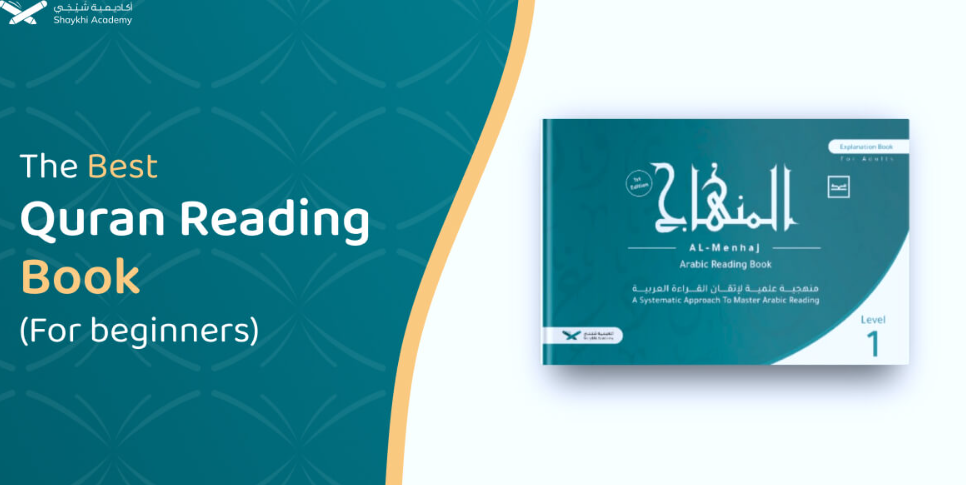
For those working through their foundational reading skills, this is also a good opportunity to review lessons from the Al-Menhaj Book — the structured beginner reading text developed by The Quran Reading Academy’s experienced instructors, designed specifically for non-Arabic speakers building their Quran reading from the ground up.
Explore The Best Quran Reading Book for FREE
Read Also: Can You Read Quran After Asr?
Begin Your Quran Reading Journey with The Quran Reading Academy
Whether you are at home or mid-flight, consistent Quran reading comes from having the right skills — not just the right conditions.
The Quran Reading Academy offers:
- Online Quran Reading Classes for Adults and for Kids — structured, progressive, and flexible
- Quran Reading Classes with Tajweed — certified instructors with 9+ years of experience
- Free Trial Class — no commitment, no pressure
- The Al-Menhaj Book — the foundational reading text for non-Arabic speakers, built by our own instructors
Book your free trial today and build the reading foundation that stays with you — in every city, on every journey.
Check out our top courses to help you read the Quran with confidence:
- Quran Reading Course With Tajweed
- Noorani Qaida Course
- Quran Reading Course for Beginners
- Quran Reading Classes for Adults
- Quran Reading Classes for Sisters
- Quran Reading Classes for Kids
- Quran Hifz Course
- Arabic Reading Practice Course
- Quranic Arabic Course
Book your free class today—it’s the perfect start to learning the Quran

Conclusion
Reading Quran while traveling is not a concession — it is a preserved, established right grounded in scholarly consensus and Prophetic practice. The distinction between recitation and touching the Mushaf is simple once understood, and it removes virtually every practical barrier a traveler faces.
Your Quran connection does not have to pause at the departure gate. Use the journey. Recite from memory, open your app, review what you know — and return home not behind, but stronger. Travel, understood rightly, can be one of the best opportunities for Quranic reflection you have.
Start Your Quran Learning Journey Today
Join Quran Reading Academy and begin structured, step-by-step Quran reading with expert guidance.
Try your first class for freeRead Also: Can You Read Quran During Sunrise?
Frequently Asked Questions About Reading Quran While Traveling
Can I Read Quran on My Phone Without Wudu While Traveling?
Yes. Reading Quran from a phone or tablet app without wudu is permitted according to the majority of contemporary scholars. A digital device is not classified as a Mushaf in the legal sense, and therefore the restriction on touching the Mushaf does not apply. You may scroll, read, and follow along freely during travel.
Is It Permissible to Recite Quran Aloud on a Plane or Public Transport?
Reciting Quran softly to yourself is permitted without any restriction during travel. Reciting loudly in a way that disturbs others is discouraged by Islamic etiquette, regardless of location. A quiet recitation or silent reading from a screen is ideal for public travel environments and fully permissible.
How Can I Keep Improving My Quran Reading When I Travel Frequently?
Frequent travelers benefit most from building strong recitation-from-memory skills and using a reliable Quran app. Consistent online classes — like those offered by The Quran Reading Academy — provide the flexibility to continue structured learning from any location. A clear Quran reading plan for beginners ensures progress continues regardless of travel schedule.
Related Articles
Times for Reading








Leave a Reply